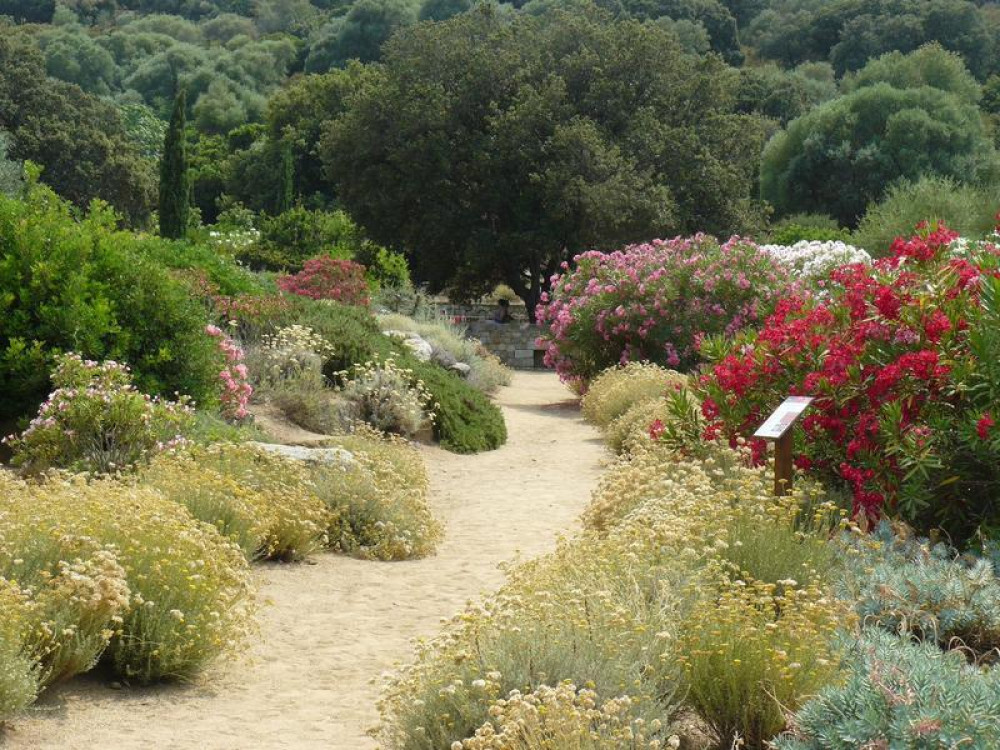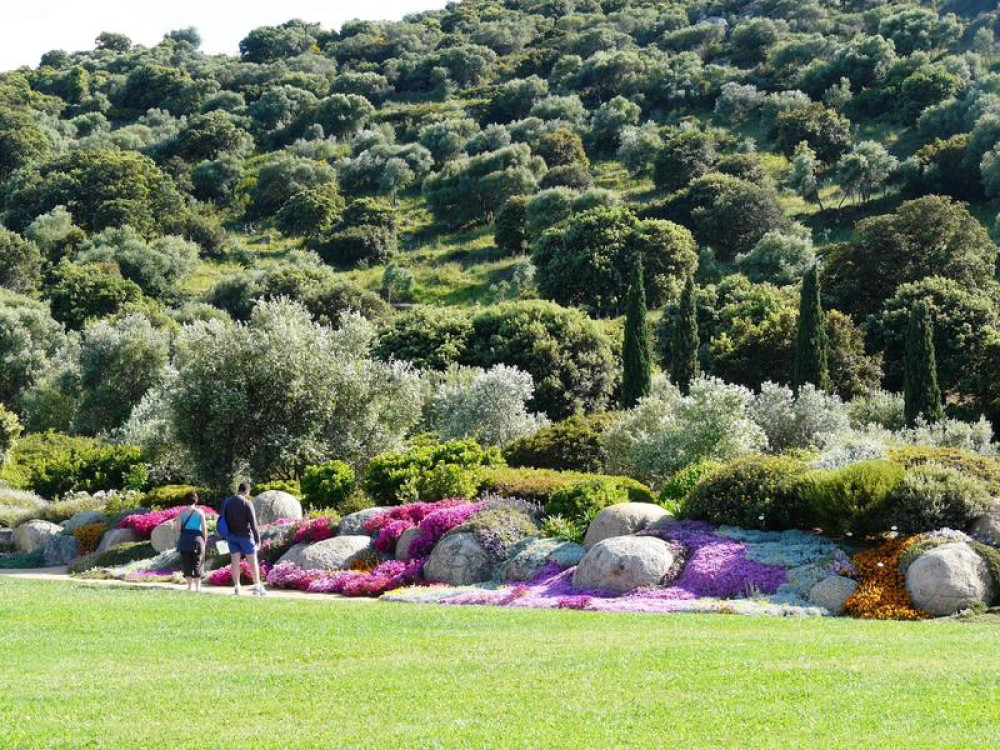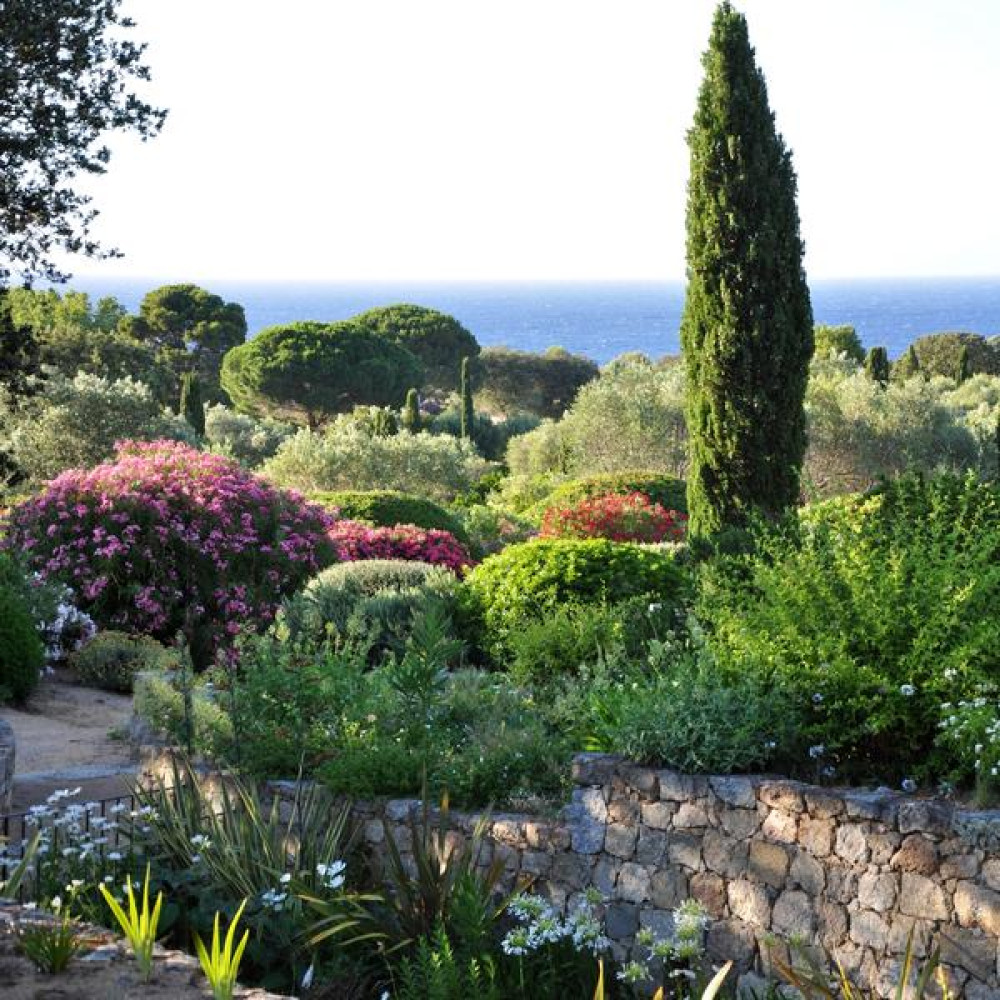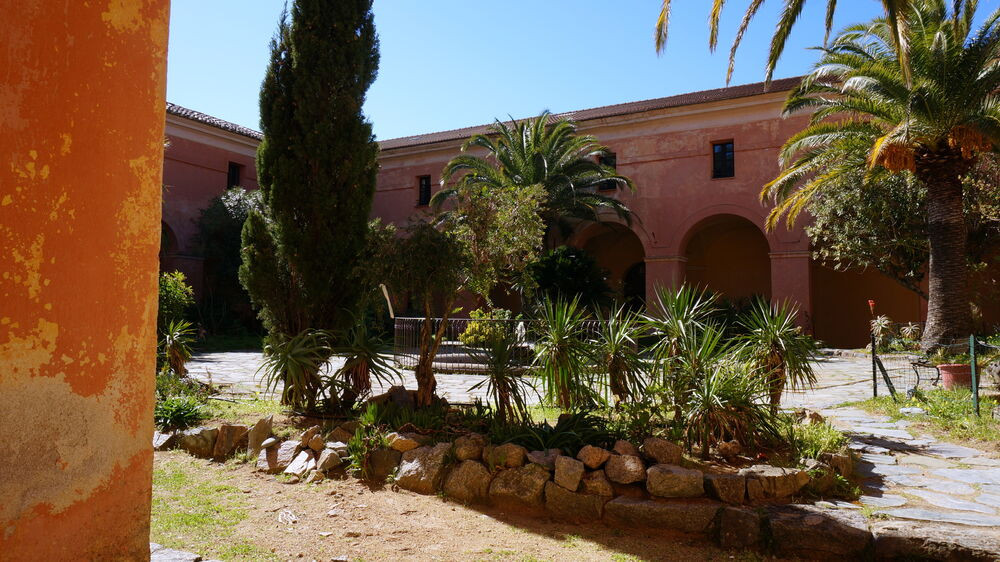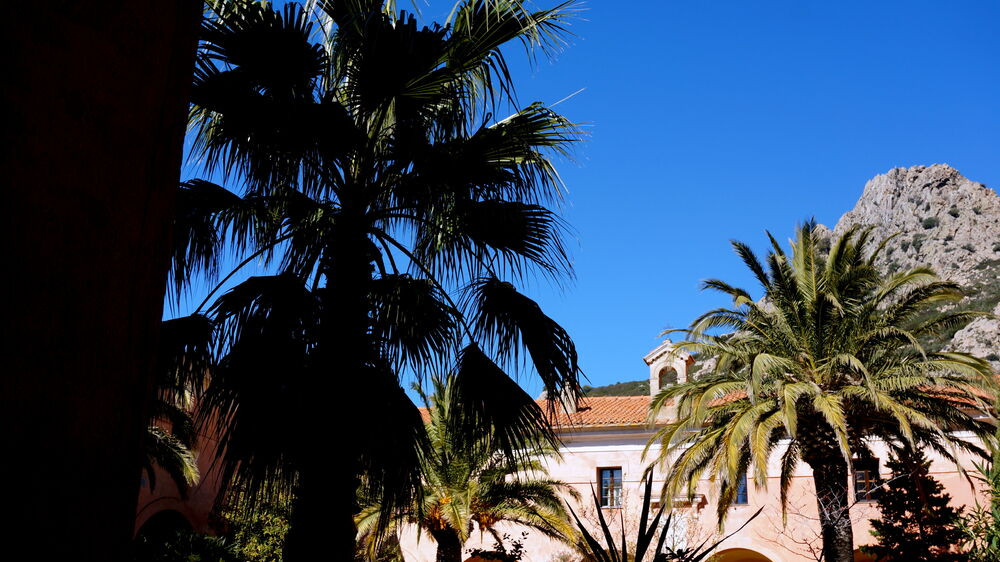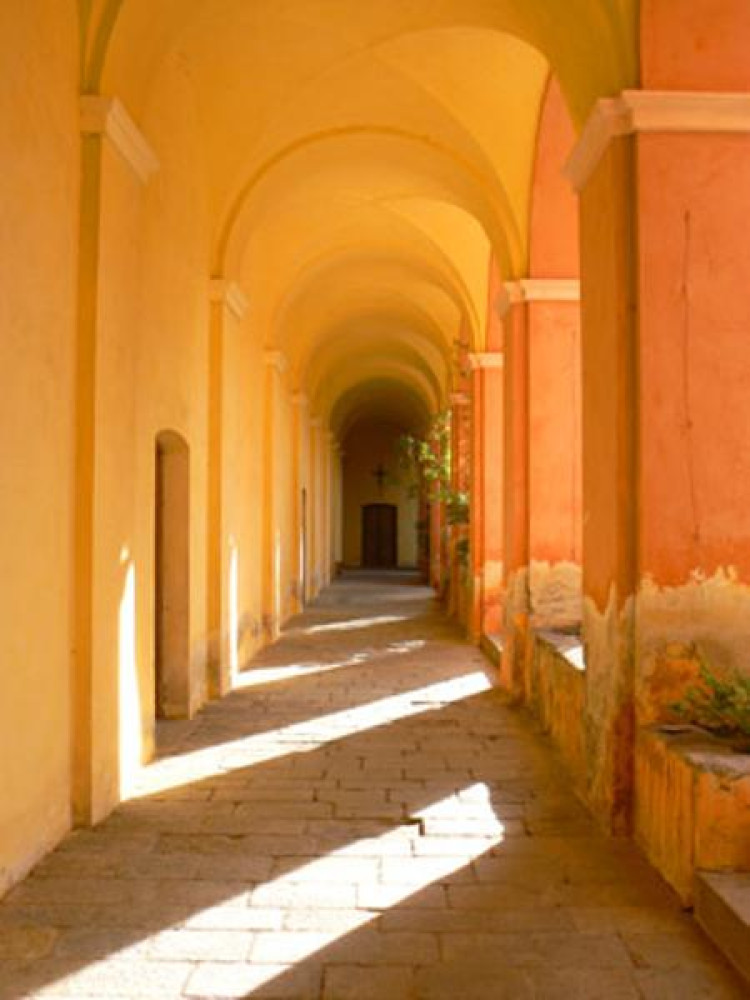
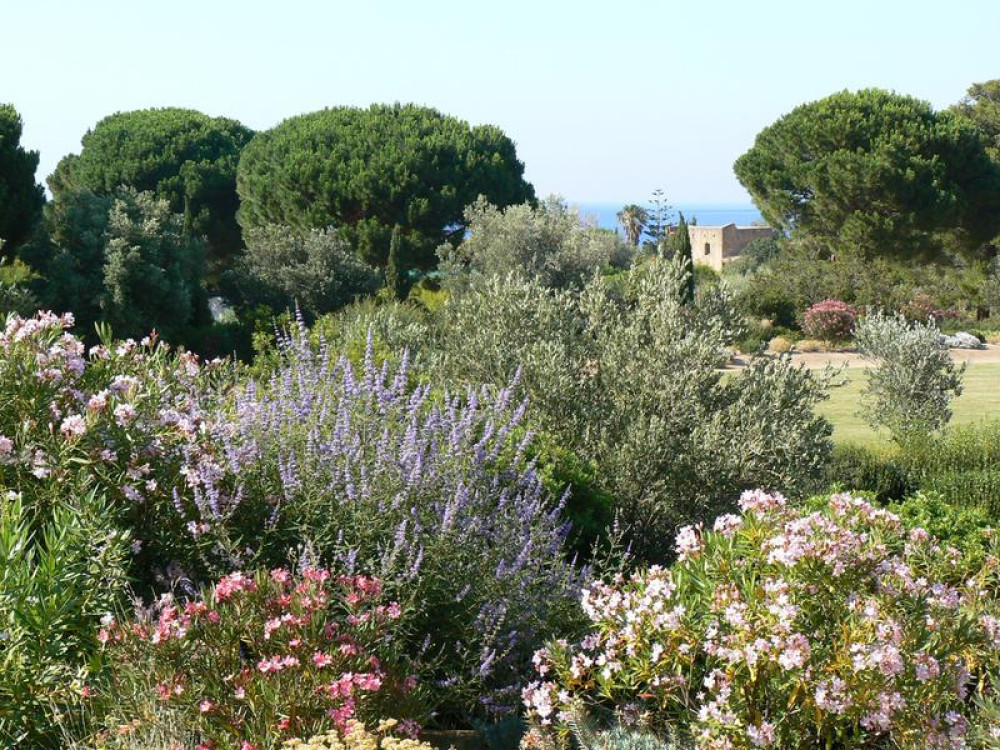
Discover Corsican and Mediterranean vegetation staged by a landscape gardener during a unique 7-hectare nature walk. A true moment of relaxation, discovery and sharing to be enjoyed with friends or family. Various activities and events.On the seafront, at the gateway to L'Ile-Rousse, discover an exceptional 7-hectare landscaped site.
Explore the "Art of gardening in the heart of the Corsican maquis" through its botanical circuit, a true immersion in the soul of the island. Here, Corsica can be discovered, breathed and admired through the plants of its maquis and the vestiges of an ancient agricultural activity.
Stroll among olive trees, cypresses and oleanders, and marvel at the sublime Mediterranean in an exceptional setting. Open to the public since spring 2005 and classified as a "Jardin Remarquable", the Parc de Saleccia is a haven of relaxation, discovery and inspiration. For lovers of Corsican and Mediterranean gardens, it's a unique example of a landscape revisited by man.
On site:
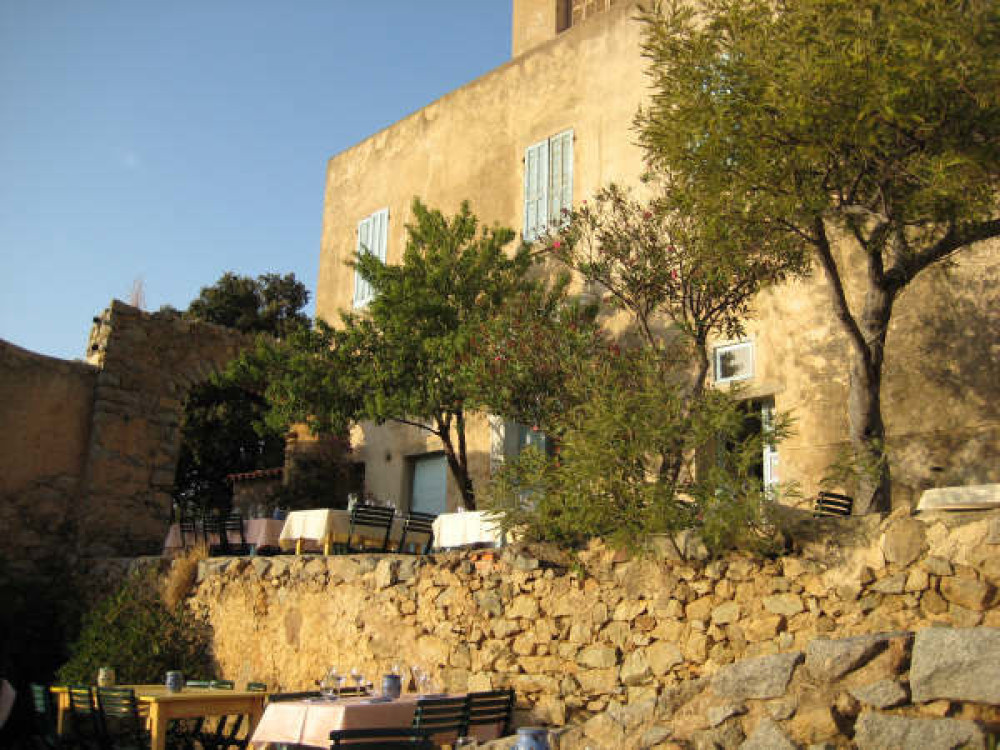
Garden restaurant - local, organic, home-made products
Children's area - large play area, huts, quizzes for visitors
Farm animals, aviaries, educational beehive
Activities & workshops - for young and old
Private events - weddings, christenings, seminars... in the heart of the park.
A unique venue for an unforgettable experience!
See the monthly program at the bottom of the page.



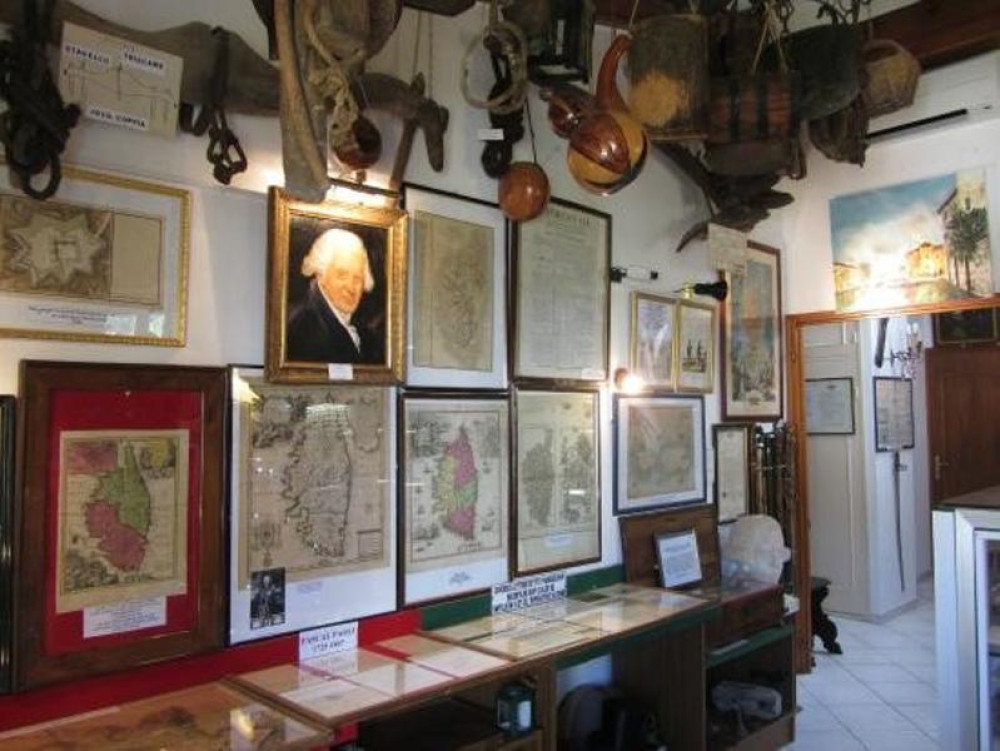
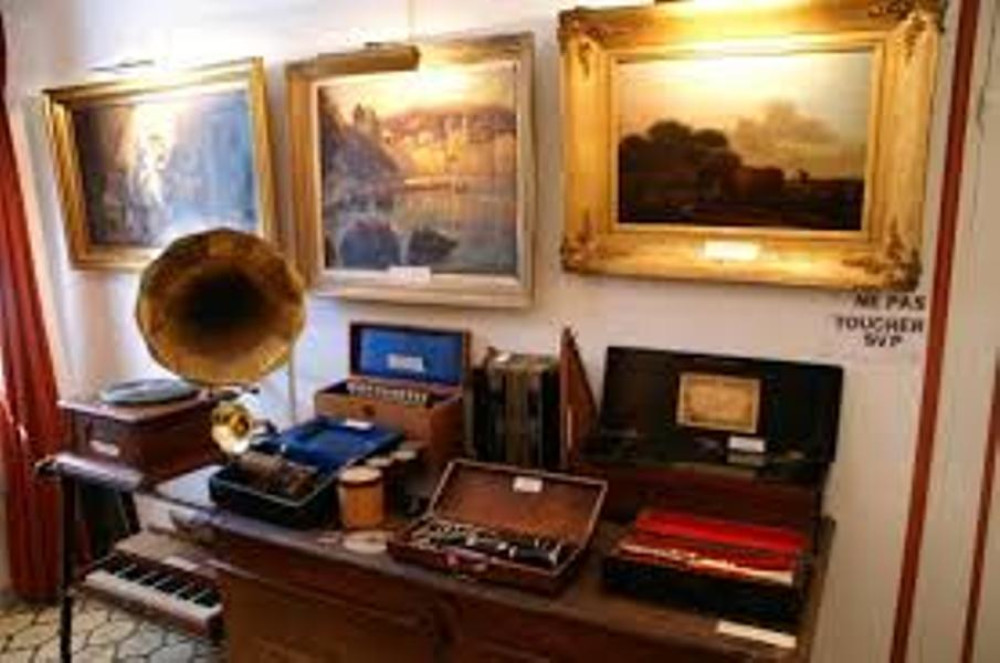
During your stay in L'Ile-Rousse and the Balagne region, meet Guy Savelli, a history buff who will tell you all about the history of the Balagne region and Corsica through a rich collection of ancient objects.In the 1990s, Mr Guy Savelli created this private museum dedicated to the history of Corsica. Perched on the heights of Corbara, it is housed in his private home.
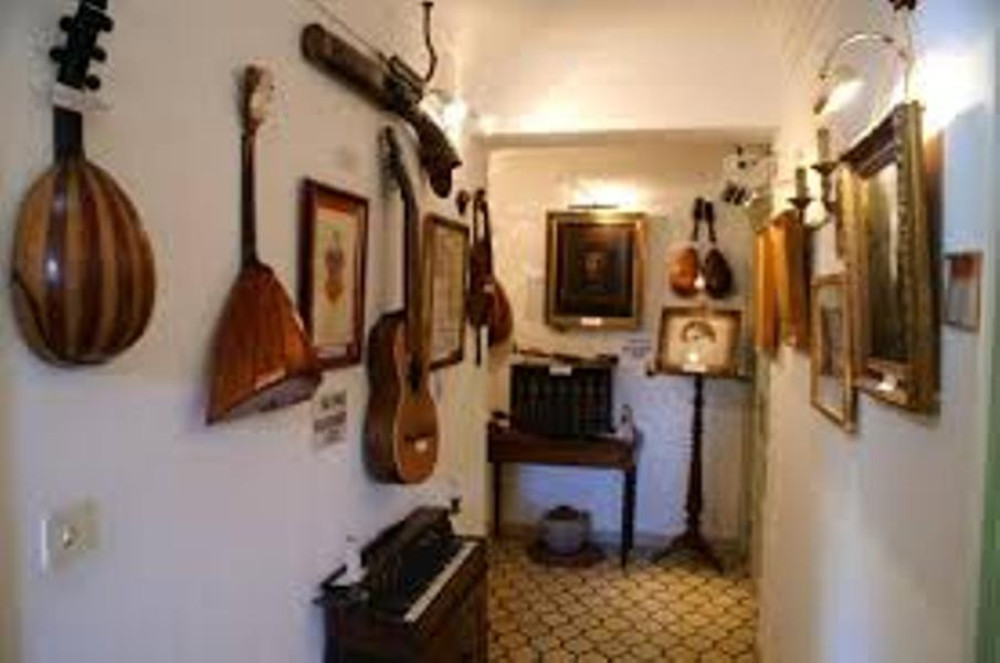
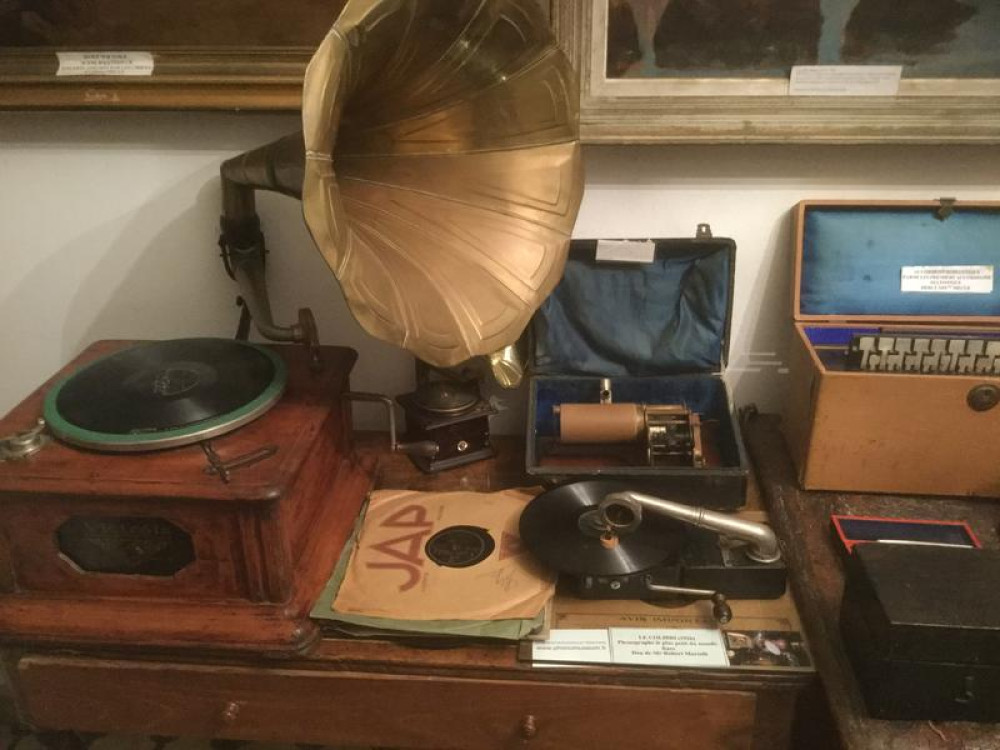
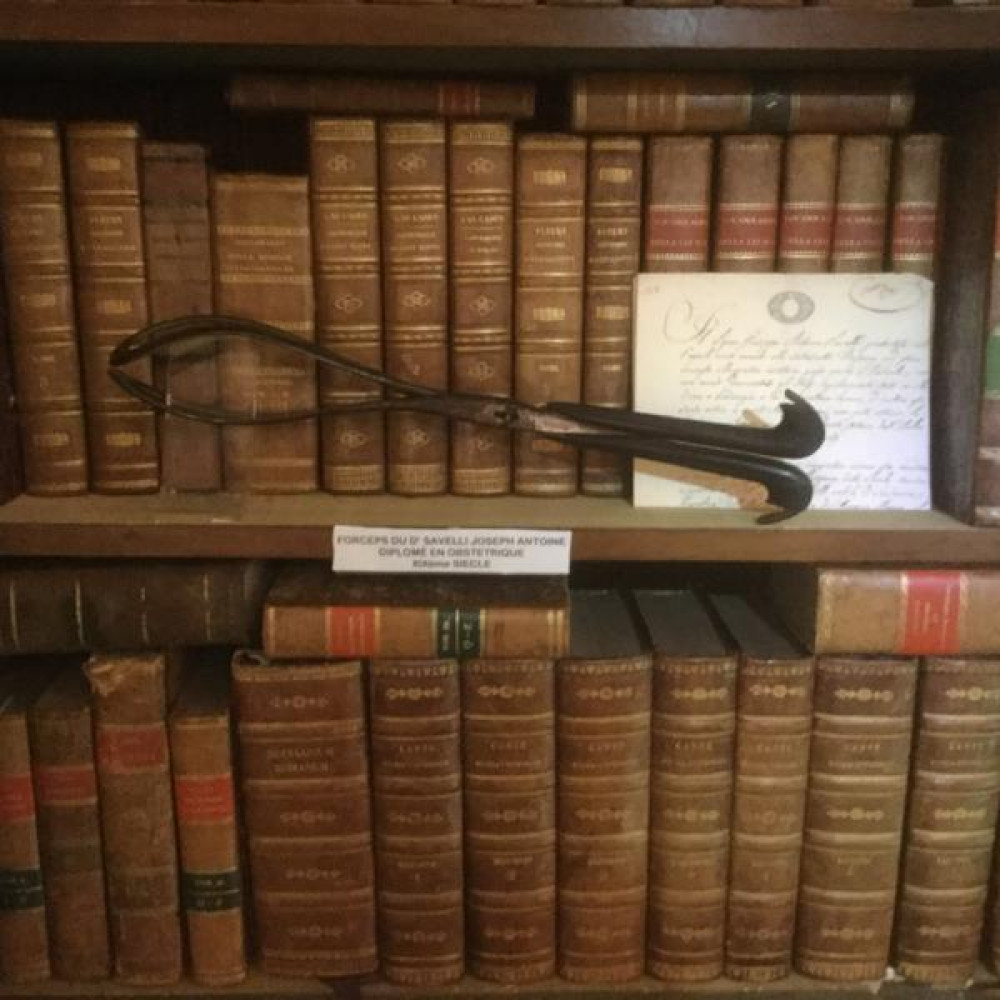
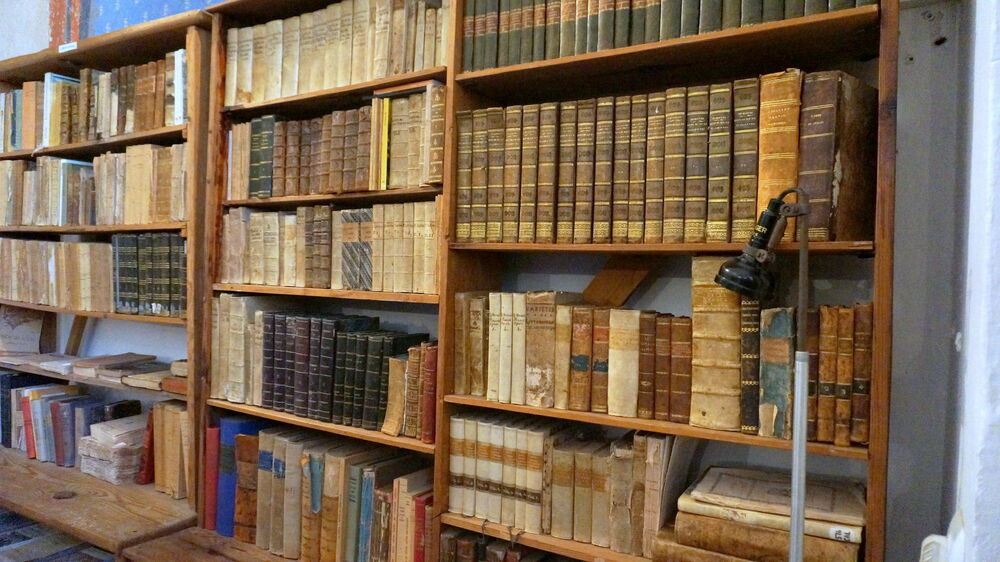
Here you can discover portraits, maps, period posters, handwritten letters, old musical instruments, numerous books on Corsican history, as well as 16th, 17th and 18th century paintings, pencil drawings and parchment manuscripts from the 12th to 17th centuries.
The museum also houses an extraordinary collection of styli, traditional Corsican knives, pistols, coins from the independent era and many other surprising objects.
Guy Savelli also collects everything relating to Pascal Paoli, u babbu di a patria. This private museum, ranked number 1 on TripAdvisor, is a must-see, guided by the owner.
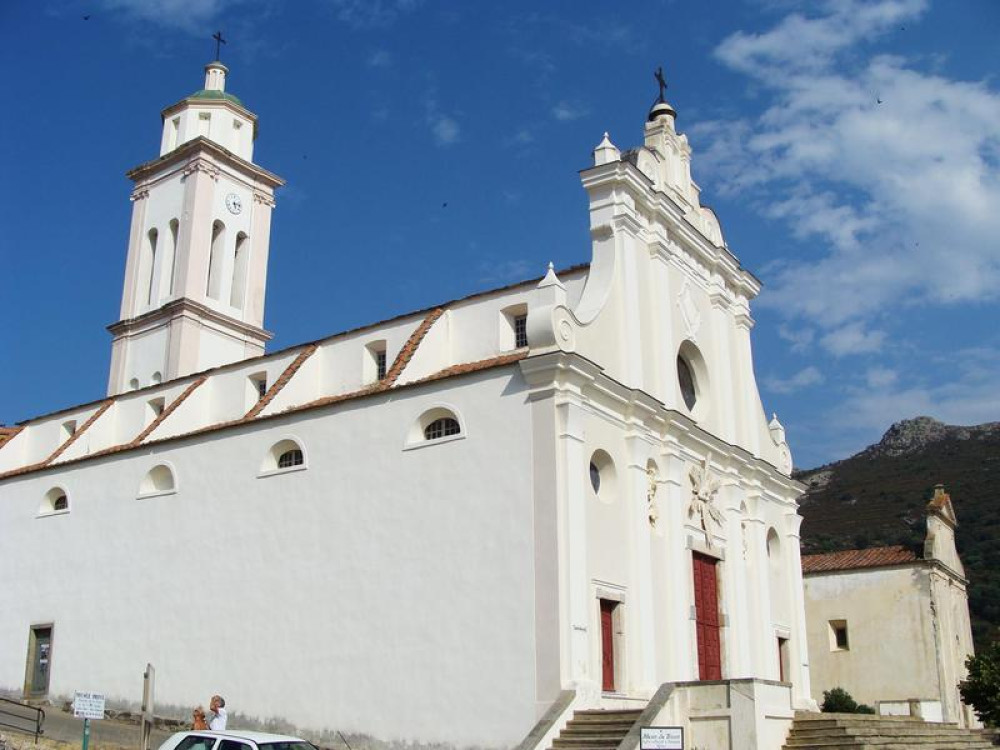
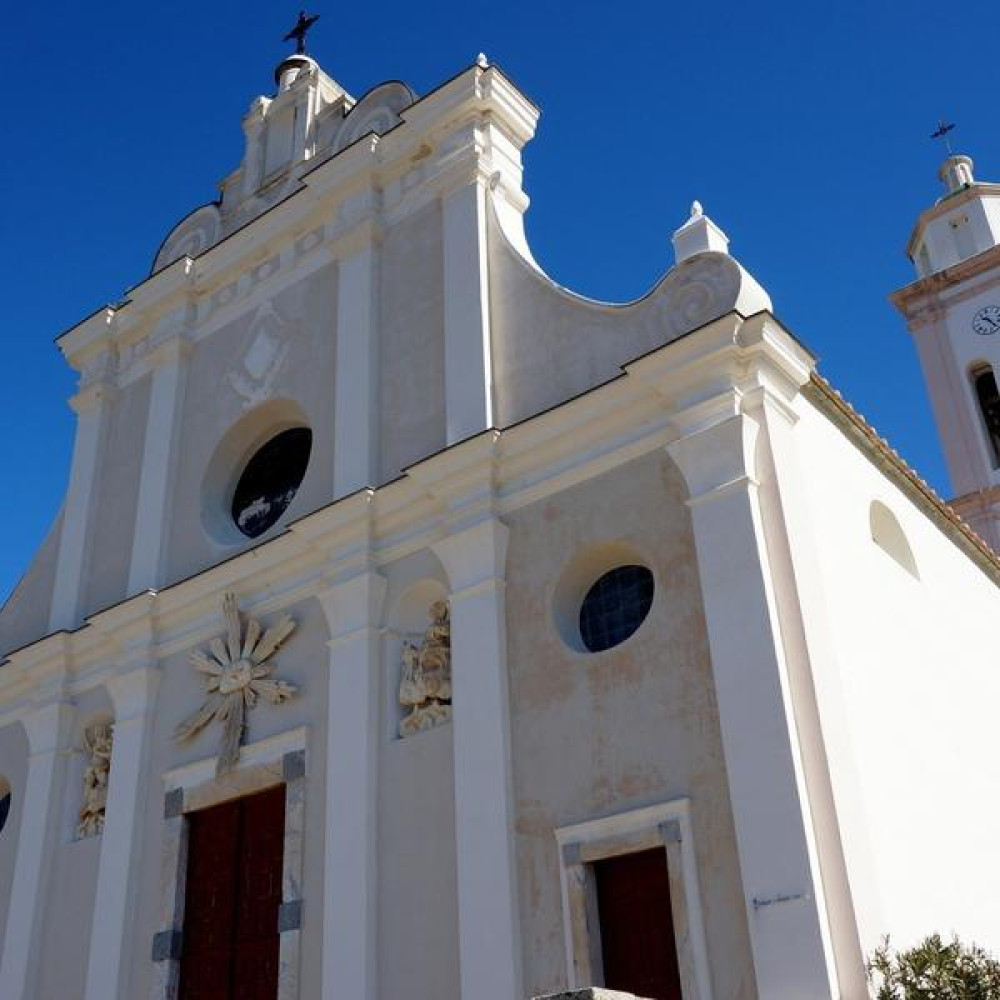
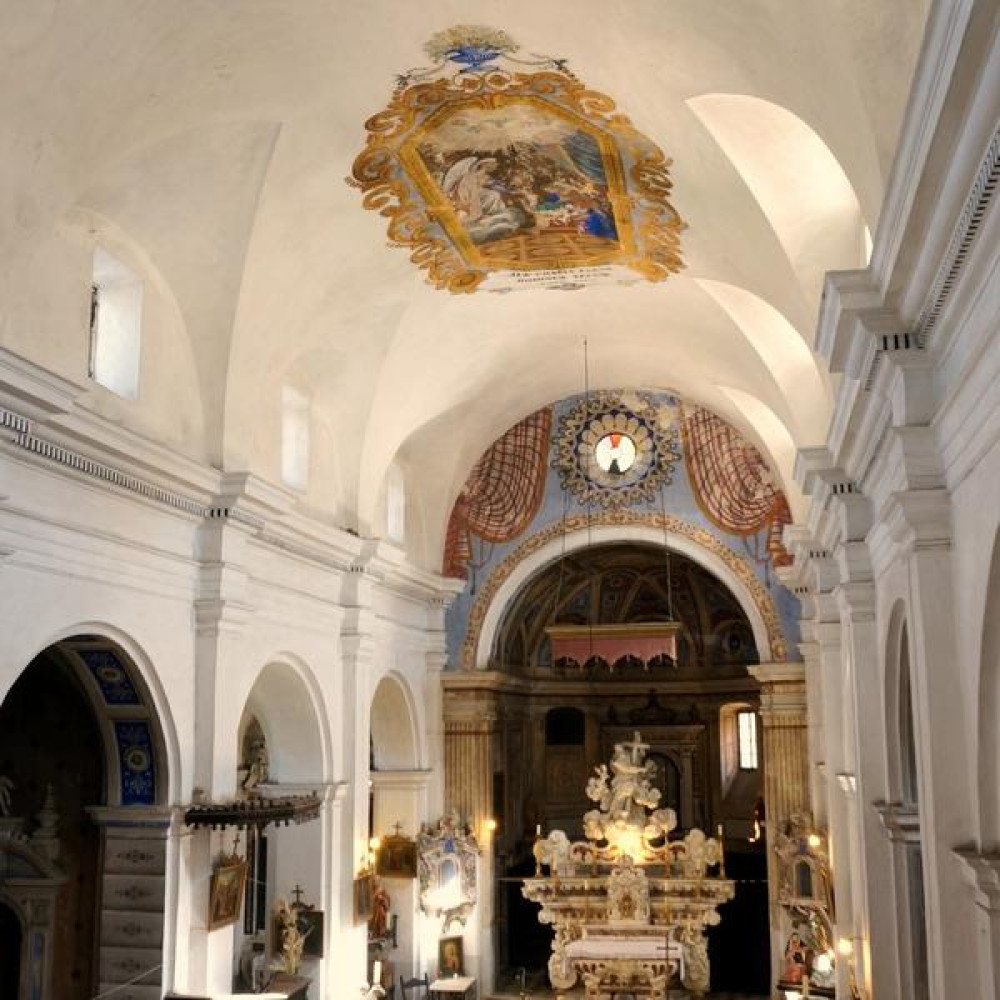
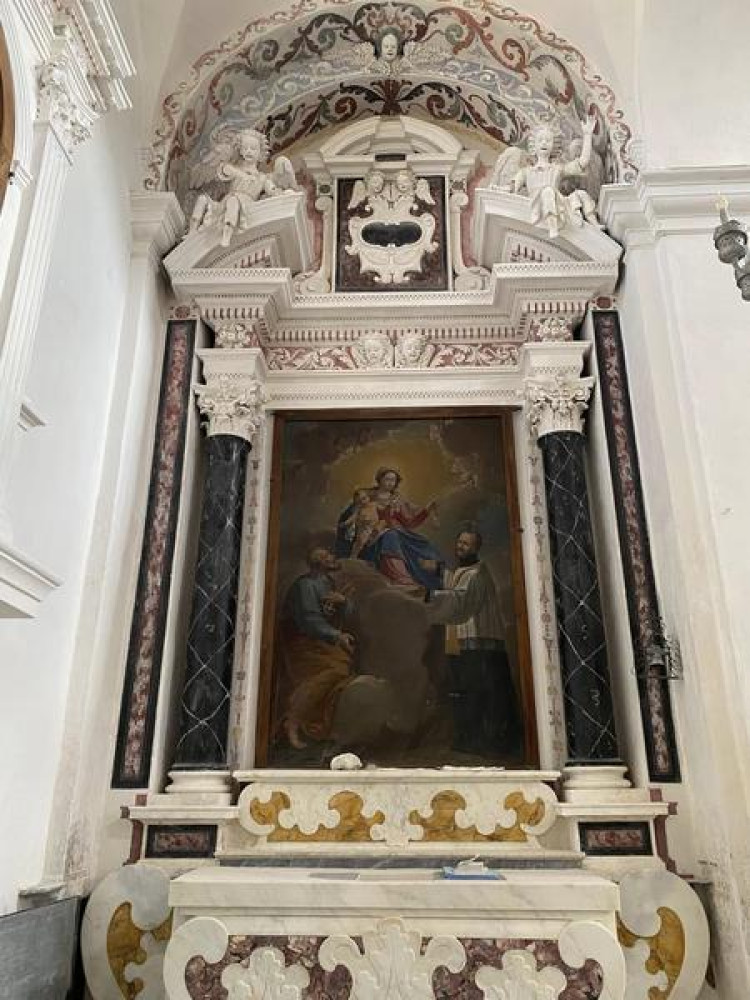
Discover the Baroque collegiate church, listed as a historic monument, with its Carrara marble high altar and side altars, paintings, historic organs and Musée du Trésor (Treasure Museum) housing a collection of liturgical ornaments!Discover the religious heritage of Corbara's Collegiata A Nunziata at the Treasure Museum.
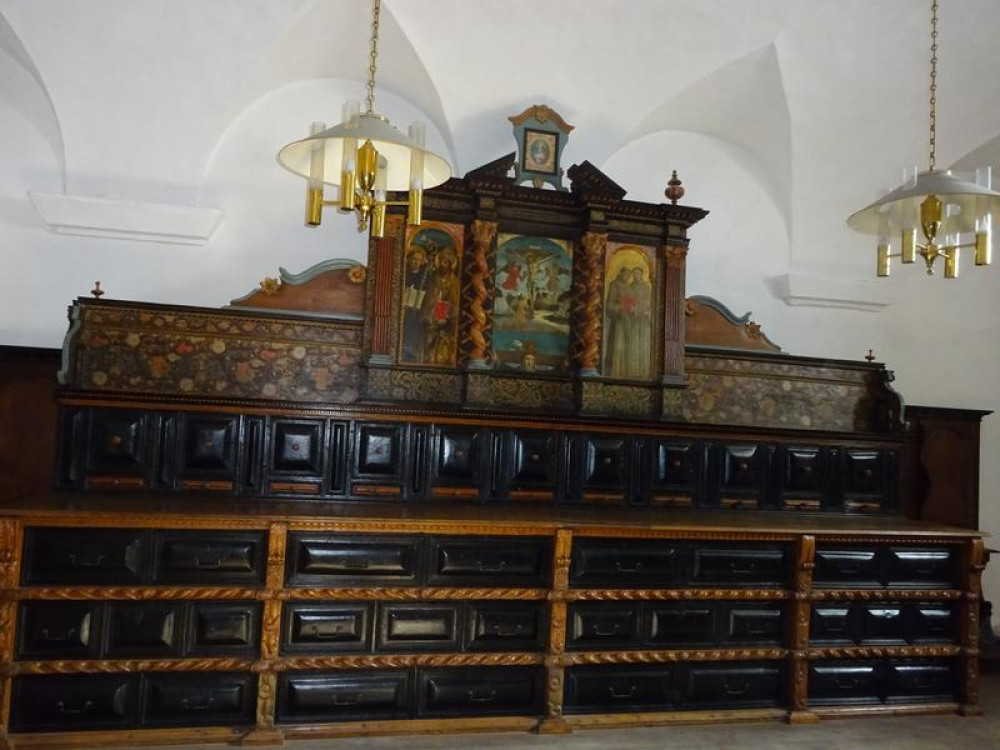
Here you'll discover numerous works of art housed in the two rooms of the former sacristy.
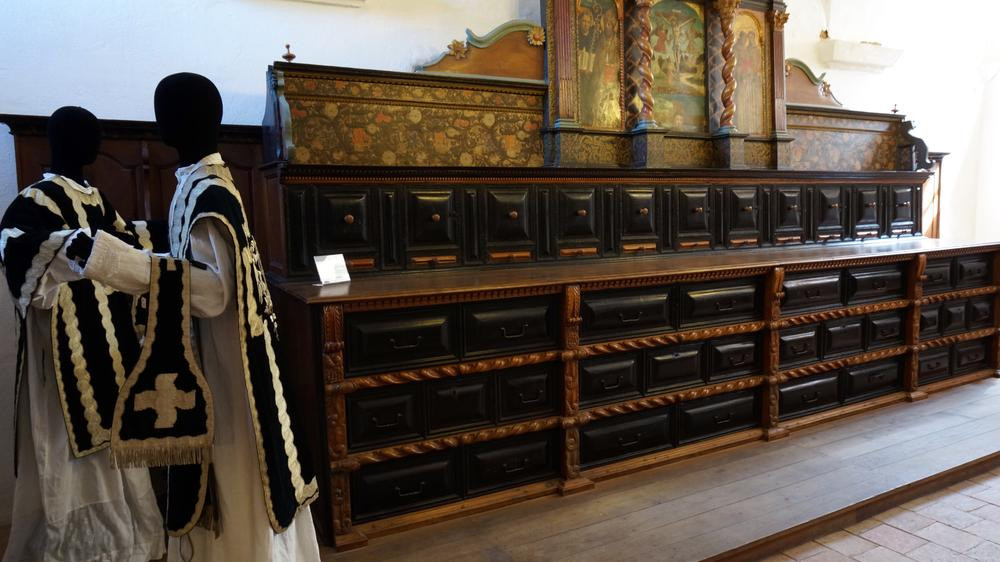
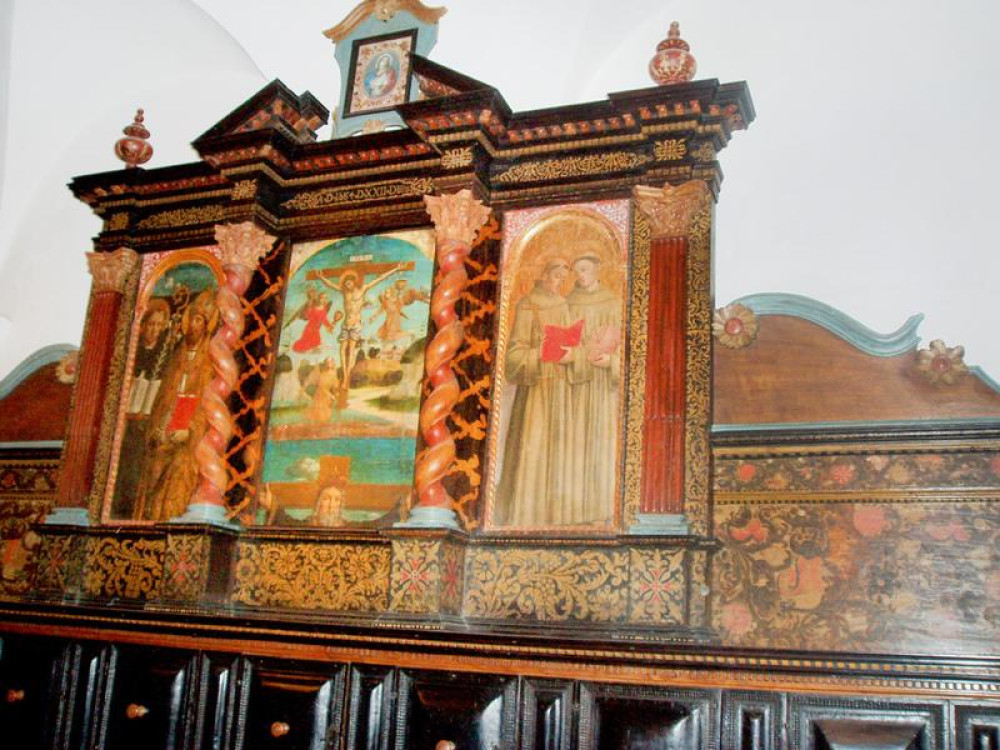
Admire two 17th-century pieces of furniture, a rich collection of priestly vestments dating from the 16th, 17th, 18th, 19th and 20th centuries, many of which have been restored, 17th- and 18th-century silverware, a bull from Pope Benedict XIV elevating the church to the rank of Collegiate Church on March 15, 1752, and 17th-century reliquaries.
An exceptional collection not to be missed, explained by a passionate guide.
Tours are guided, and the museum takes part in the Nuit des musées and the Journées du patrimoine.
Visit the magnificent church of San Tumasgiu (Saint Thomas) in the heart of Belgodère village.
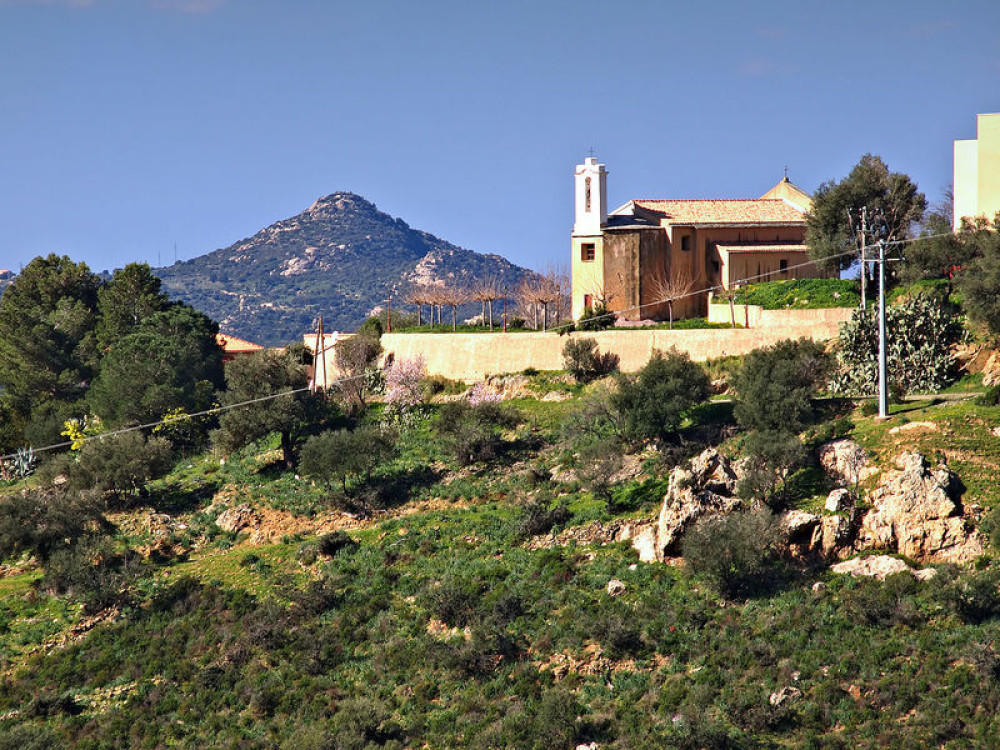
You'll find the chapel of San Ghjuvanni on the edge of the village of Belgodère, on the road to Occhiatana.Built in 1711 on the site of an old oratory, using stones from the destroyed church of San Marcello, this chapel is dedicated to St John the Apostle. It contains a baroque altarpiece in carved wood dating from 1604 and a polychrome statue of Our Lady of Seven Sorrows carved from an olive tree trunk dating from 1545, both of which are listed. On the third Sunday of September, the patronal feast day, a mass is celebrated here followed by a procession.
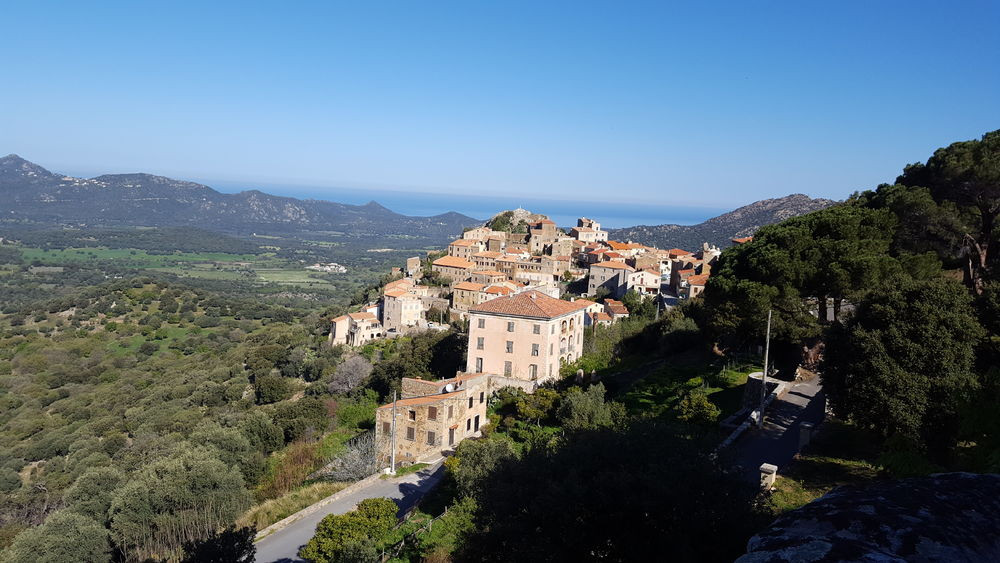
You'll find San Roccu chapel near Belgodère station, below the village. San Roccu day is celebrated every year in mid-August.
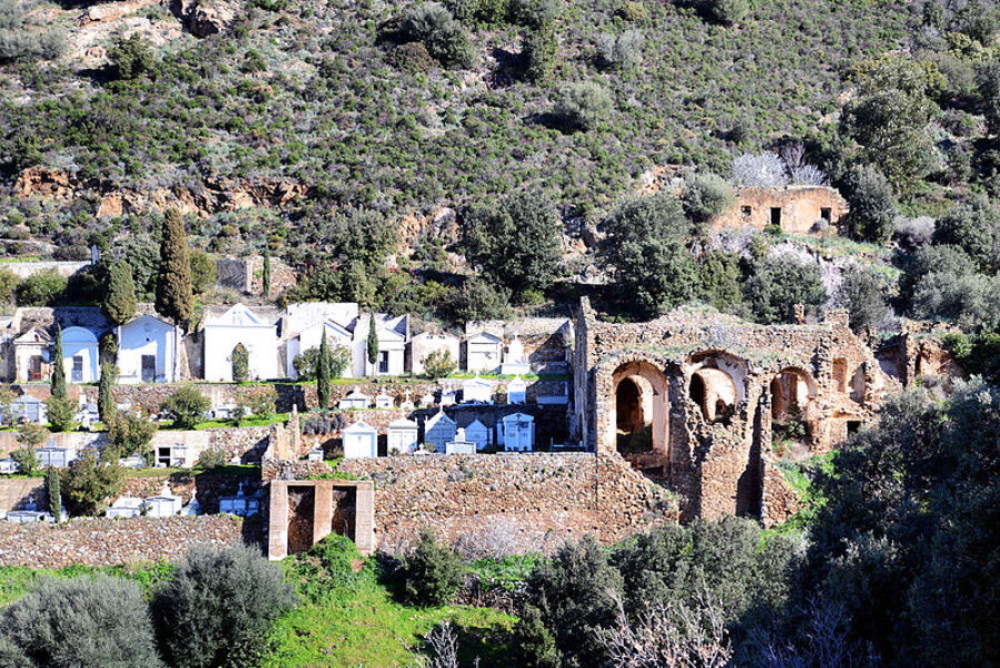
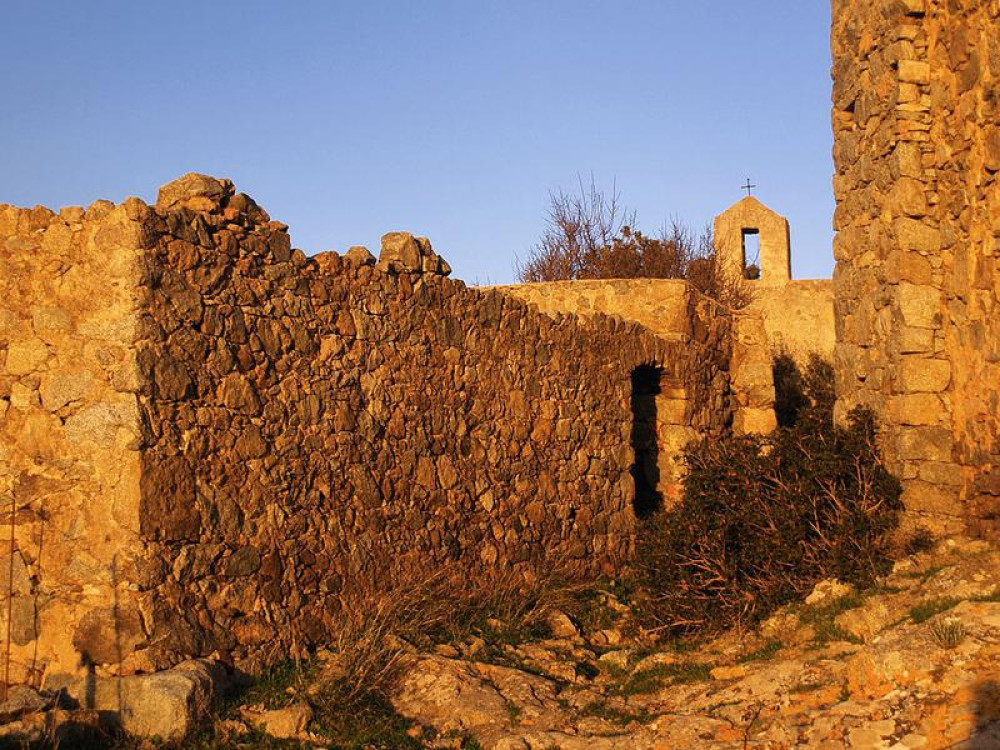
The convent of Nostra Signora delle Grazie in Belgodere was founded in the 16th century by the Capuchin monks. In 1590, the Servites settled there for good. Abandoned by the fathers, it fell into disrepair and is now in ruins.
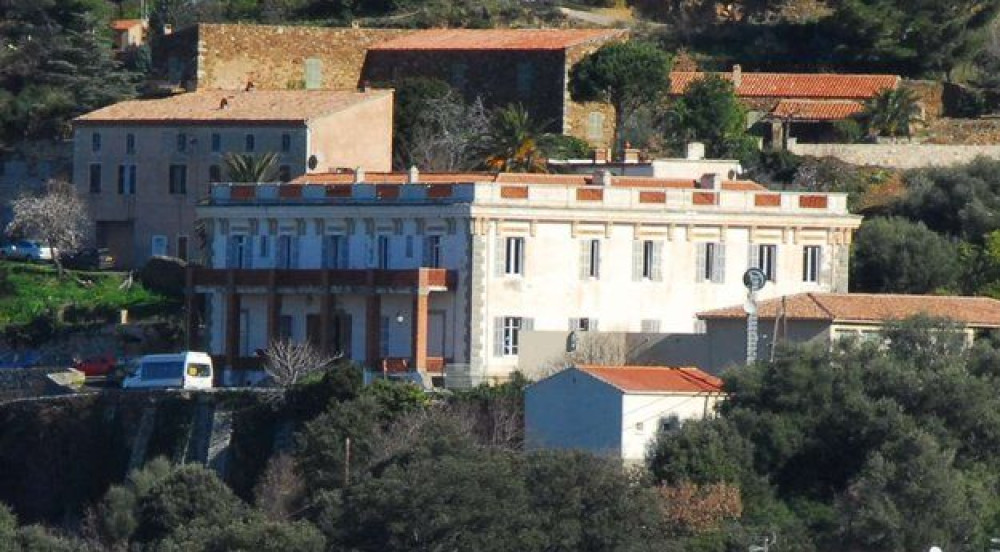
This vast 19th-century mansion stands on the side of A Costa hill. It was built in 1892 by Toussaint Malaspina, a local man and friend of Georges Clémenceau. The gardens of Malaspina castle, in the locality of Ajola, date from the late 19th century.From the height of its century of existence, Malaspina Castle still looks out over Belgodere. Its home, where it has always been useful over the years. Its construction was completed in 1892. This Victorian building, inspired by the Italian palaces, was first named Castle of La Costa and then Castle Malaspina.
The crypt adjacent to the building is still owned by the heirs of the Malaspina family and is due to be restored soon.
The public garden of the castle includes an orchard, an earthen terrace, a chapel in white Carrara marble, a caretaker's lodge and an agricultural building. It was the subject of a preliminary survey in 1996 and was included in the pre-inventory of remarkable gardens (Ministry of Culture, Directorate of Architecture and Heritage, and Ministry of Ecology and Sustainable Development). It has stood in the village since 1892.
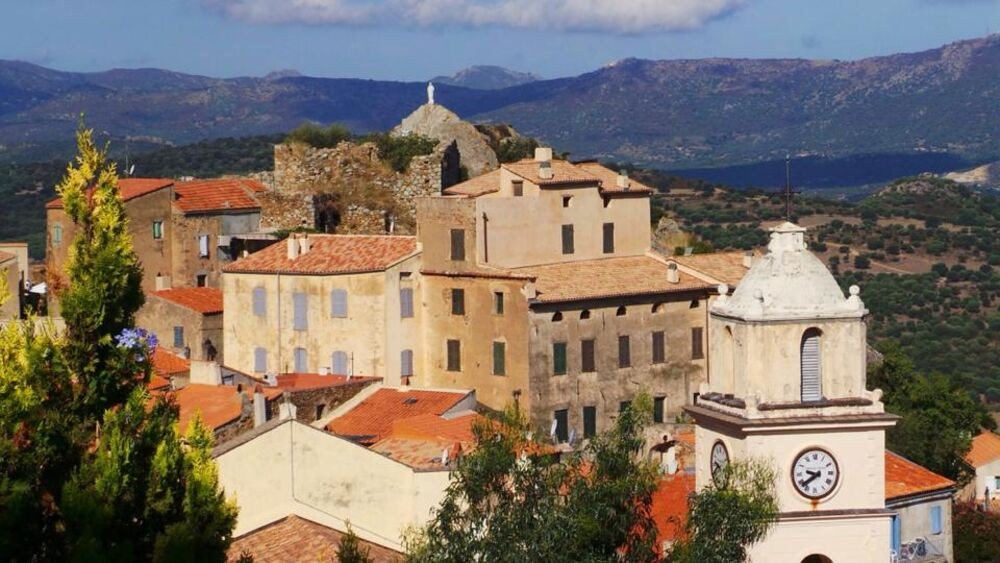
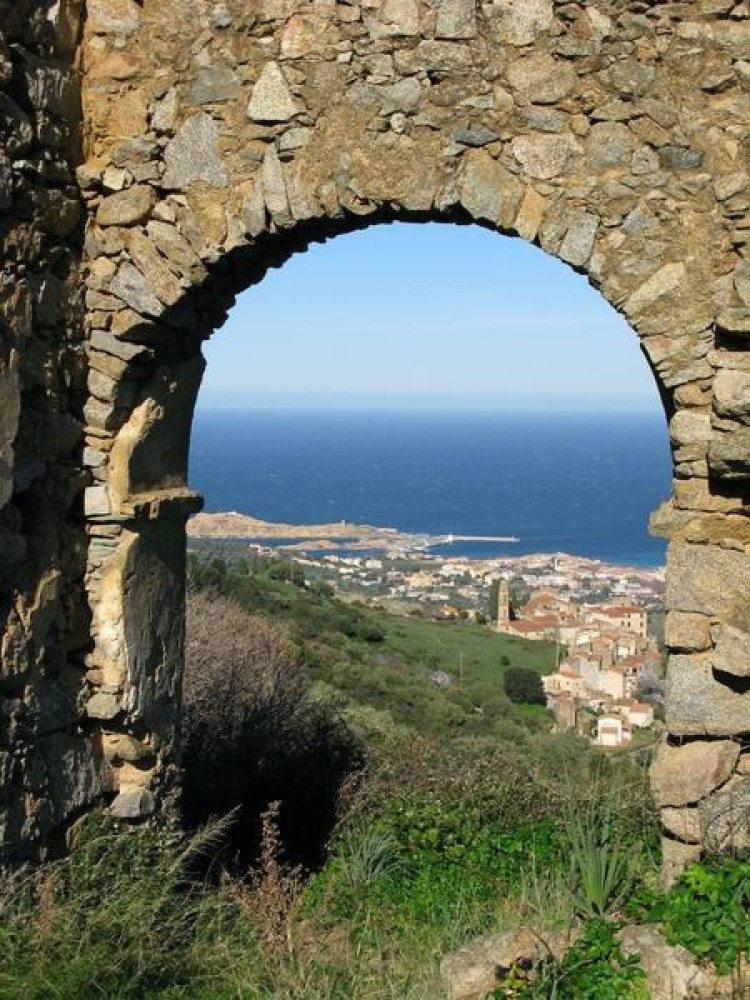
The village is overlooked by the vestiges of E Teghje, a medieval watchtower dating from the 16th century. A statue of the Sacred Heart of Jesus was erected there in the summer of 1991. The site offers remarkable views over the Réginu valley.
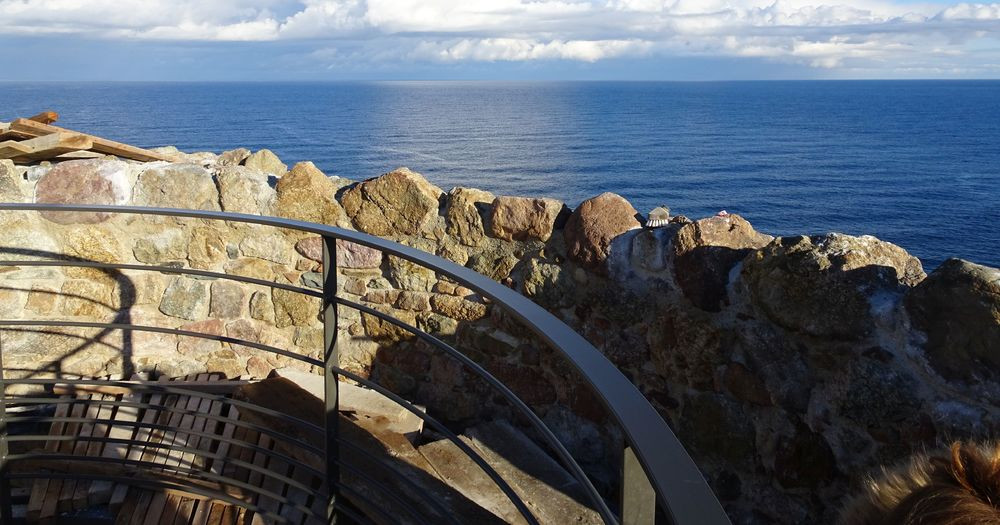
This Genoese tower dating from the late 16th century was built by Angelo Aijcardo on a headland 26 metres above sea level. It can be reached via a footpath near the Casa di Losari, and a flight of steps takes you to the top of the tower to enjoy a 360° panoramic view.
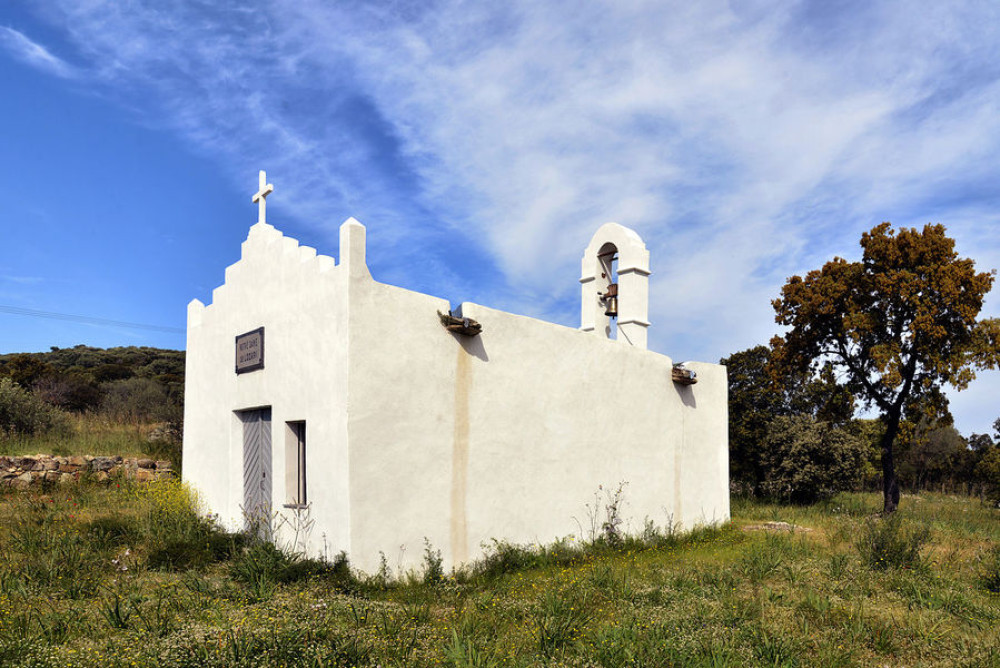
Longtime abandoned, it was renovated in 2015. An annual mass is celebrated here with many inhabitants who spent their childhood here. A number of shepherds from the Niolu area came to spend the winter in Losari with their families.
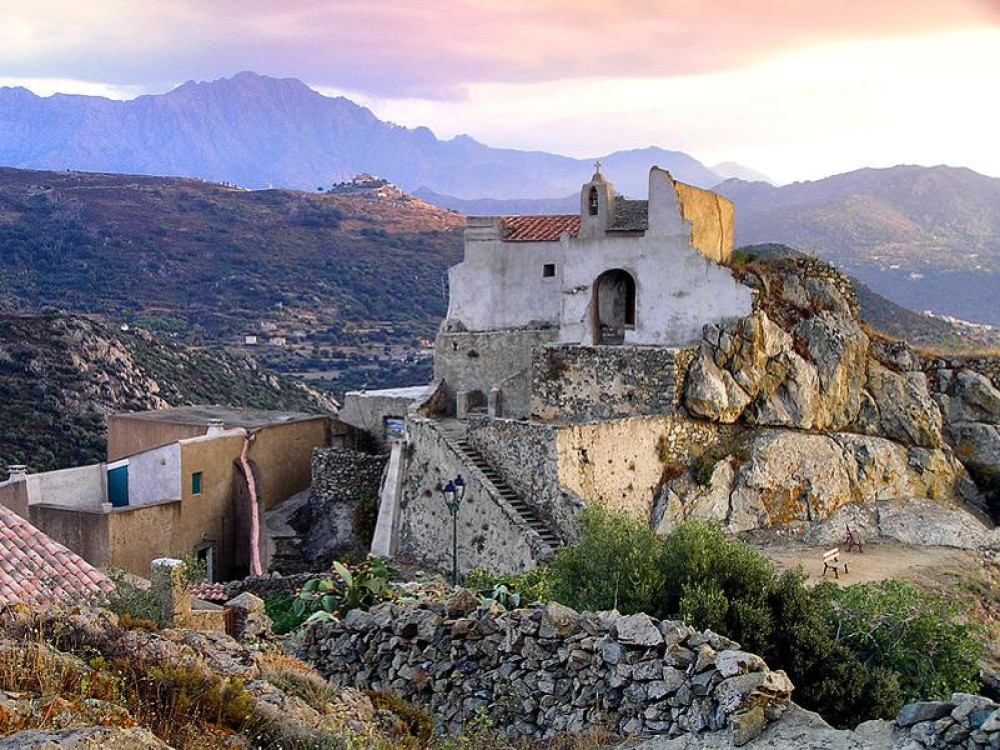
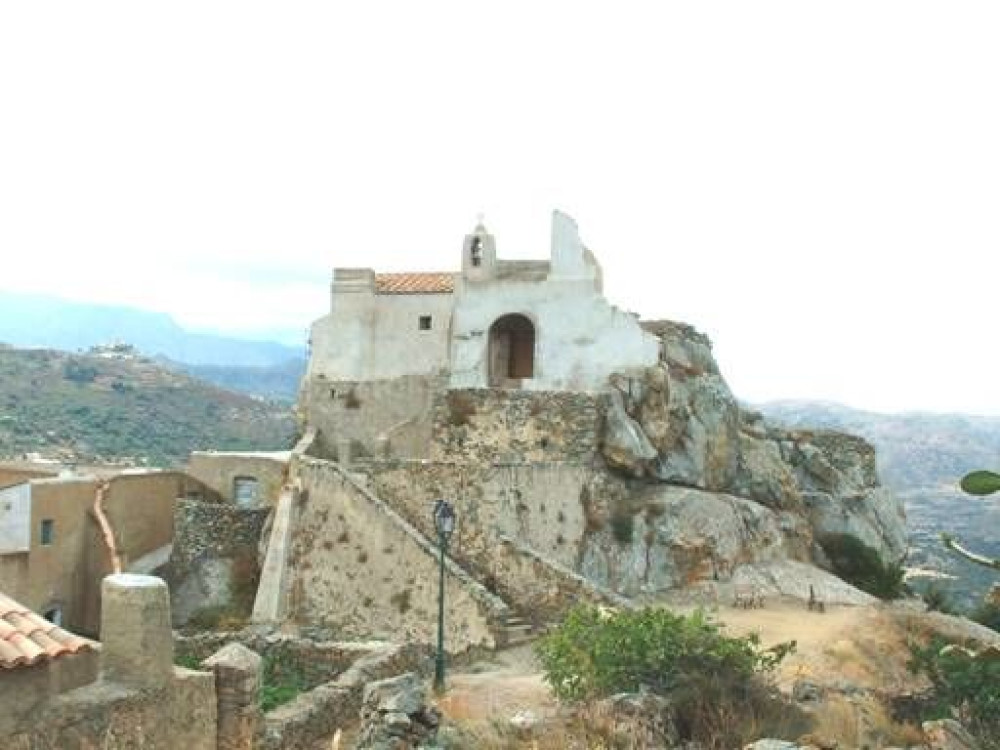
Completed in 1375, the chapel occupied the arms room of the old castle of Corbara. It offers a breathtaking panoramic view, making it a must-do if you're visiting Corbara.Completed in 1375 by Guido de Sabellis' descendant, Manonne, the "castel" (today's chapel) is located in the locality of U Forte, which marks the birth of a major urbanization around the village of Corbara, with the creation of hamlets and neighborhoods that would come to an end in the 18th century.
Partly destroyed by the Genoese, the building was named "Notre Dame des Sept Douleurs" (Our Lady of Seven Sorrows). In 1700, the Madonna chapel was established in the arms room of the old Corbara castel.
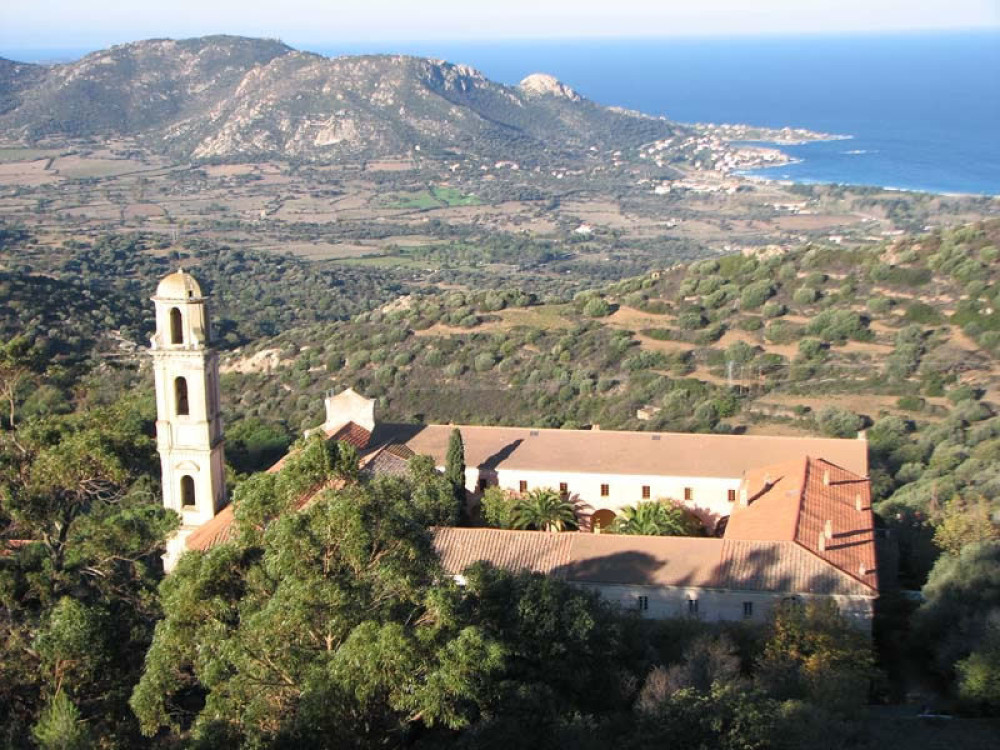
Saint-Dominique convent was founded in 1456 by two Franciscan priests of the Observantine Order. After being destroyed during the Revolution, the Dominicans rebuilt it as a place of study. It is now occupied by the community of Saint John.The convent of Saint-François d'Aregno was founded by the Friars Minor of the Observance in 1456, representing one of the oldest convents in the Franciscan province of Corsica.
During the French Revolution, the monastery's property became "national property".
From 1857 to 1864, the Dominicans set about rebuilding the convent. The Dominicans restored it as a school for local children. Later, a philosophy and theology college was added for religious students from the PARIS province. After the separation of church and state, the Dominicans were expelled and the building became the property of the commune of Corbara. Left abandoned, German and Austrian prisoners were placed inside.
Then, in 1927, the convent returned to Dominican hands for 66 years.
In 1993, the friars of Saint-Jean took over the convent following the departure of the elders. Pasquale de Paoli took advantage of his many visits to gather his friends and advisors from the Balagne region. Illustrious figures such as De Didon, Peyrefitte, Roncalli and Maupassant have stayed here. It is thus a veritable emblem for the commune of Corbara.
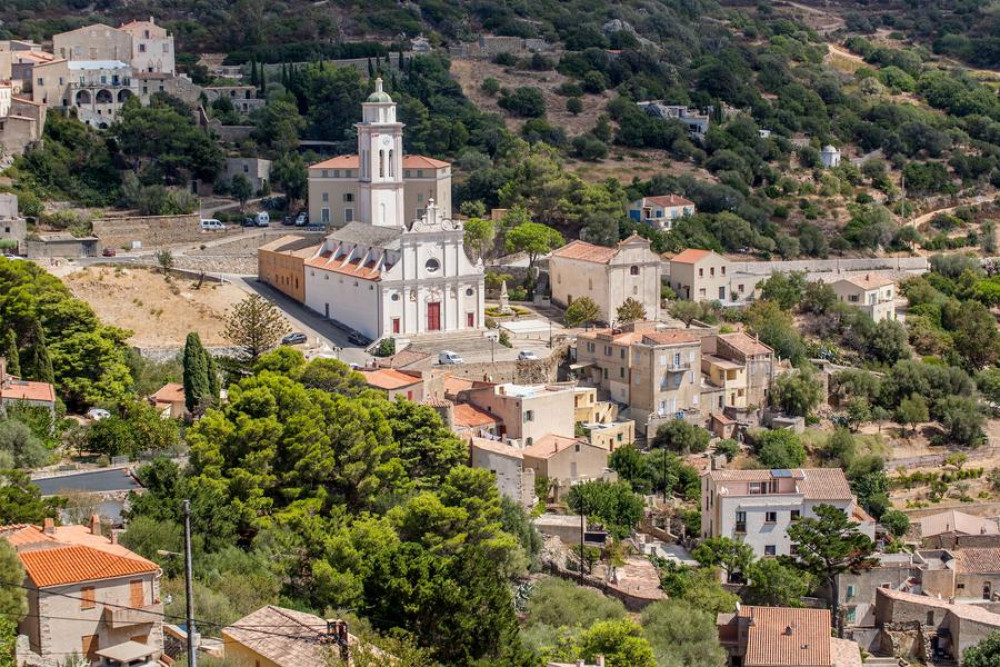
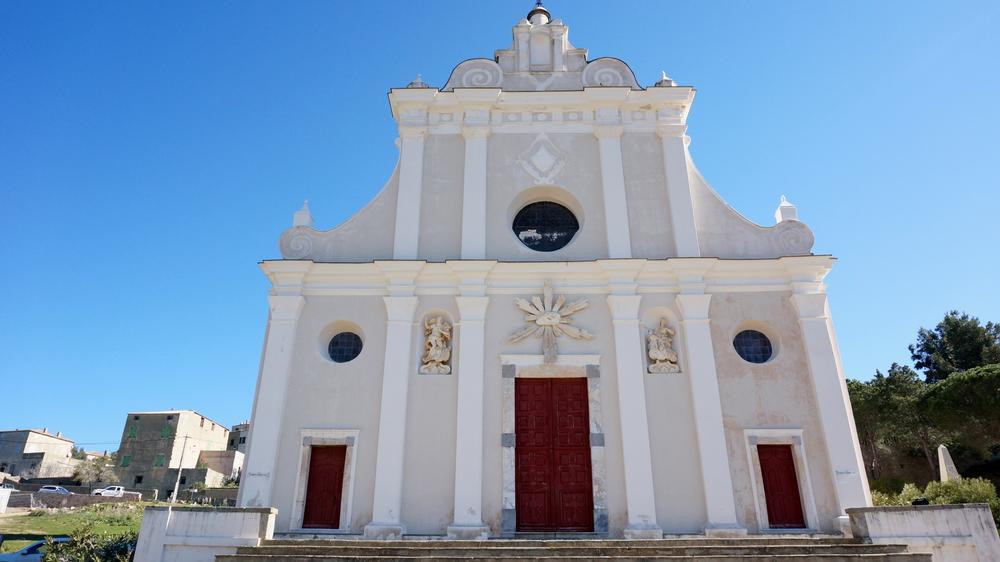
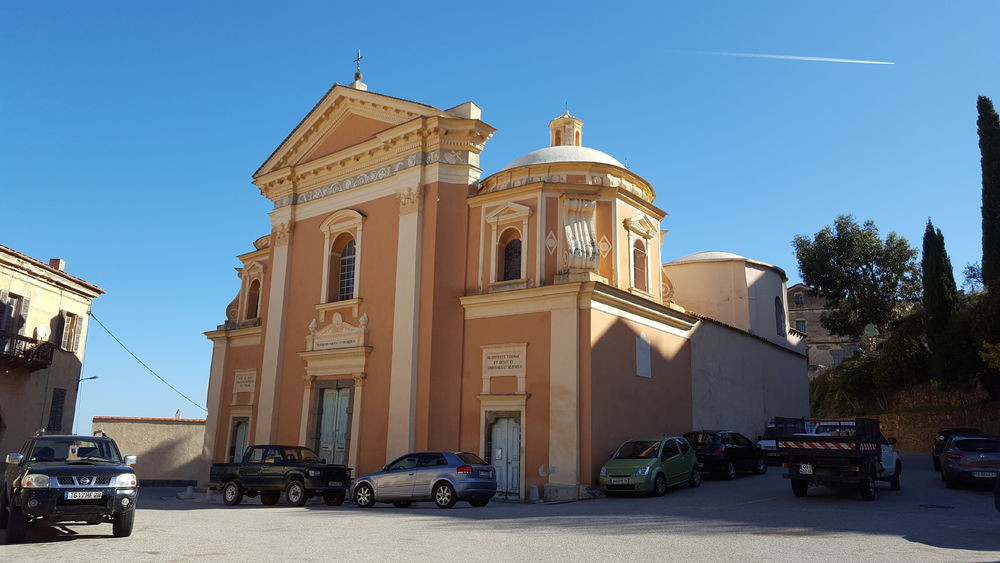
This 17th-century Baroque edifice was built to replace the former Piazza Save church, which had become too small. An annex of Aléria Cathedral, it was elevated to the rank of Collegiate Church by Pope Benedict XIV.In 1641, work began on the construction of a new church to replace the former parish church in the Villa di Mezzo district of Piazza Savé, which had become too small to accommodate the congregation. In 1686, the structural and finishing work was completed. At this date, the church had a nave with a main nave and four side chapels dedicated to Our Lady of the Rosary, St. James the Apostle, Our Lady of Good Help and Our Lady of Mount Carmel, as well as three other unconsecrated altars, while the choir had a high altar. The building also features a wooden pulpit and a stoup in the middle section of the church.
A second major renovation campaign took place in the mid-18th century, focusing on the choir, with the erection of a new high altar and the installation of stalls. The work was completed in 1752. On this date, the church was elevated to the rank of collegiate church by Pope Benedict XIV, as attested by the papal bull preserved by the commune. Over the course of its history, the church counted from 2 to 8 canons, as Canon Casanova points out in his book on the history of the Corsican Church under the Ancien Régime.
In the course of the 19th century, further work was carried out on the building, as highlighted by parish priest Marchini in a letter sent to the grand vicars capitular on September 13, 1905. He listed the main works carried out during the aforementioned century: repair of the choir in 1815, reconstruction of the frontispiece in 1855, tiling of the nave in 1866, the bell tower in 1899, and the nave roof structure in 1901. In the final years of the 19th century, the painter Sicuri adorned the church with monumental paintings.
During the 3rd quarter of the 20th century, a new restoration project was completed in 1974, focusing on the exterior plasterwork.
From 1992 to 1993, renovation work was carried out on the facade of the building, which was listed in its entirety on the supplementary inventory of Historic Monuments on September 6, 1985. Further work was carried out at the beginning of the 21st century.
In 2002, under the direction of Jacques Moulin, architecte D.P.L.G, architecte en chef des Monuments Historiques, a collection of liturgical ornaments, two pieces of sacristy furniture and a processional canopy donated by Emperor Napoleon III were installed in the sacristy.... In 2006, the church tower and north elevation were restored, and in 2009, the main facade and south side elevation.
On March 18, 2013, the church was listed as a historic monument.
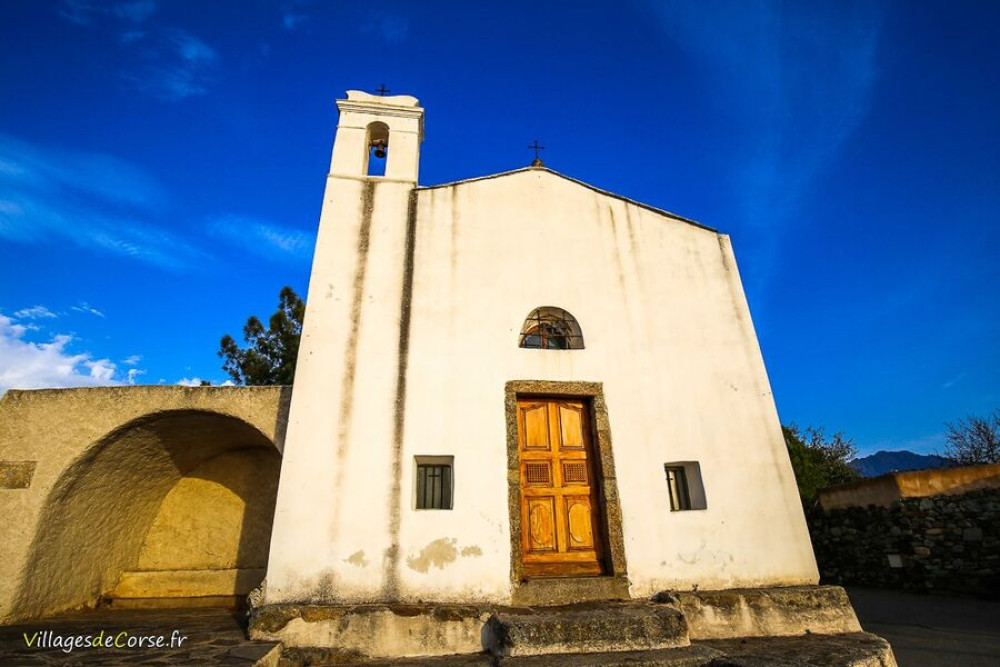
Located on the edge of the village, it was built during the 6th and 7th century. Mass is celebrated here every year on 29 June. With its breathtaking view, this marvel provides the local people with an ideal place to meditate.
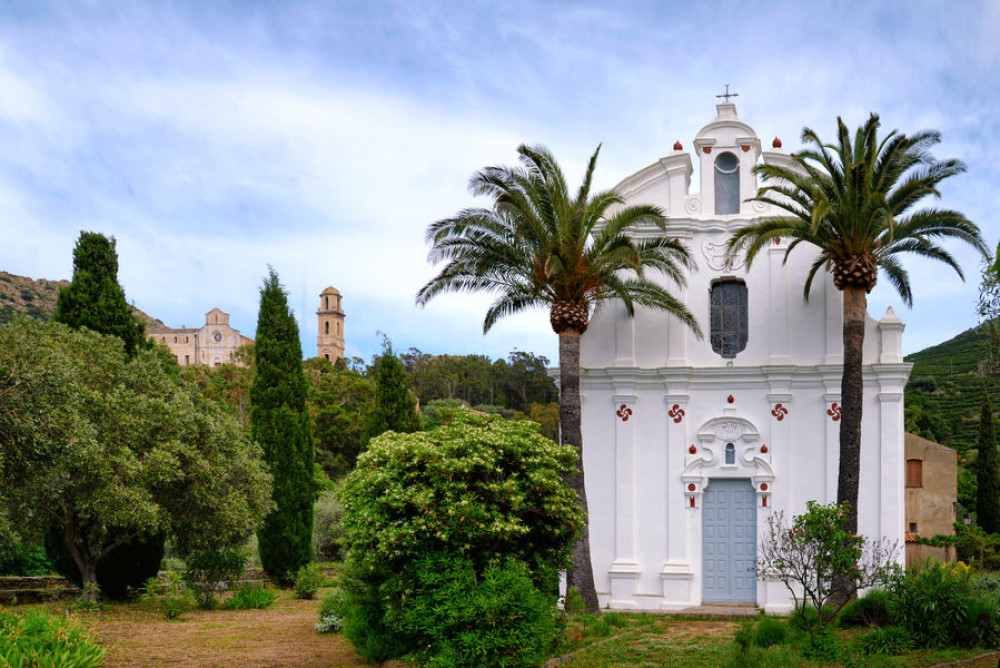
Notre Dame du Lazio in Corbara is an ancient sanctuary of Balagne. It dates from the Middle Ages and was rebuilt towards the end of the 18th century.
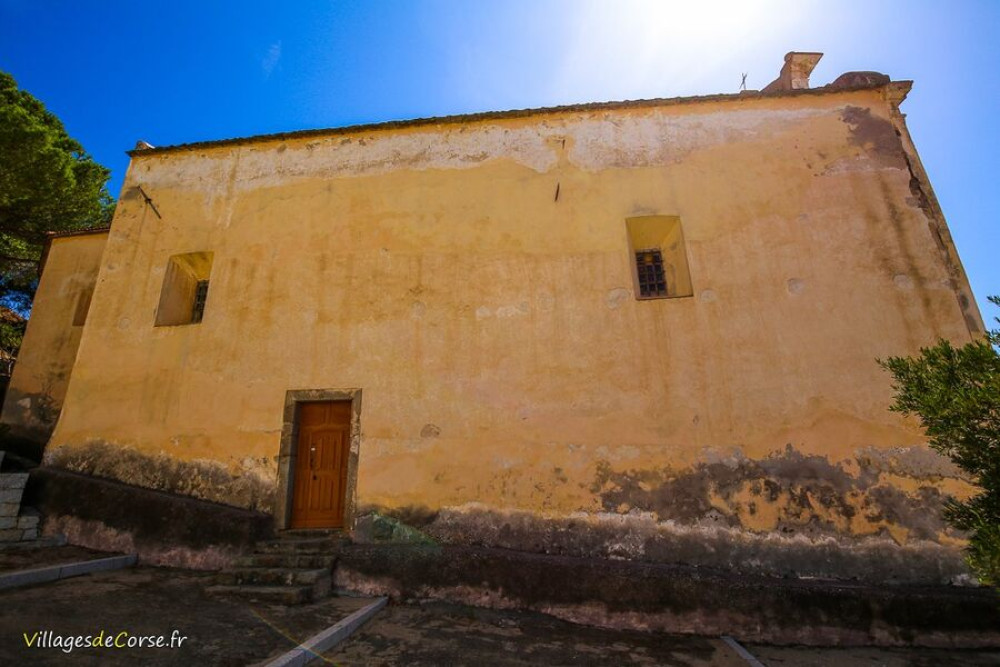
This building located next to the Collegiate church dates from the early 17th century. It is the seat of the Friary and the venue of various religious celebrations, includiing Saint Antoine (17 January) and Holy Week. The nave is decorated with paintings by artist Pietro Sicuri.
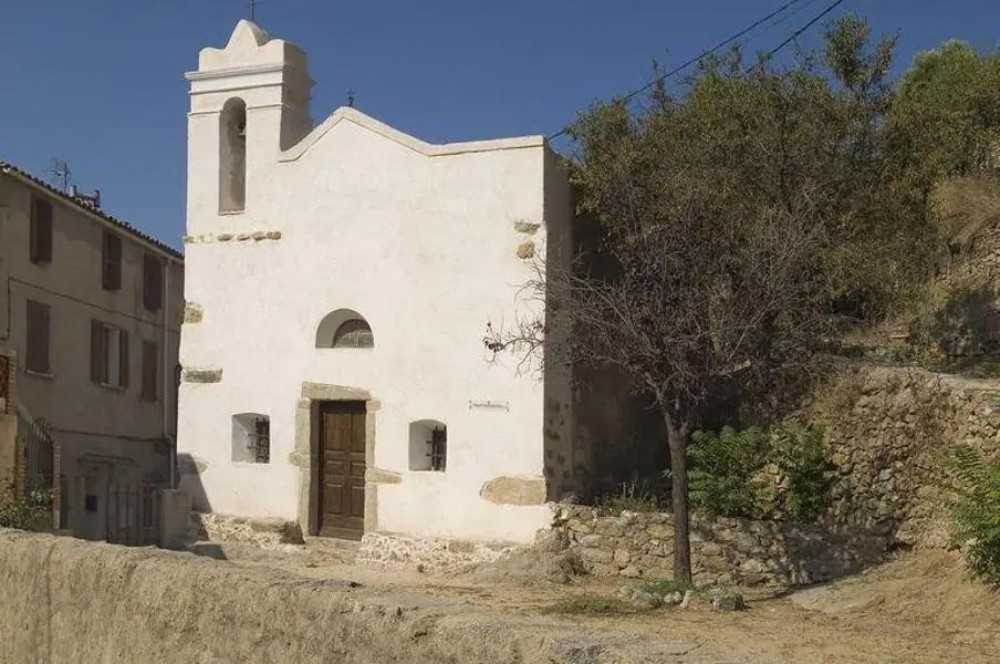
Located on one of the main squares of the village, Piazza di a Chjesa Vecchja, the chapel was rebuilt in the mid-17th century on the site of the old Medieval church which had been the parish church until the early 17th century when it became too small to accommodate all the followers.Refurbished in the 18th, 19th and early 21st centuries.
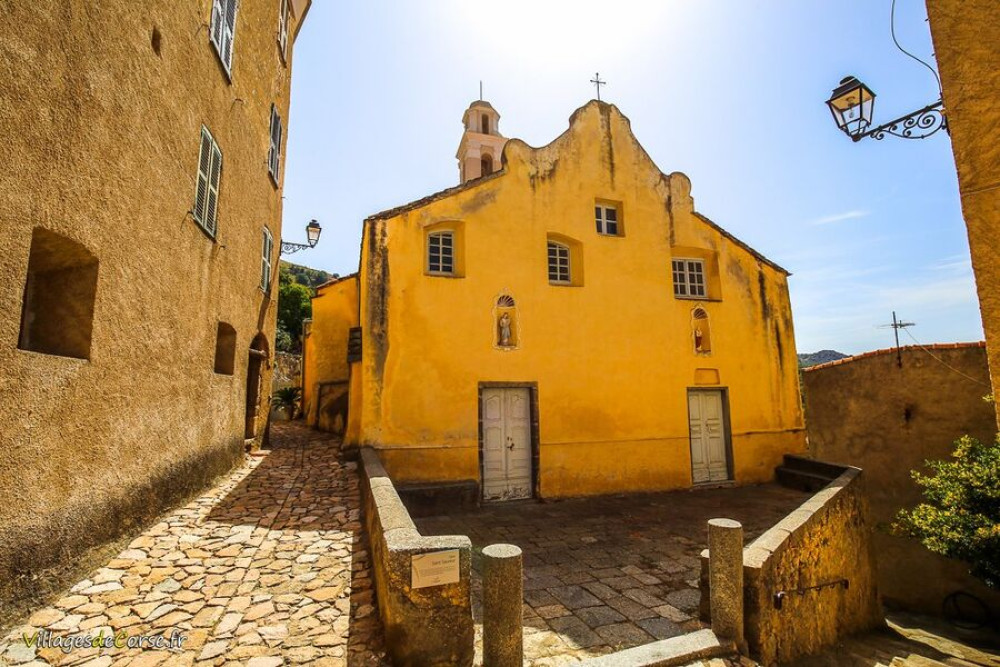
Located in Costa village centre, the parish church of the Holy Saviour is home to many remarkable statues and works of art that are listed Historical Monuments, including the organ, paintings, sacristy furniture and one of the stalls.
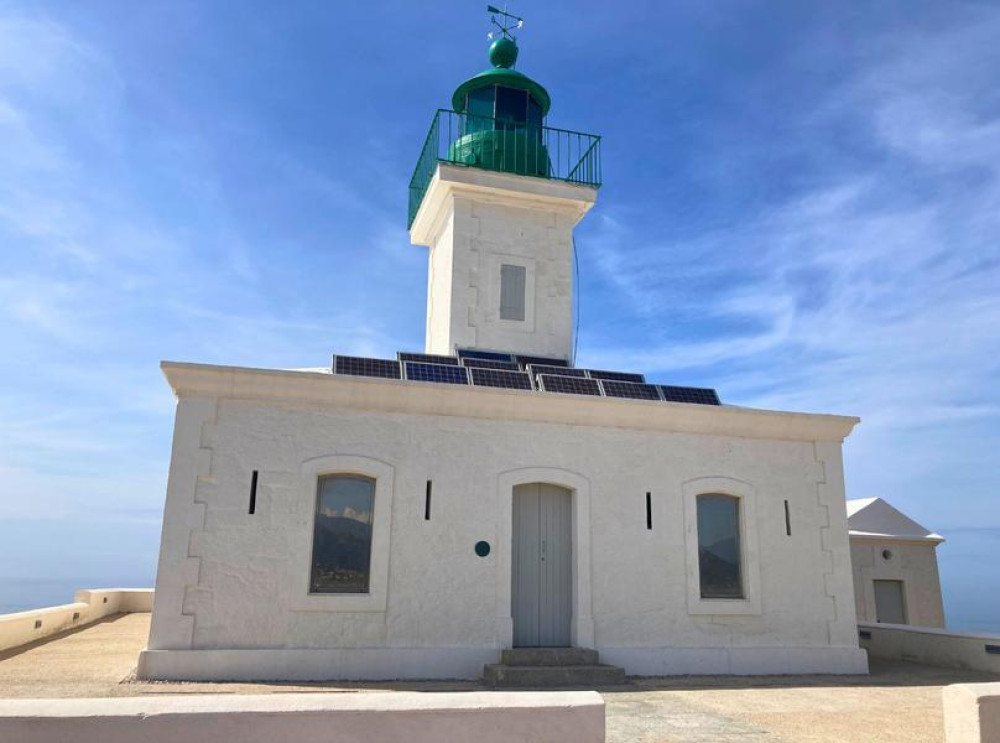
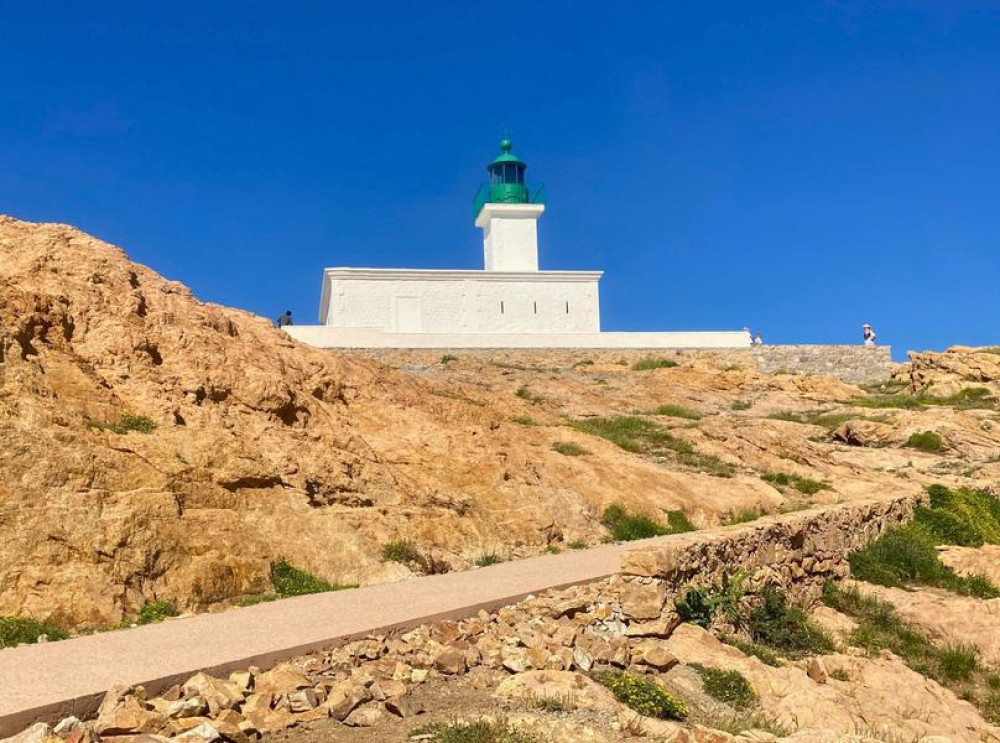
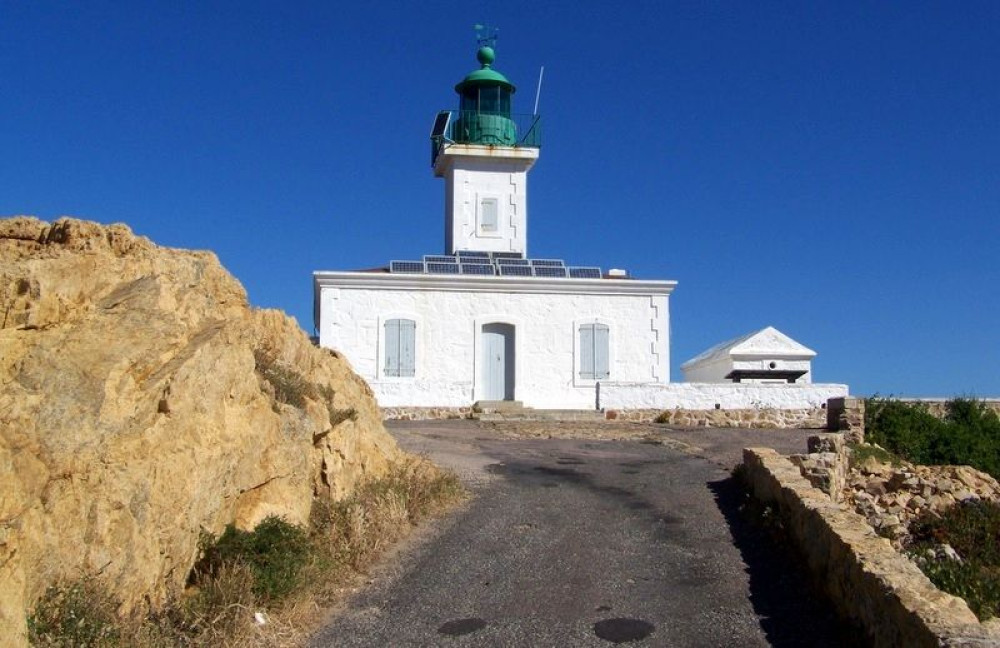
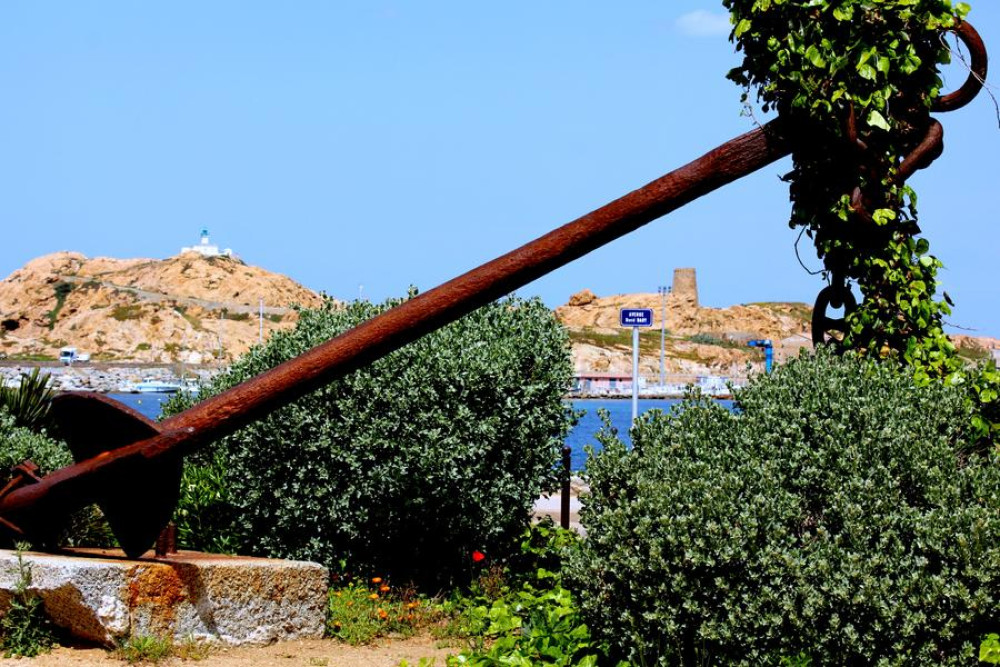
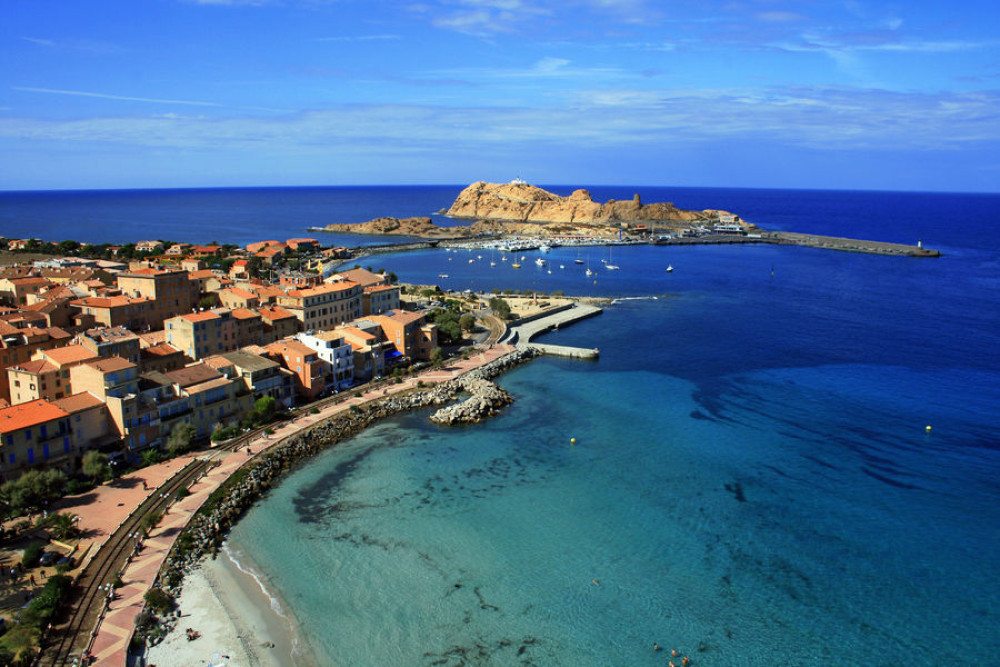
The Pietra lighthouse marks the entrance to Corsica's north-western coastline. It marks the end of your visit to the island of Pietra, where you can admire a magnificent view of the hinterland and the Balagne seaside.
A wonderful walk!It dates from the 3rd quarter of the 19th century, during the reign of Napoleon III. It is built on the highest point of the island of La Pietra, linked by a dike to L'Ile-Rousse. It marks the entrance to Corsica's north-western coastline. The lighthouse known as "La Pietra" was part of the second wave of lighthouses to be built in Corsica, along with the lighthouse at Ajaccio.
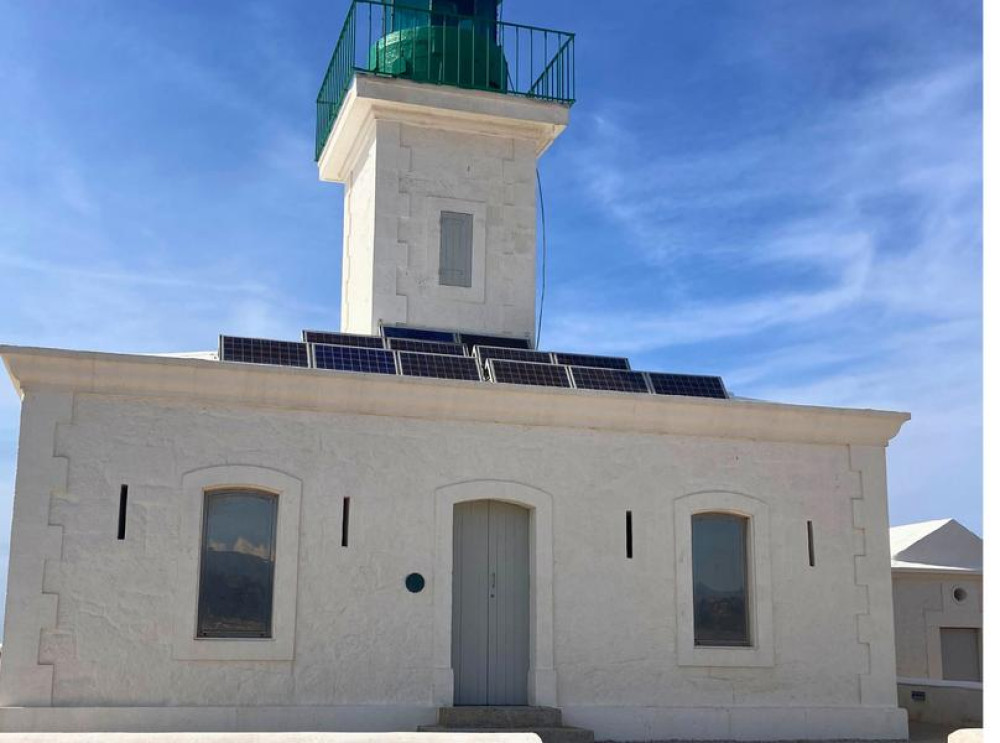
The current lighthouse is a square tower, centered on a square base, in smooth masonry, painted white, with the lantern painted green. The lighthouse is powered by solar panels and automated.
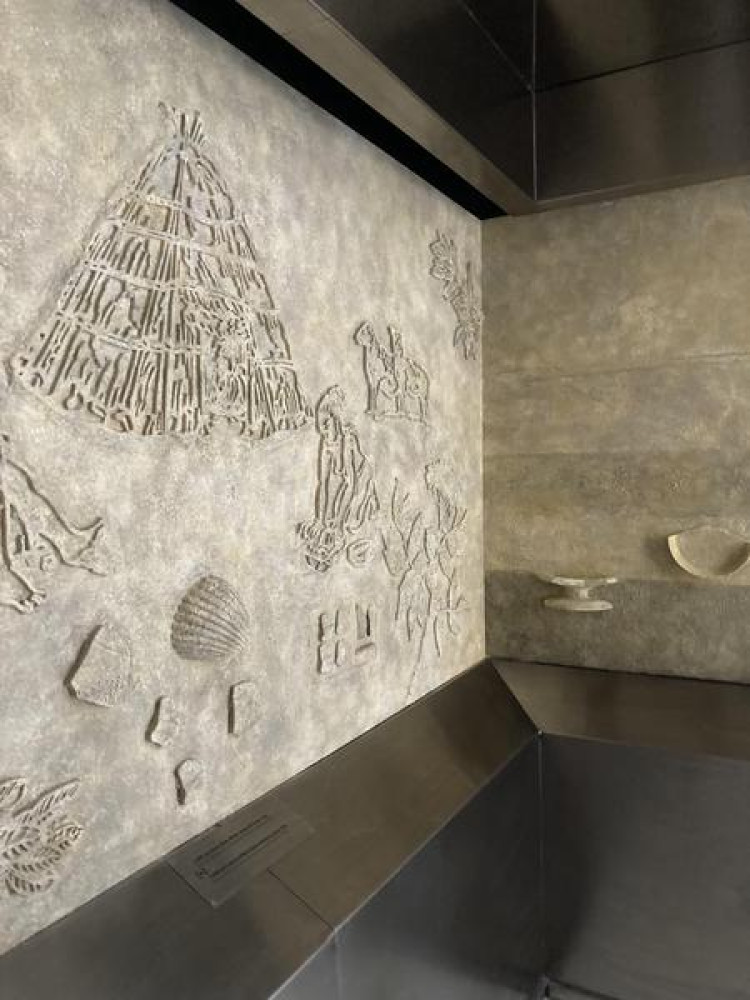
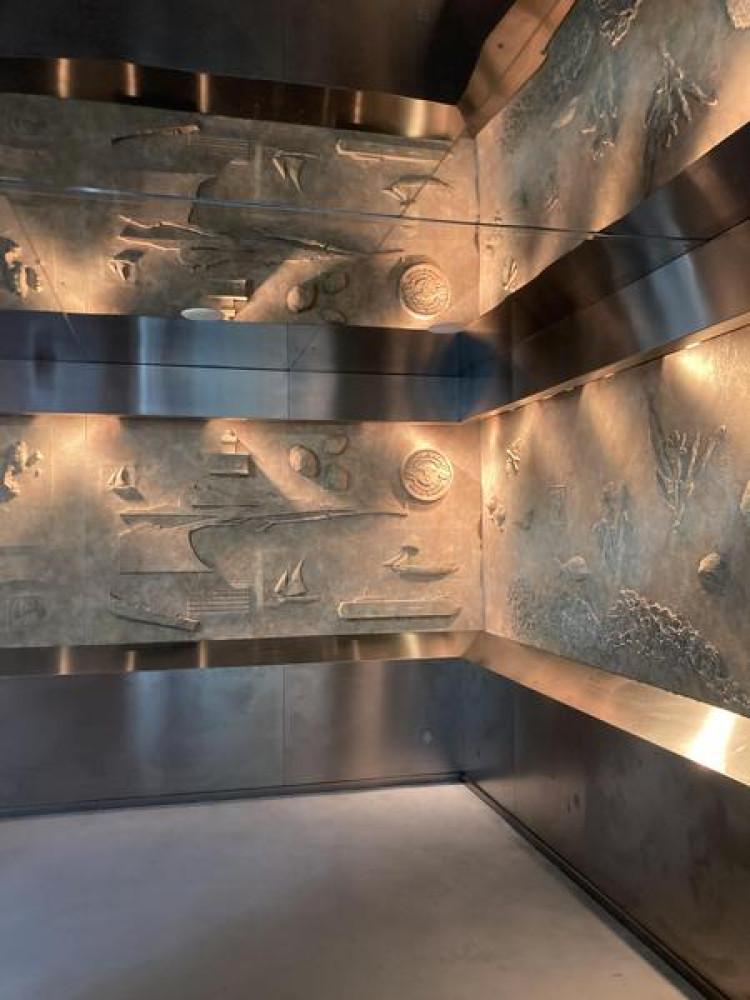
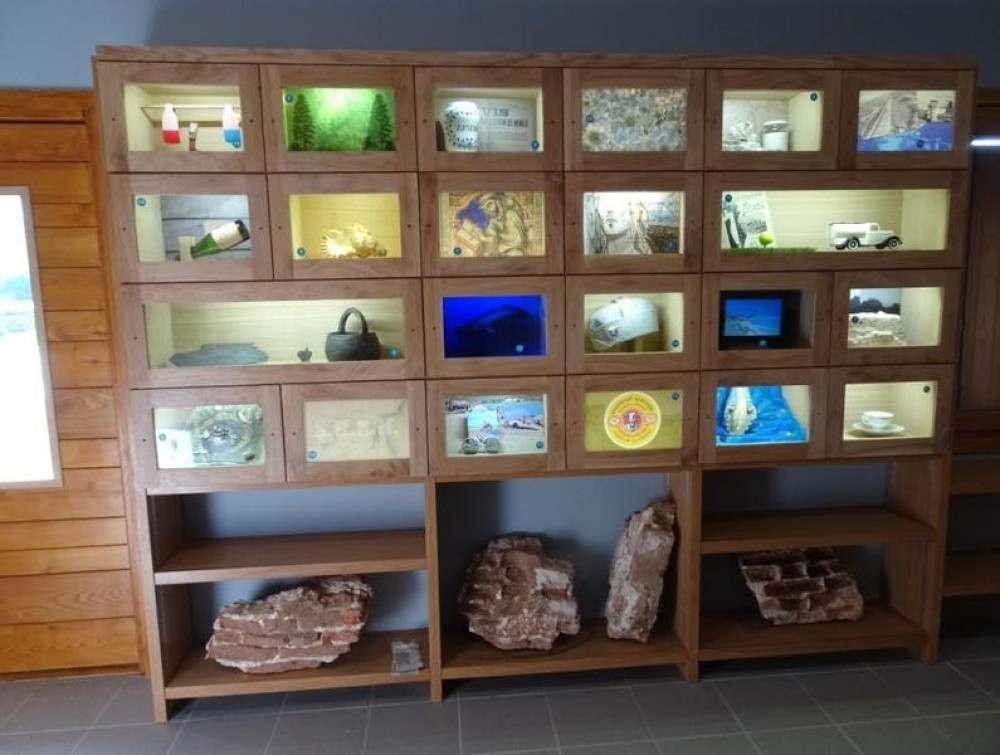
The interior of the lighthouse is open to the public during the summer! Here you can discover a unique museographic space, comprising three interpretation rooms that tell the story of Pietra Island and the lighthouse:
- Room 1: Vertical map cabinet -
A collection of historical plans and documents tracing the evolution of the islands and the lighthouse, highlighting architectural transformations and maritime developments.
- Room 2: Magic Lantern Lighthouse -
An interactive model of the lighthouse illustrating the evolution of lighting over the decades, with light projections to visualize changes in the lighthouse's illumination.
- Room 3: Technical room -
An immersive projection on sea-level fluctuations, accompanied by historical bas-reliefs forming a chronological frieze of the Pietra's evolution, enriched by visual and sound elements.
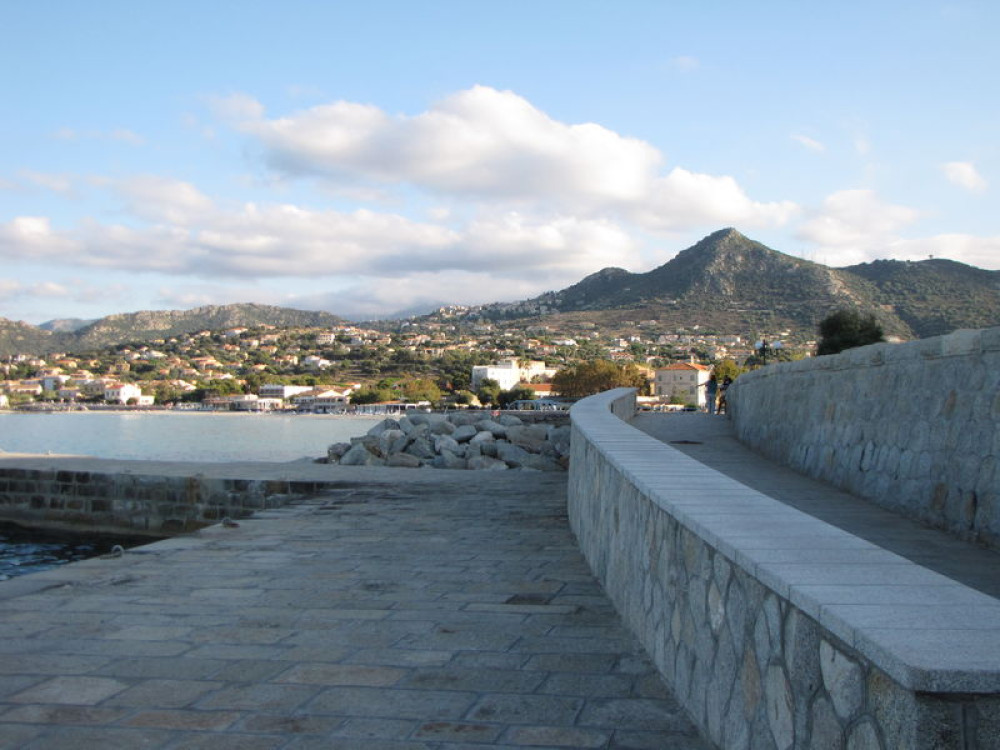
Discover the island of La Pietra and its lighthouse, recently embellished and in the process of being planted. Enjoy the beautiful pedestrian promenade and marvel at the spectacular panoramic views over the town, the villages of Balagne and the majestic surrounding mountains.
Whether you're a nature lover or a fan of breathtaking views, this must-see site in L'Ile-Rousse is sure to please.
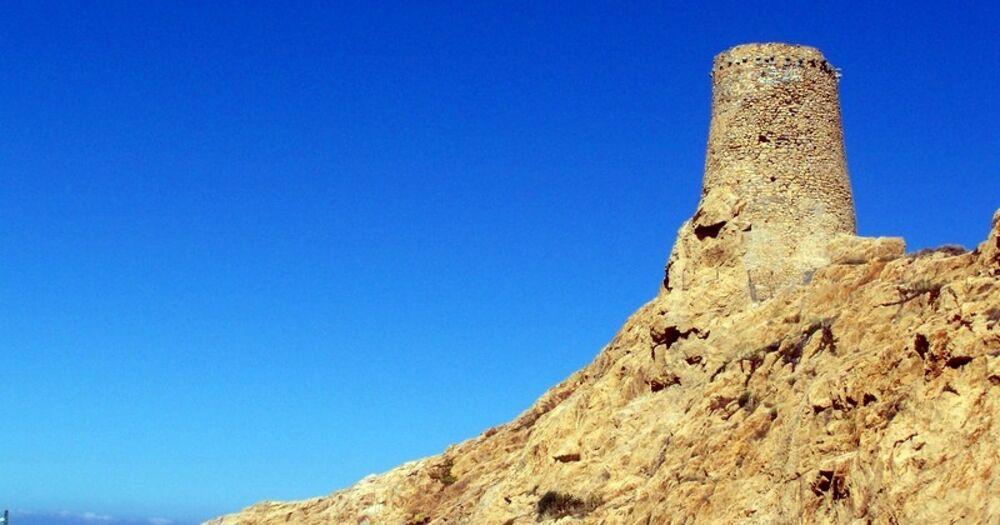
This military building from the 16th century features a round tower whose purpose was to ward off attacks from the Barbaresque corsairs. It was restored in the early 1980s.

Created in 1834 and inaugurated in 1852, this pleasant square is the heart of the town. Surrounded by ancient plane trees, it is an inviting spot featuring a fountain known as "the pump" which is decorated with statues, including a bust of the town's founder, Pasquale de Paoli.
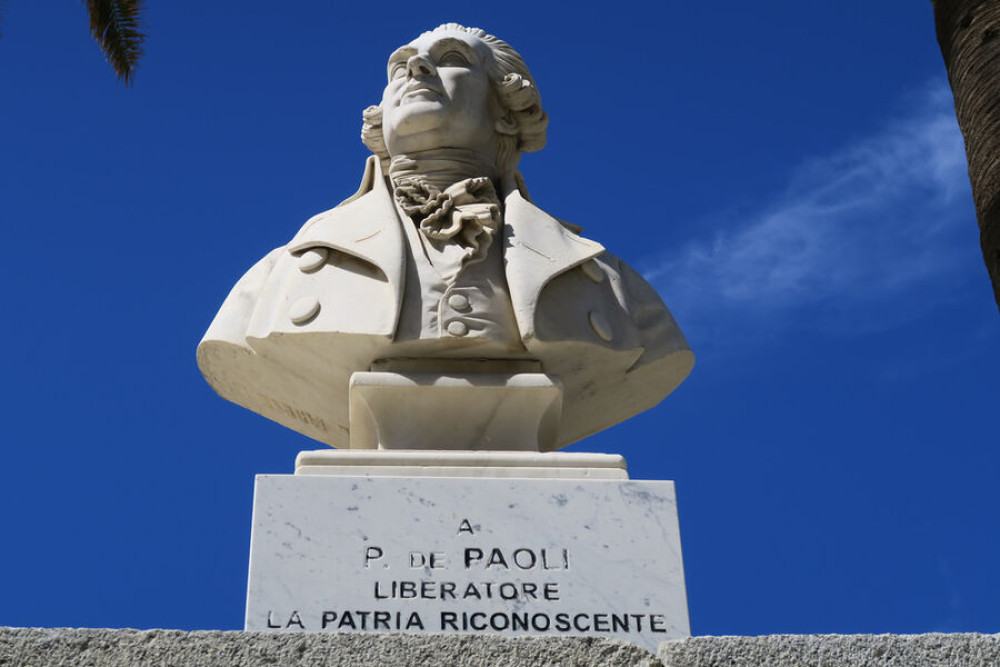
In L'Ile-Rousse, the bust of Pasquale Paoli takes centre stage on the square of the same name. Paoli founded this town during the Corsican Revolution. He is the father of a democratic constitution, a national hero whose wisdom shone out across Europe.
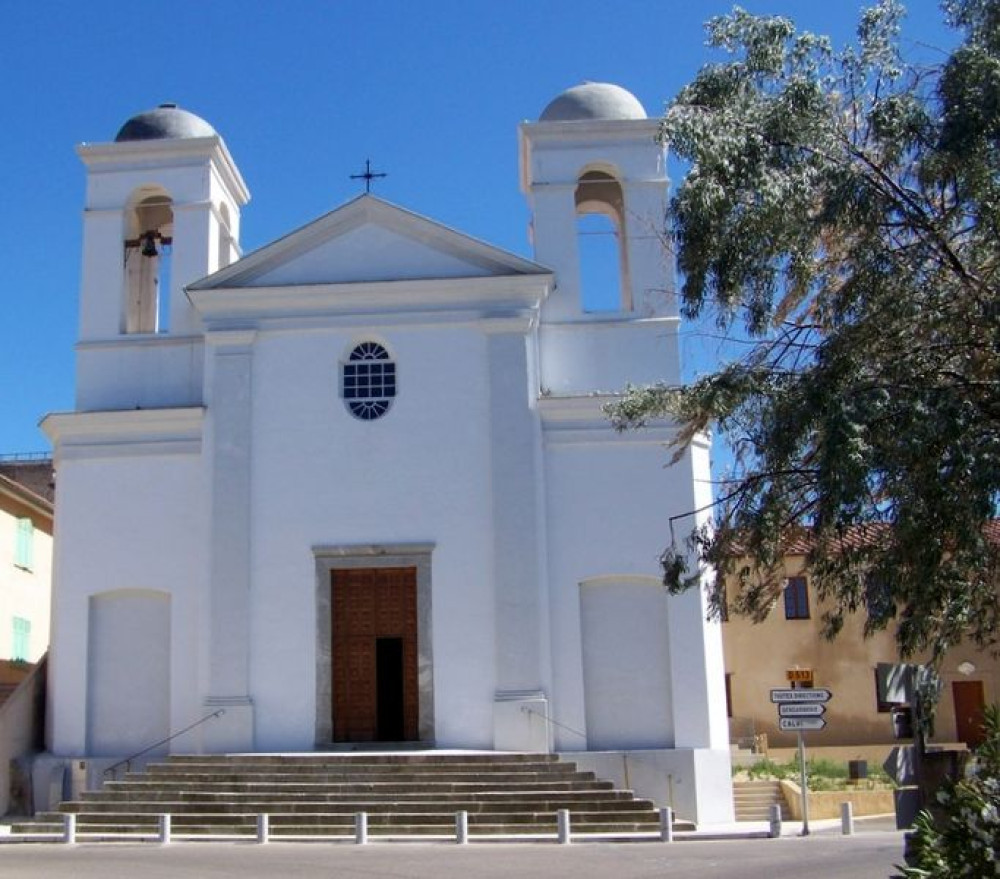
Commonly known as "Monks' church", it was built between 1825 and 1850 by Tony Cardella, the great Corsican master of the 19th century. Some of his paintings can be found inside, including his "Stations of the Cross".
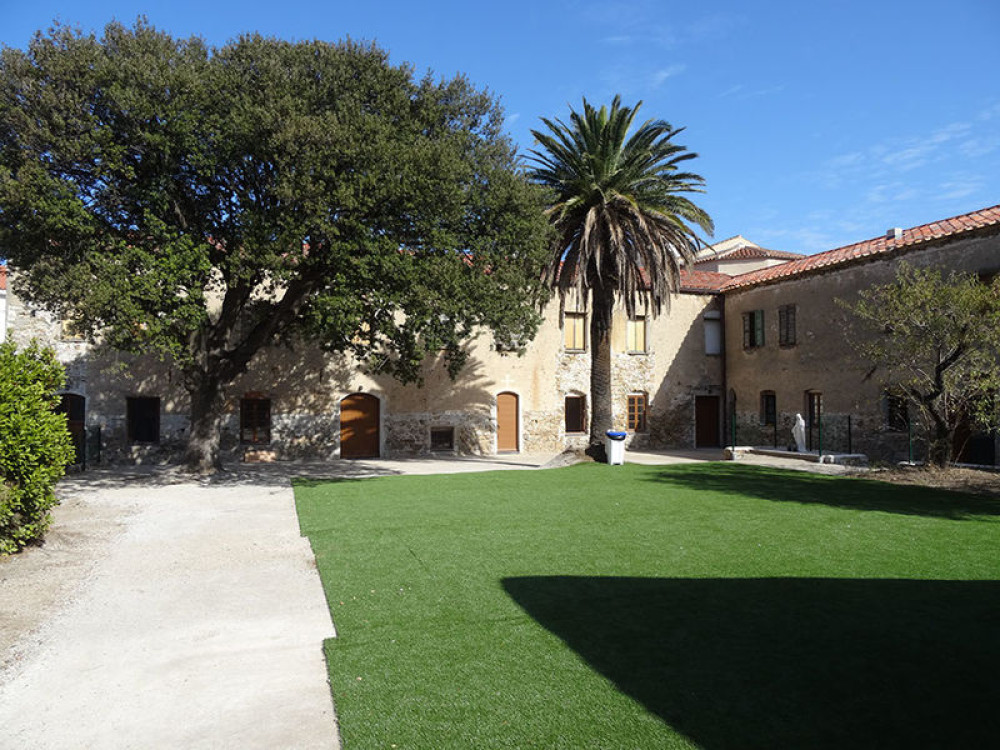
In 1853, the people of L'Ile-Rousse wanted their own community of the children of Saint Francis. The house adjoined the Church of Mercy and for a time was the town's only place of worship. It houses the private school of Notre Dame.
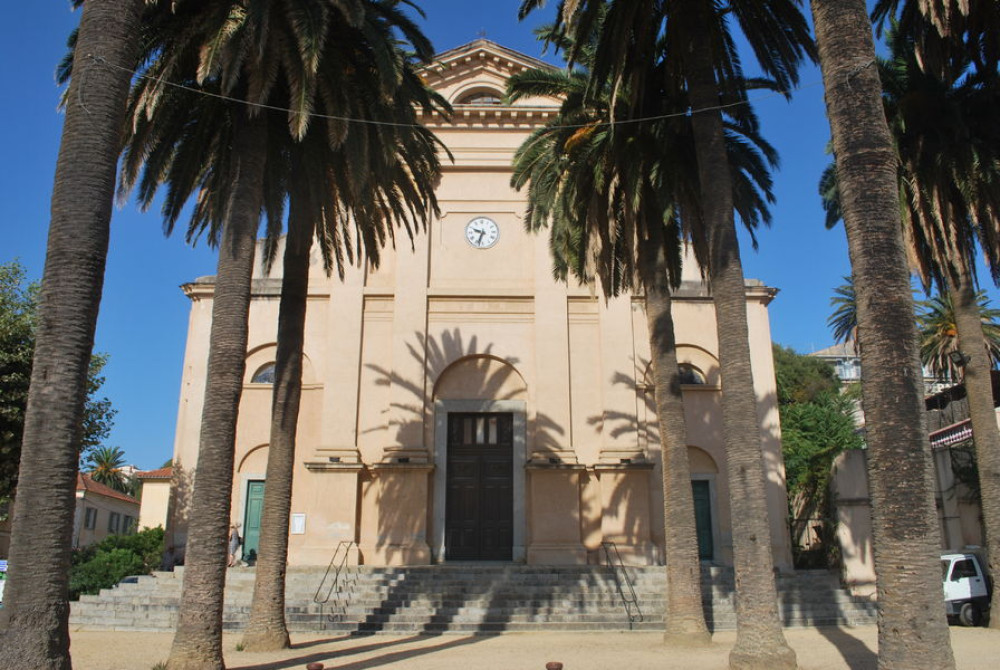
Built in 1887 to replace the old parish church of Le Scalu and its successor, Notre Dame la Miséricorde, which had become too small. This church was more spacious and occupied a more central position in the expanding town.
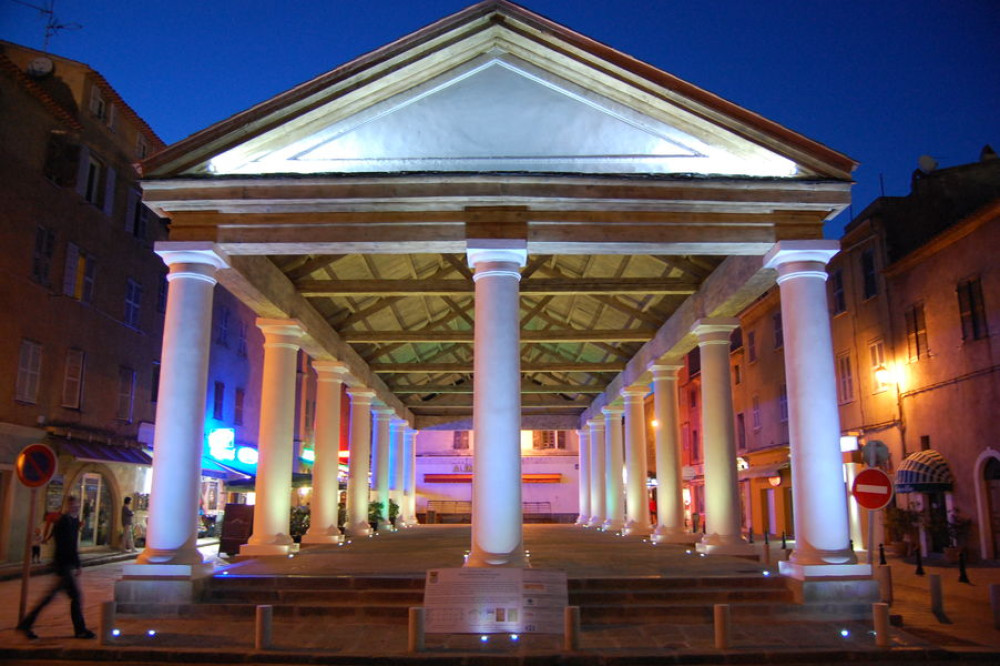
Built in 1844 by the mayor, Mr Piccioni, essentially to replace the outdoor market. The region's producers can be found here every morning.
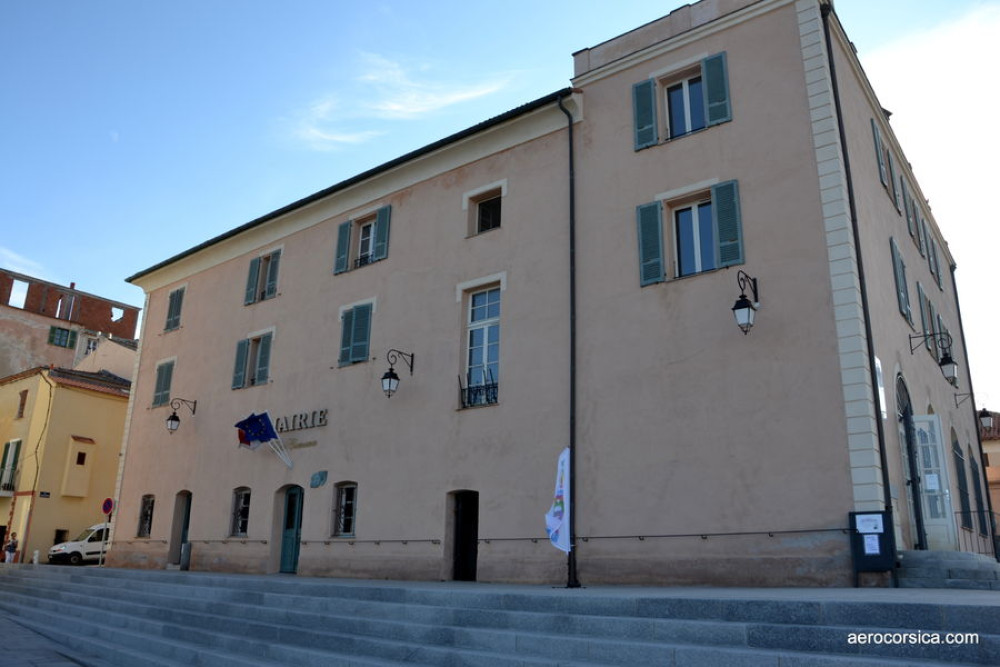
Now the Town Hall, this building built in 1763 by Pasquale de Paoli was occupied by the military headquarters of L'Ile Rousse and the King's lieutenance, at the initiative of the Count of Vaux.It was a military estate until 1904, when it was called the General Ambert barracks. Then, the mayor of the time, President Gavini, bought it and one day made it the seat of the town hall and the social services. The gabelous had their post in this old barracks (today the town hall) as well as a shelter at the bottom of the small cove under the Pietra lighthouse. This building was marked not so long ago on the staff maps. However, it was rebuilt and is now used as a marine archaeology shed.
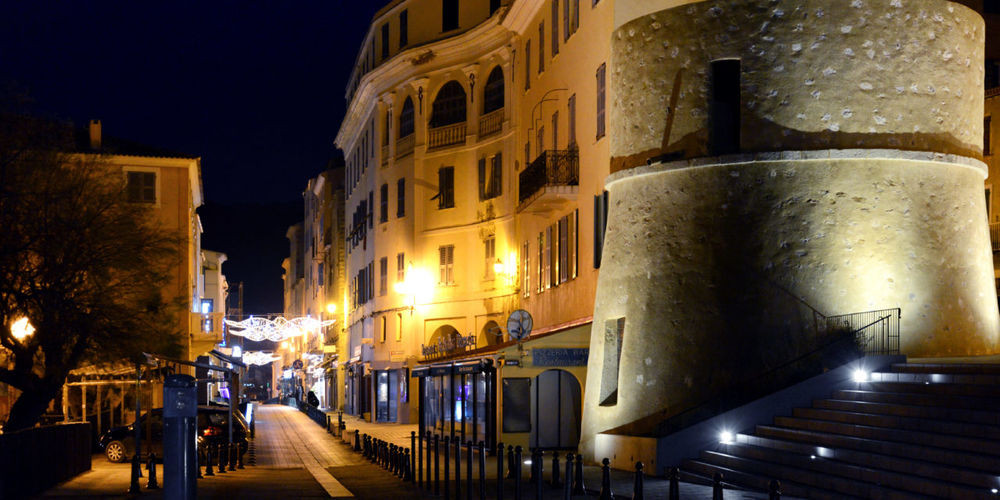
The old gunpowder magazine named Tour du Scalu stands on the current Place de la Mairie. Refurbished in 2012, it was built in the 17th century when it went by the name of Tour des Fabiani. It was a salt warehouse before becoming a gunpowder magazine and, finally, a prison.
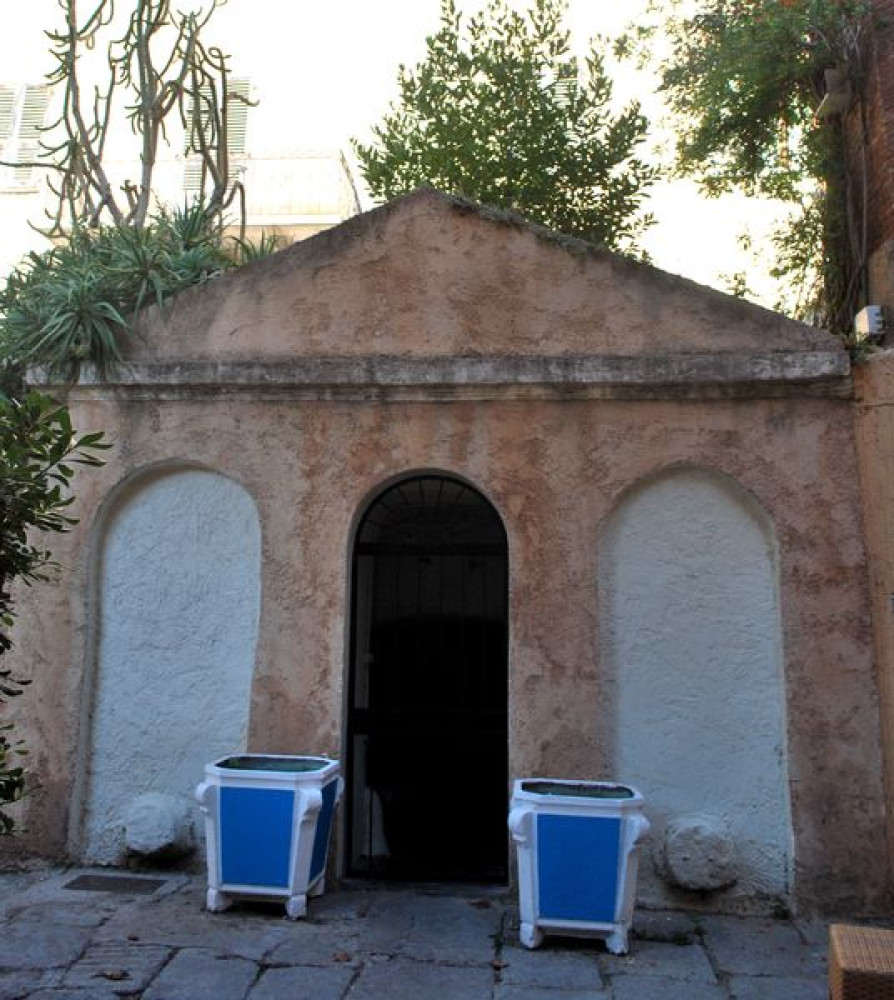
This square takes its name from the spring, Di U Canone. The wash house built around the spring is no longer in use. Succumb to the charm of the blue-shuttered houses and the traditional biscuit factory.
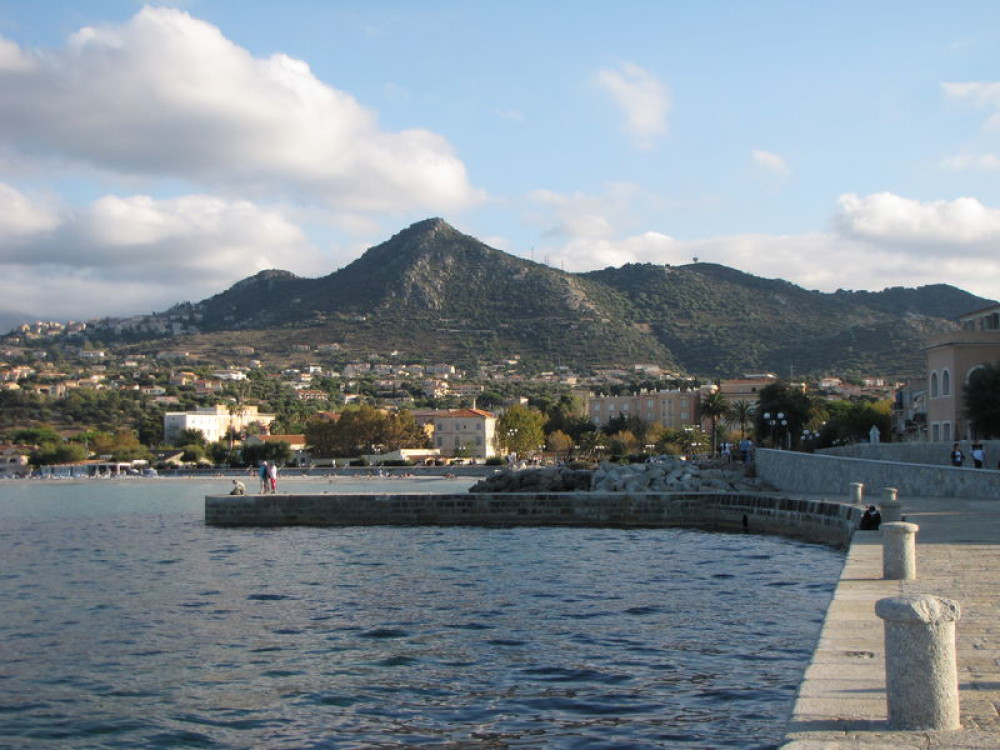
Le Scalo is an old natural fishing port that's commonly known as the "fishermen's jetty". So it's no surprise that the structure has always had close links with the fishermen's market located at the bottom of Rue Notre Dame. This market was refurbished in 2002.
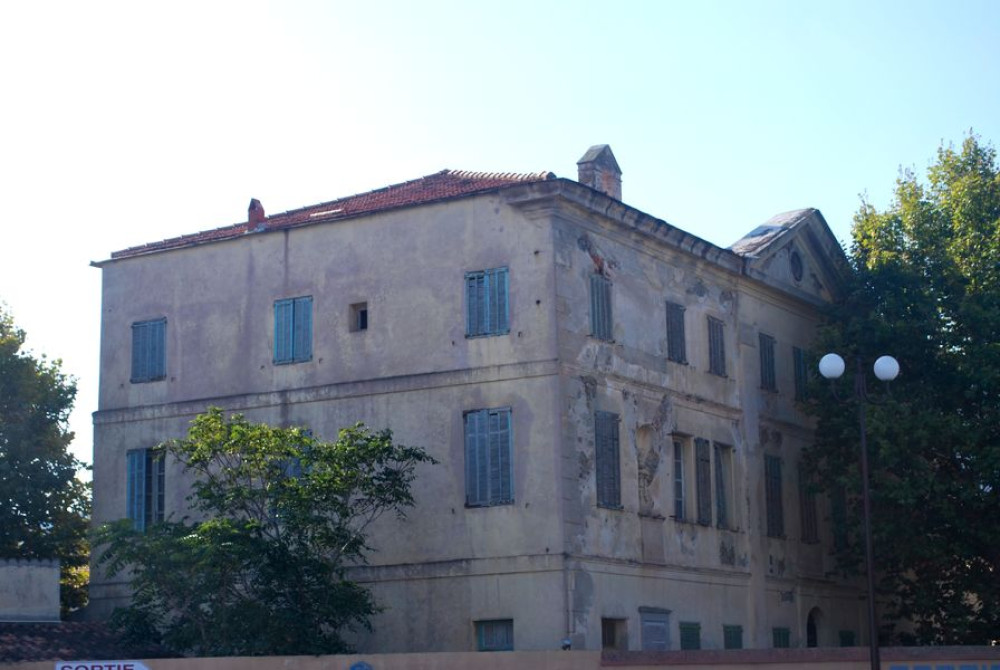
Built in 1849, the Institut des Filles de Marie has welcomed several generations of children from L'Ile-Rousse. Once a school, it has become an iconic landmark of the city and is now the focus of a renovation project aimed at breathing new life into it.Located at the eastern end of Place Paoli, the Institute of the Daughters of Mary is an iconic site in the history of L'Ile-Rousse.
Founded in the 19th century to house the Congregation of the Daughters of Mary, who came from Agen to provide education for young girls, it subsequently served various purposes. Secularized in 1906, it became the Jeanne d’Arc School and served generations of students until the late 1960s.
After the school closed in 1984, the building continued to house a private preschool and catechism classes until 2014.
Today, this former school is the focus of an ambitious renovation project led by the Communauté de Communes de L’Ile-Rousse Balagne, the City of L’Ile-Rousse, and the Tourist Office.
The goal is to preserve this remarkable heritage by giving it a new purpose: to house the Tourist Office as well as an Interpretation Center dedicated to exploring, sharing, and promoting the history, heritage, and treasures of the Balagne region.
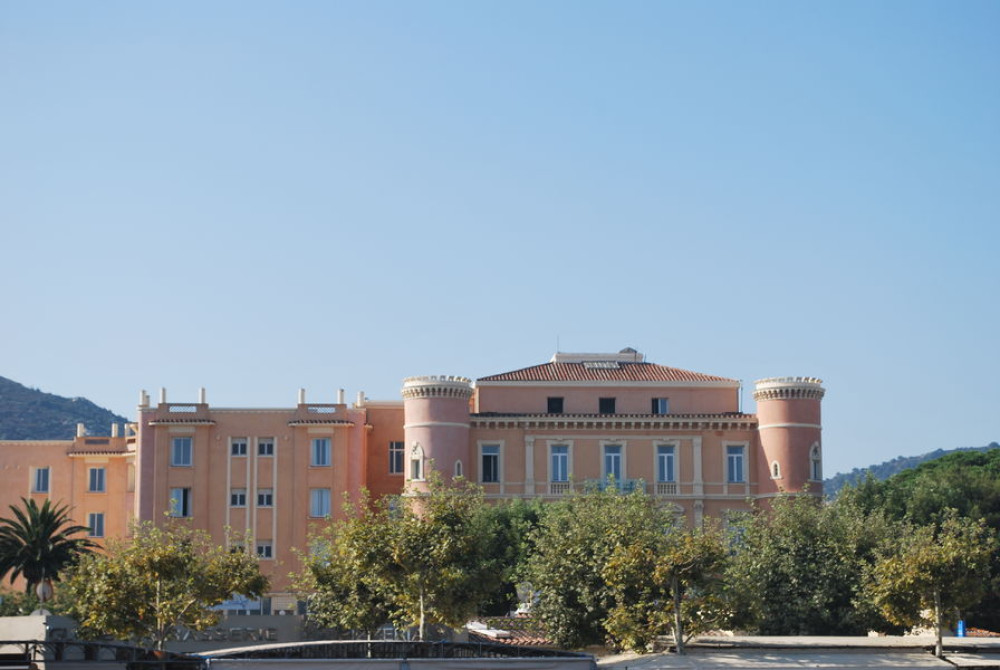
The Piccioni palace is the highest and one of the most famous buildings in the town of L'Ile-Rousse. Magnate Sebastien Piccioni, dissatisfied with a mere town-centre abode, ordered the construction of this veritable château which is now the Hôtel Napoléon.
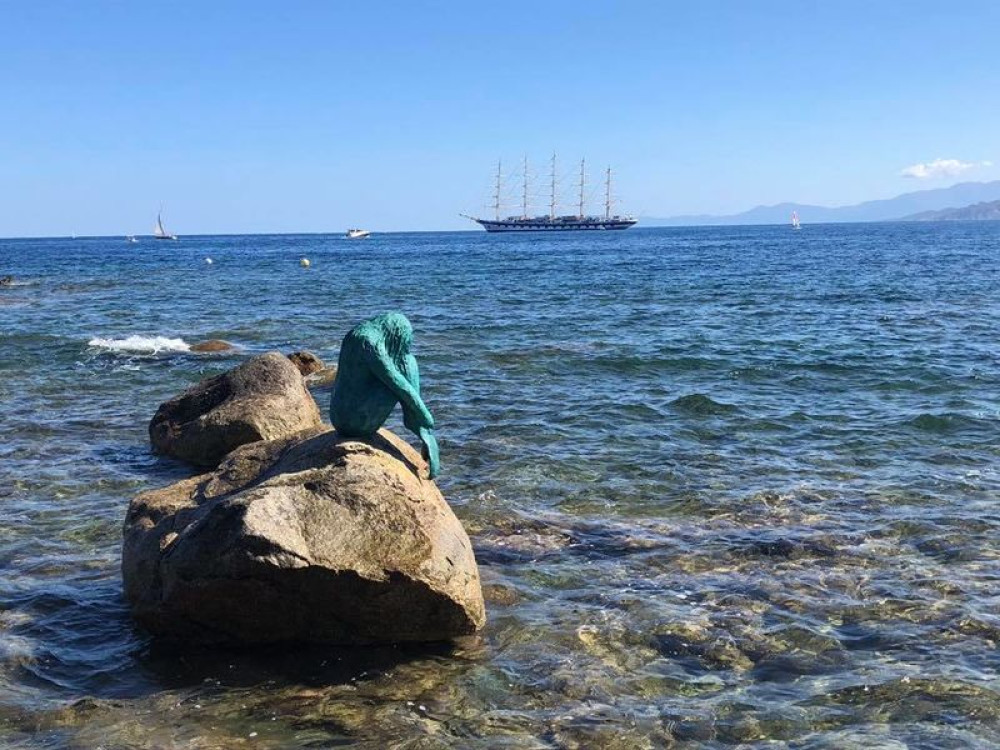
The Mermaid by Corsican artist Gabriel Diana is a lost-wax cast bronze sculpture of human dimensions. Competing beautifully with her Copenhagen counterpart, A Sirenella sits on a granite rock close to the shore.
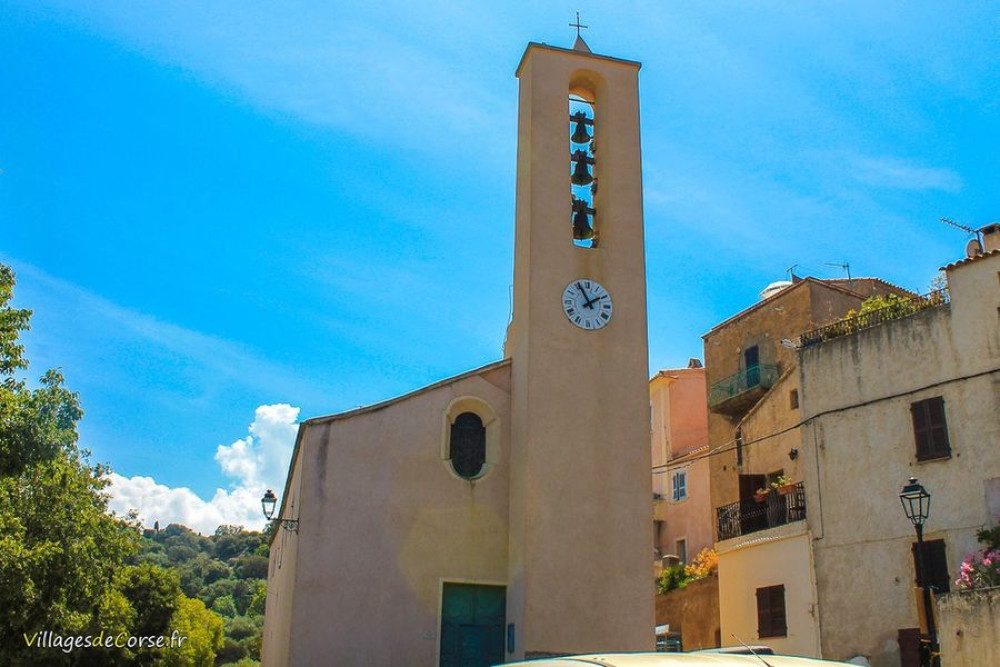
This Roman church was destroyed in the 16th century by the King of Algiers and rebuilt in the 17th century. In 1887, the exterior was enhanced. The church boasts a tower with 3 bells and a listed painting which has been restored.
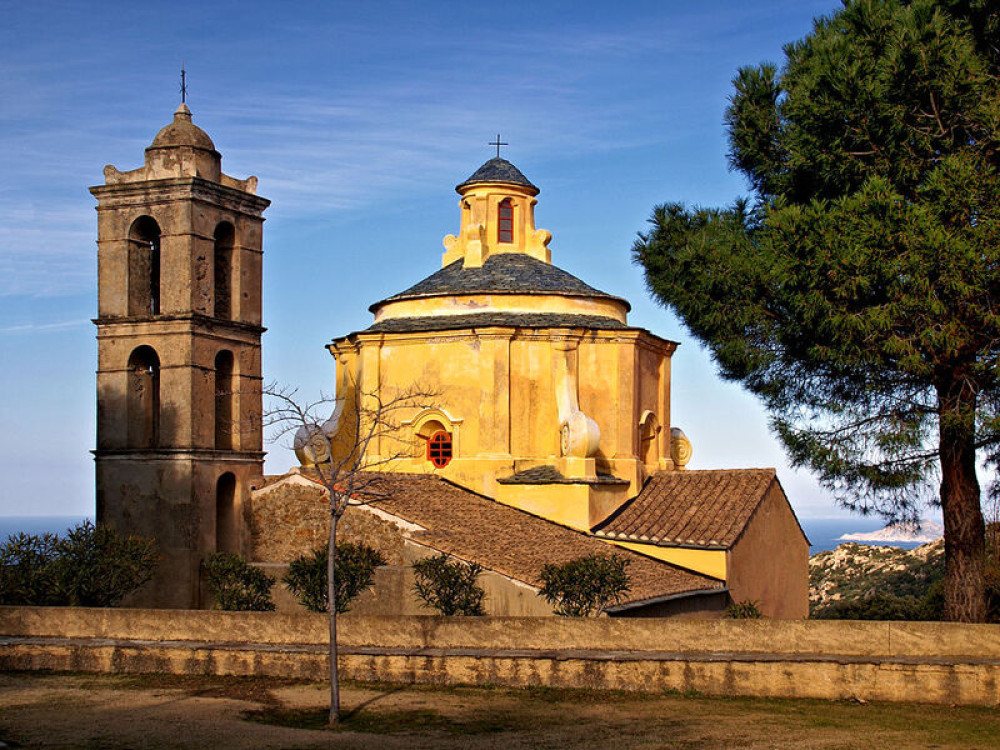
Of Baroque style, it dates from the latter half of the 17th century. The dome was added in the 18th century. The chapel was built at the initiative of a Jesuit priest who wanted to protect the population from its enemies. San Roccu day is celebrated here every year on 16 August.
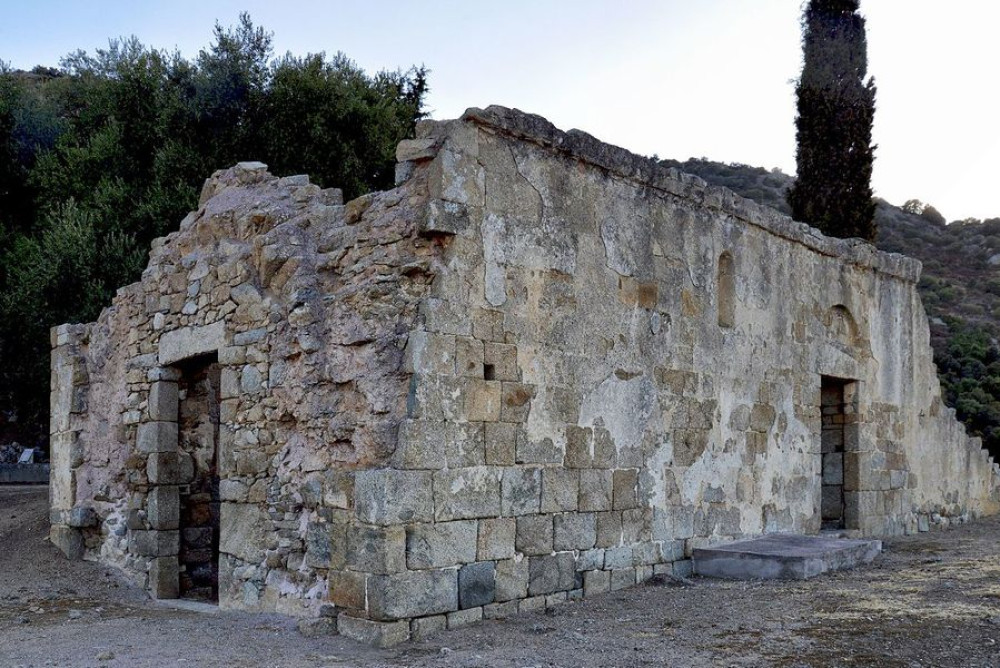
Built in the 11th century, this Romanesque chapel was stripped of its sacred objects and religious ledgers during an incursion of the Turks who then burnt and destroyed it. Its only nave has been consolidated with what little was left of the ruins.Several attempts have been made to restore and consolidate it, which has not been easy since the chapel was seriously damaged by the transformations it underwent around the 17th century (apse cut off, extended nave). There is an "arca" inside, as evidenced by the marble plaque on which is engraved "ANNO 1686 DEL MONTICELLO". There are also funeral plaques of the oldest inhabitants of Monticello.
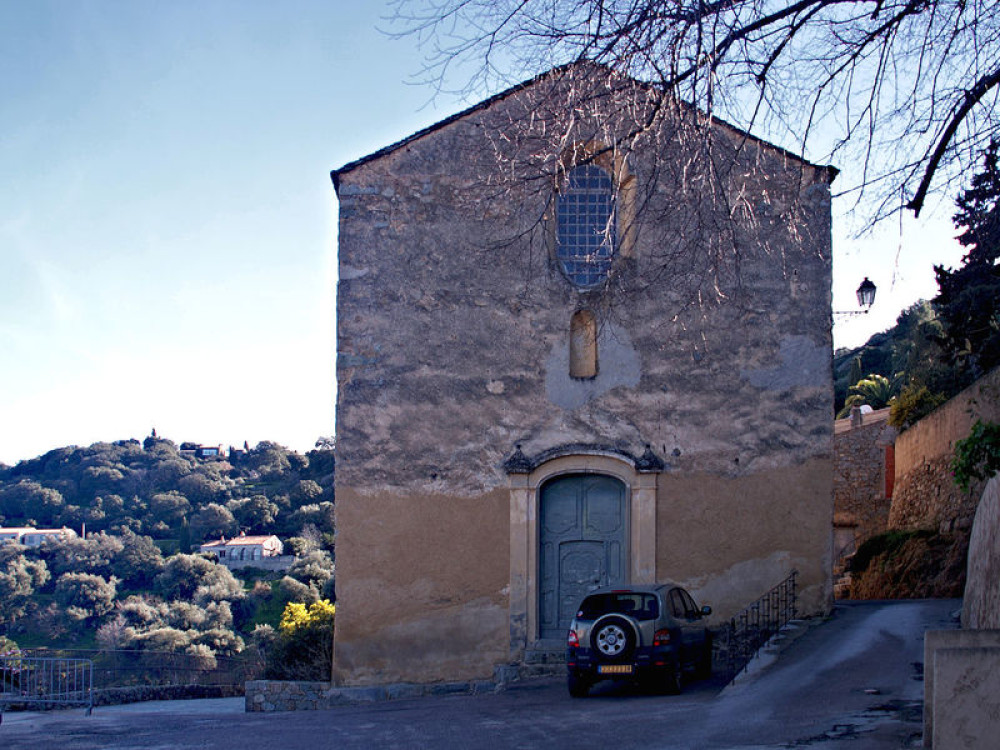
Built in the 17th century, it boasts a remarkable decor with a smooth, shiny appearance thanks to the use of ground marble. The interior frieze is superbly decorative. The walls are covered in timber which forms two benches on either side of the entrance.
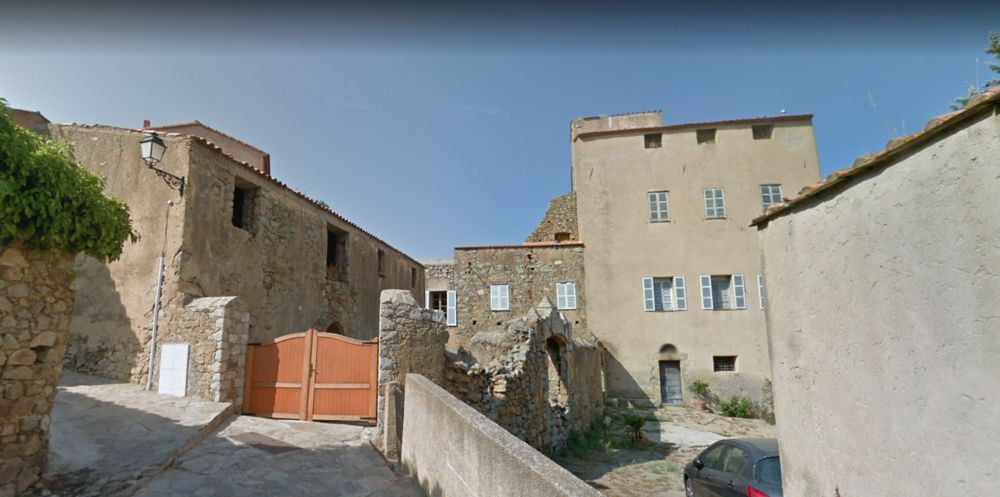
Protected by the VMF built heritage label, this 17th-century private mansion is the Fabiani Malaspina palace and was the home of Pasquale Paoli from 1790 to 1796. One of its lounges is decorated in frescoes depicting 17th-century L'Isula Rossa. Napoleon Bonaparte also stayed here.
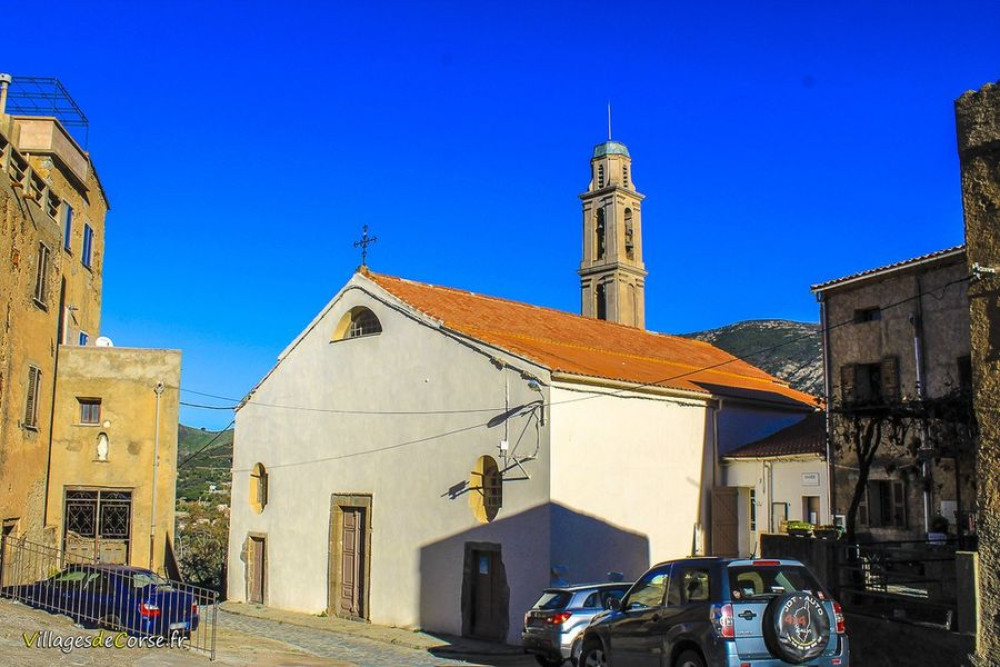
Formerly the church of the Assumption, it is now the parish church of Saint Bartholomew. It dates from the 2nd quarter of the 17th century. Rebuilt in 1620, then reworked in 1627, it features a 3-level Baroque bell tower with a small lantern.
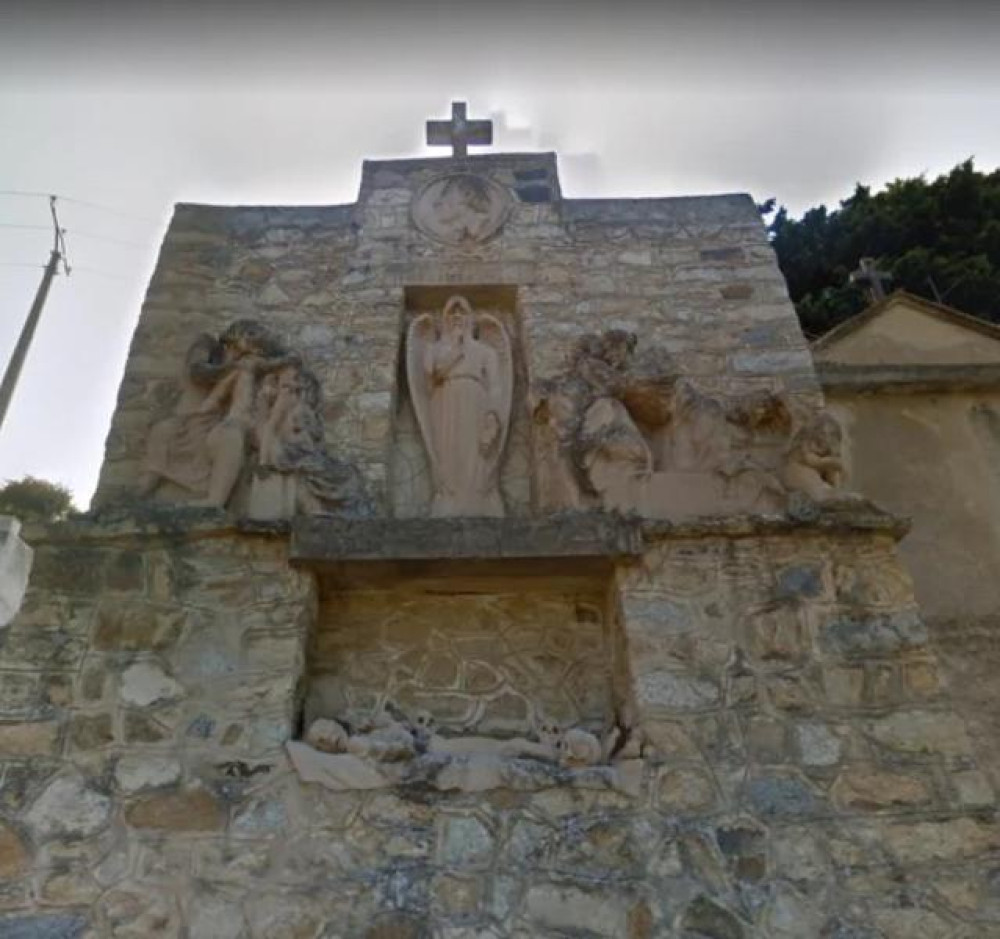
The amazing tombstone of Damaso Maestracci, whose naive art reminds us of the work of Ferdinand Cheval, is located in the cemetery's north entrance. He was the creator of the War Memorial and also bedecked his own house with some imposing curiosities.
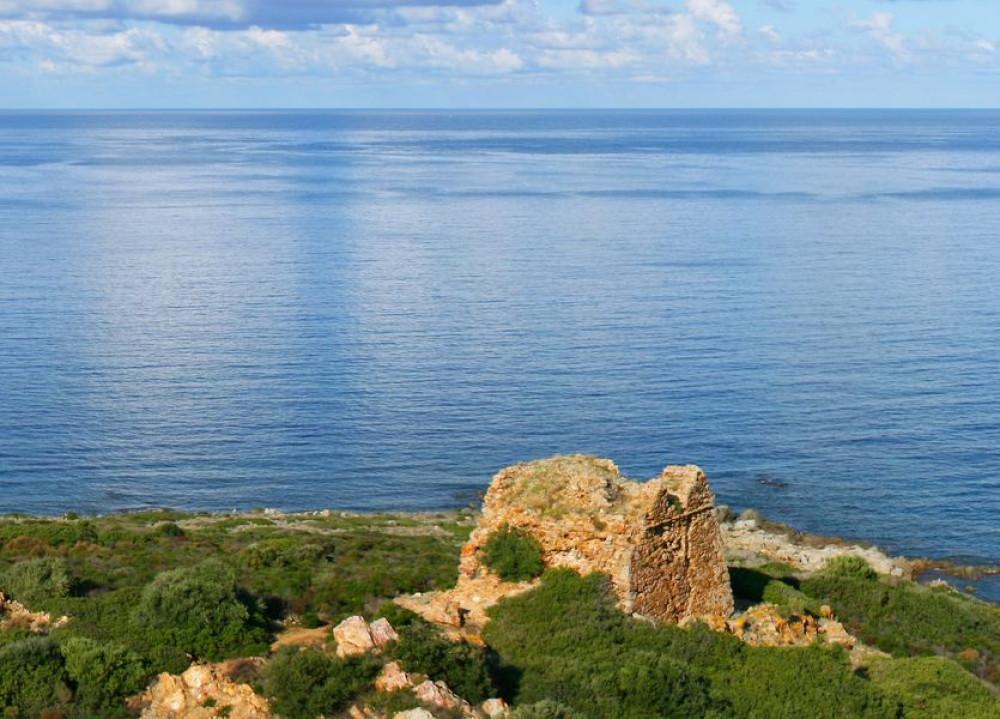
Also known as Cala Rossa or Di Tre Moline, the tower was built in the 16th century by the Genoans, 36 metres above sea level and the little cove of Algaja.
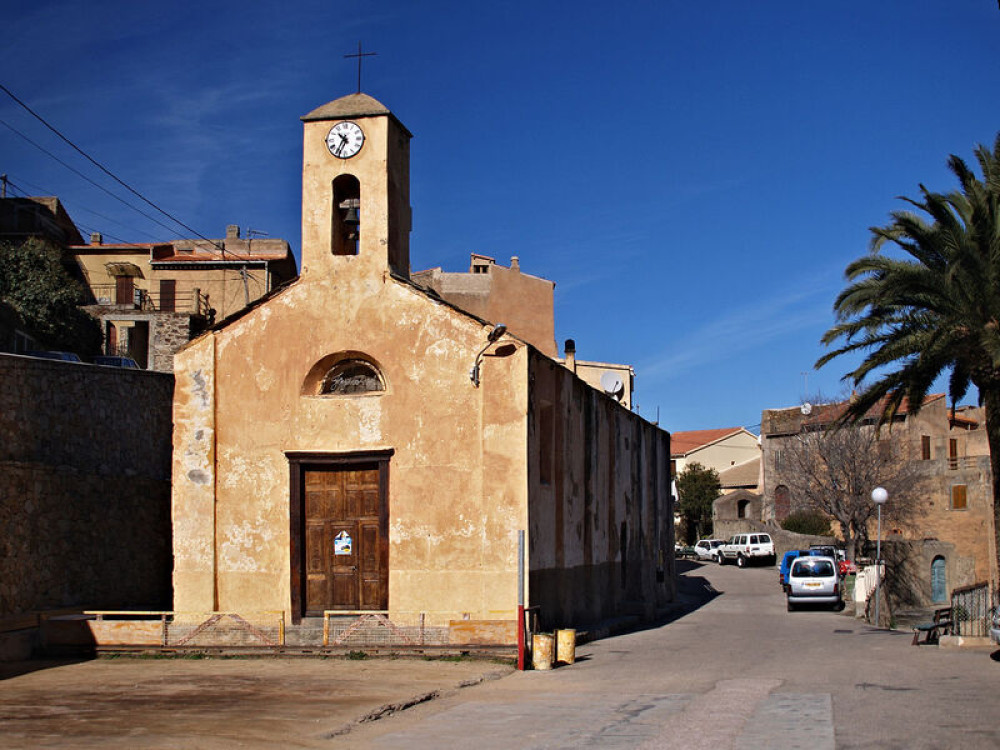
The recently-renovated Friary building is occupied by the Association Per l'Animazione d'Ochjatana. This ancient chapel boasts remarkable acoustics. During the summer season drinks can be purchased here.
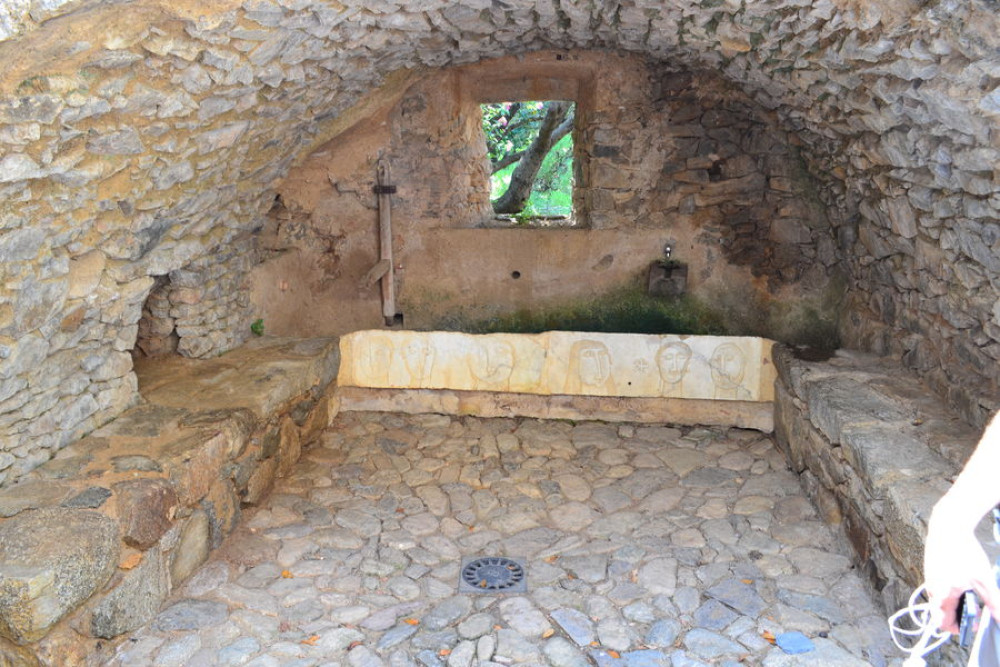
The ancient foundry's bellows support is still visible in this simple single-vault construction. It was in ruins before being converted into a fountain and decorated with a marble bas-relief feature by Toni Casalonga which represents the four seasons.
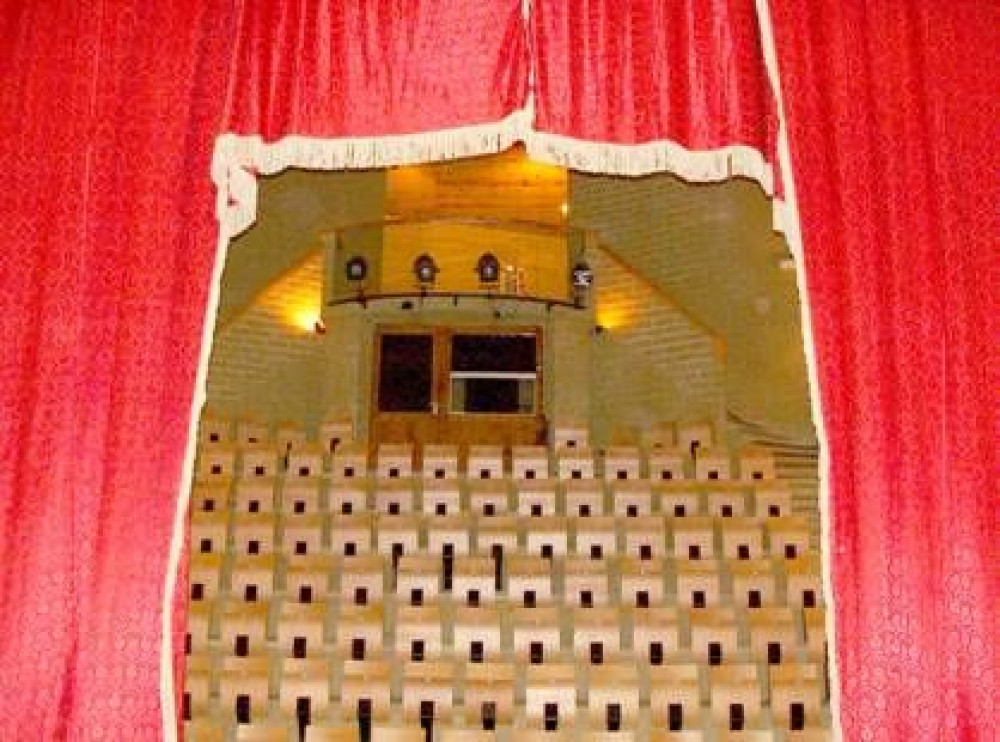
A small construction of earth which hides a 120-seat auditorium. An original venue used by singers and musicians from Corsica and beyond, for research, experiments, rehearsals and recordings.
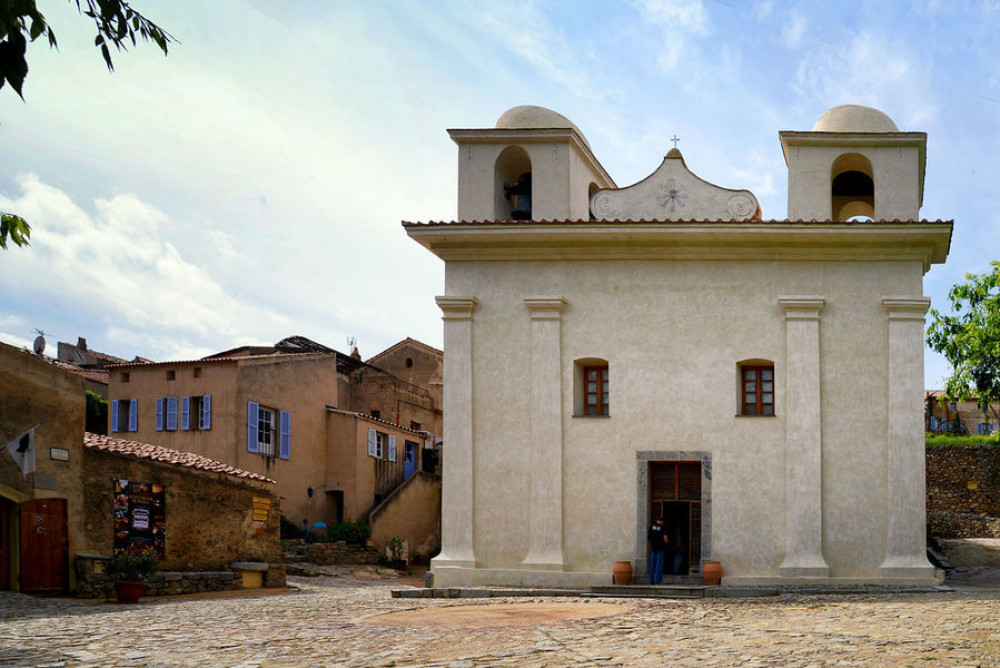
A transformation of the choir area of this religious building, during the 18th century, included the addition of wall paintings in the apse by Toni Casalonga. The church also features two small bell towers and a remarkable organ which was built in 1881. Annual celebrations are held on 15 August and 8 December.
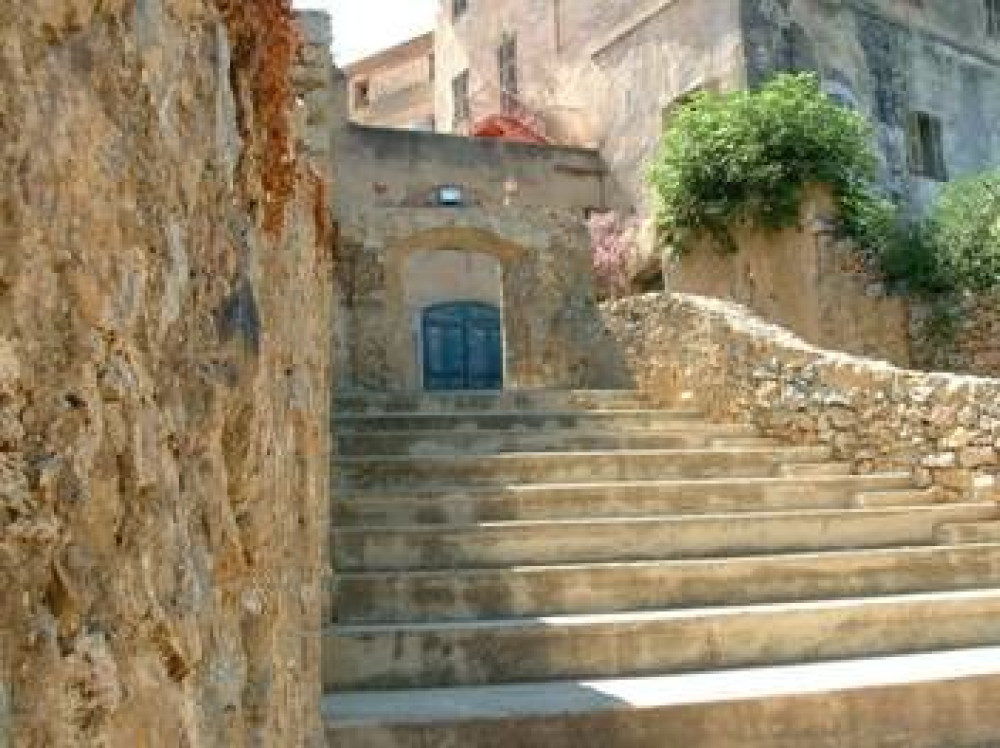
This former stockyard is a listed historical monument which was converted in 1974 into an open-air theatre. Restored in 1999, this outdoor venue enjoys views over the Laziu Valley, the Corbara Convent and Mount Sant'Anghjulu.
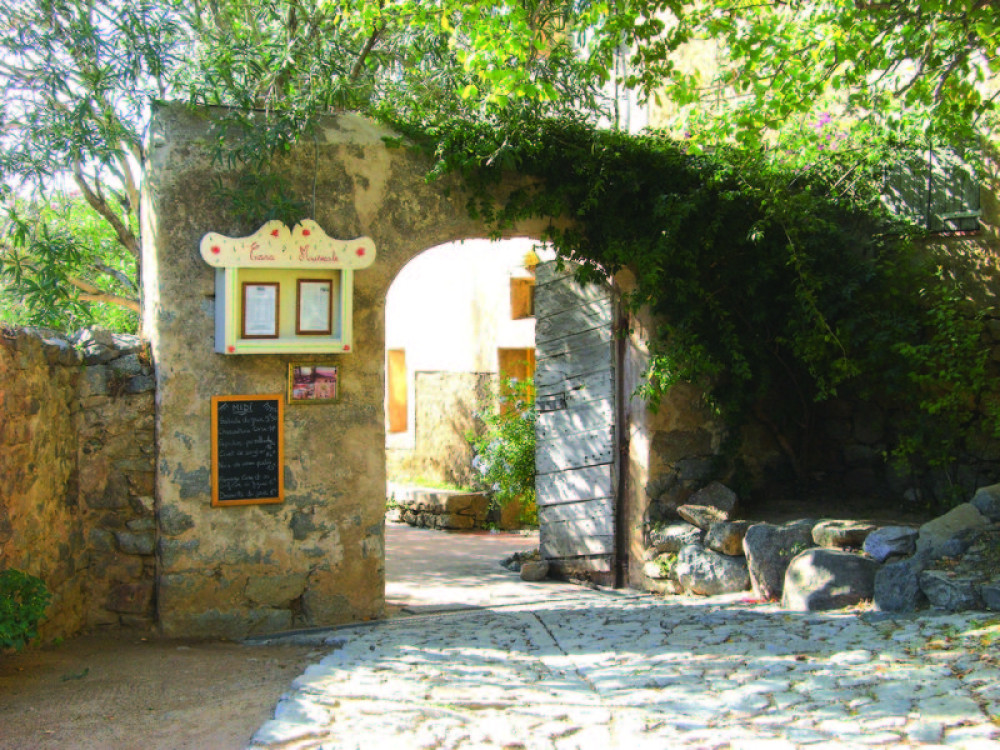
The Casa Musicale is an 18th-century mansion which, since 1995, has been a venue for the Centre Voce artists who stay here as well as others who come for various events and discussions. It is also a guesthouse.
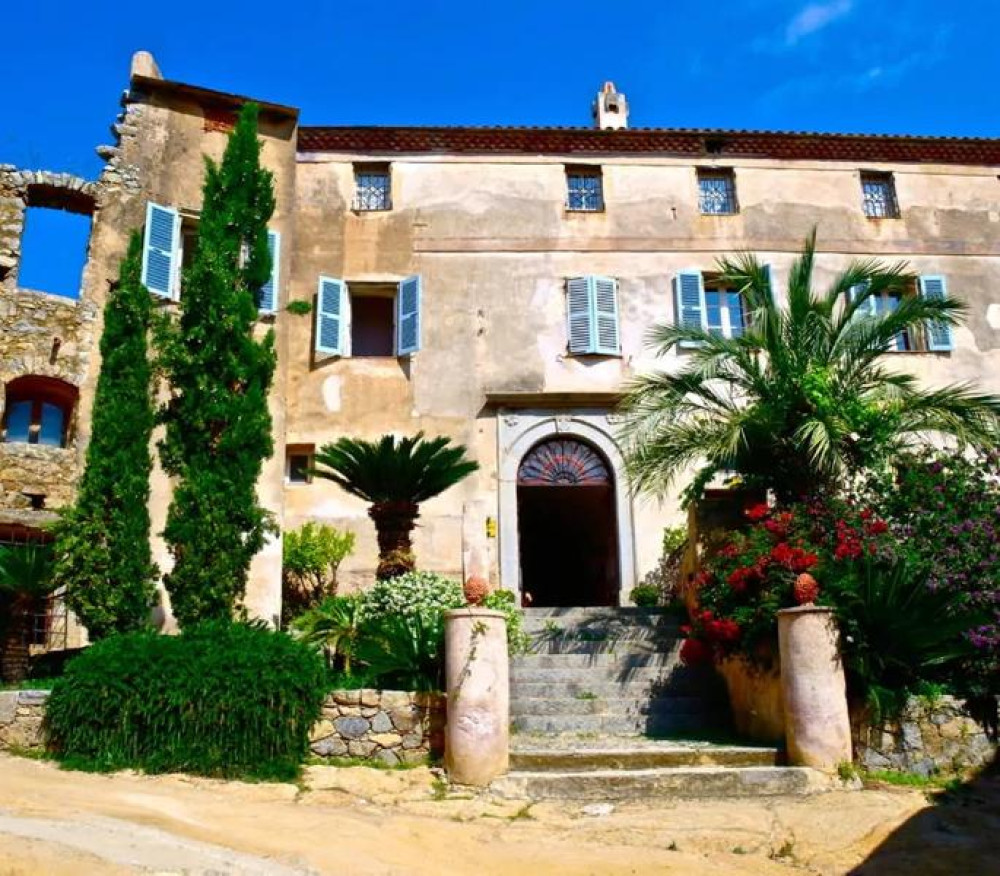
This 18th-century mansion house, now a boutique hotel, has always belonged to the prominent Franceschini family of Balagne. It is a magnificent seaview property featuring three rooms and two suites, as well as a reputed restaurant.
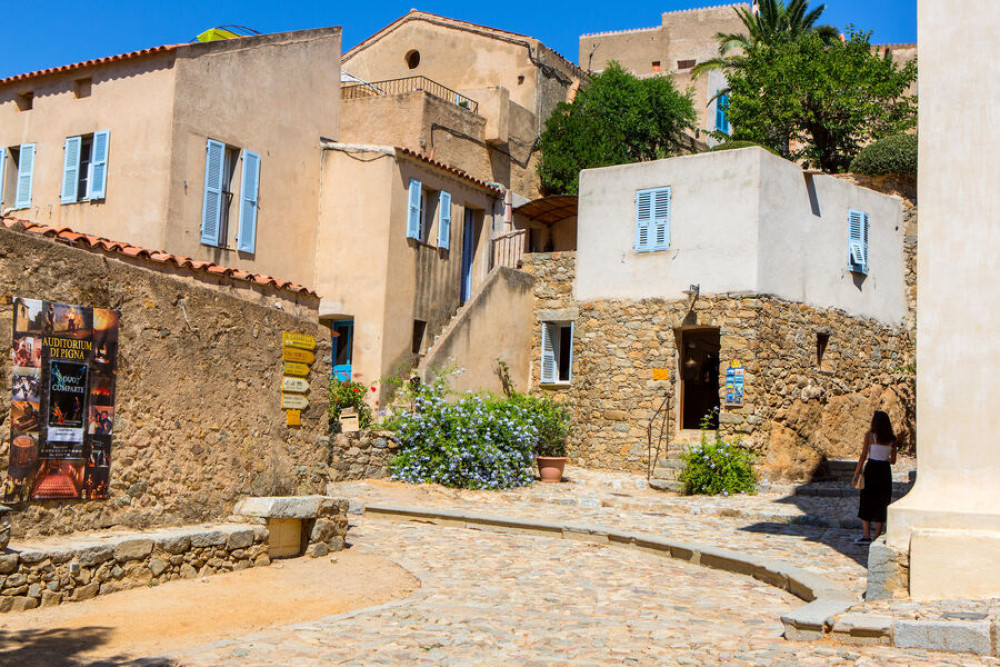
The former Presbytery in the village centre is one of the oldest buildings in Pigna. Fully renovated, it is now an art and craft shop run by the Casa di l'Artigiani association.
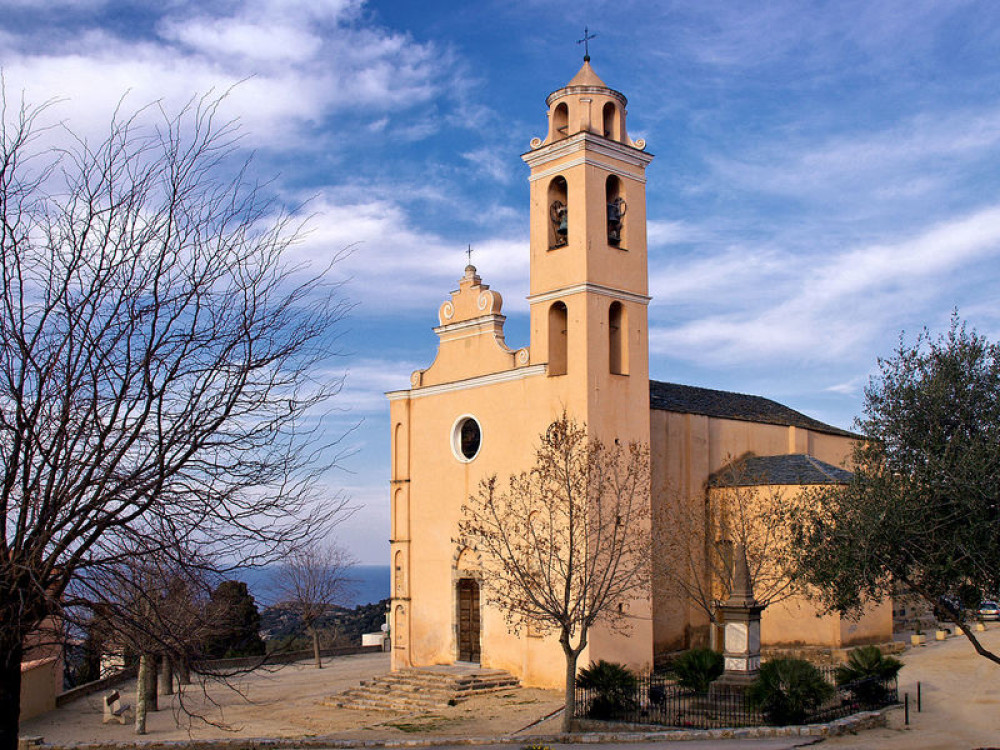
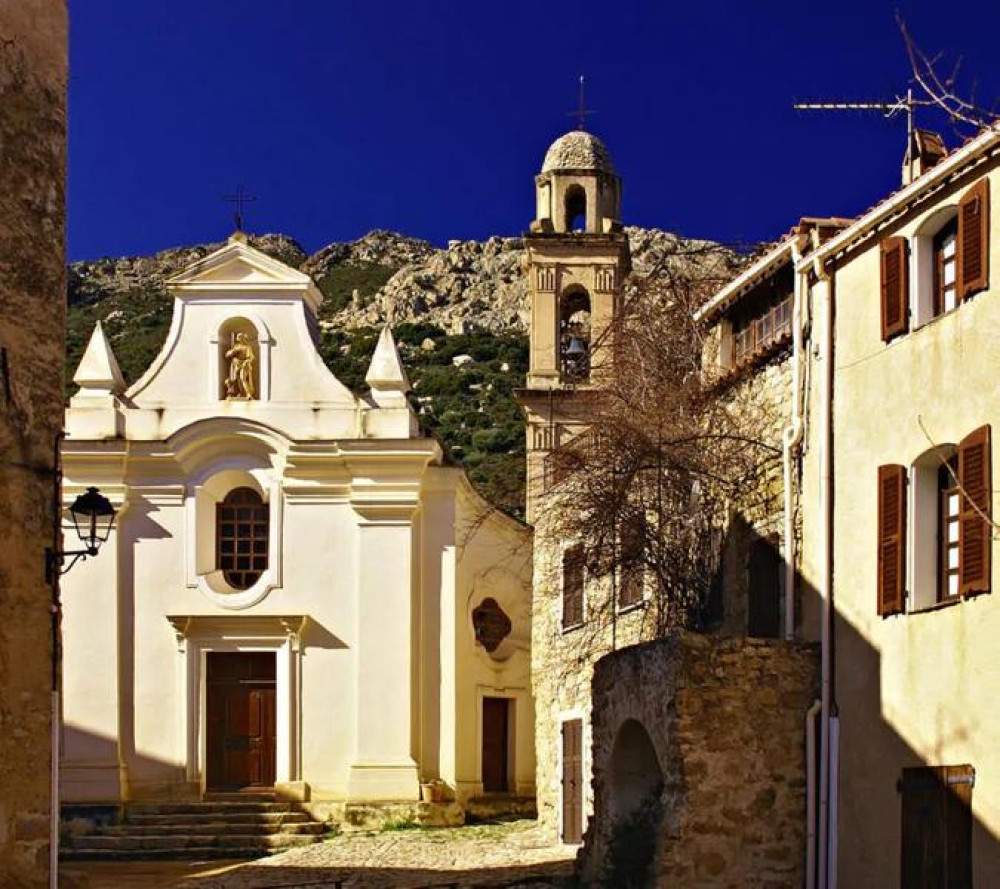
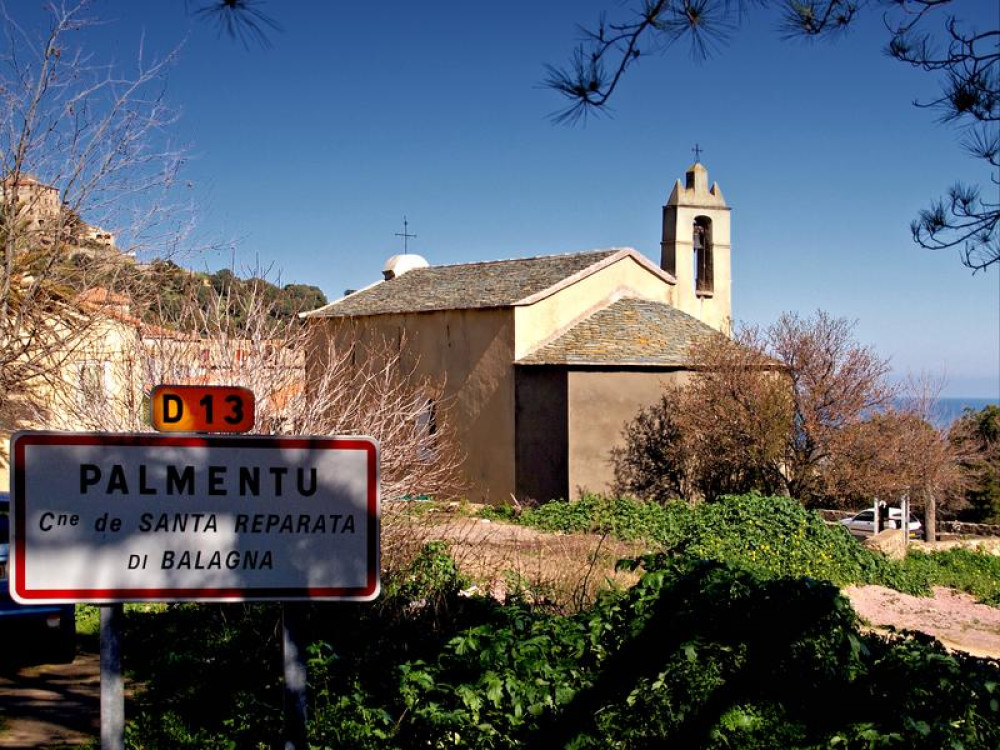
Overlooking the village, the parish church of Santa Reparata bears witness to a long history. Built in the Middle Ages and expanded in the 16th and 17th centuries, it features a remarkable polychrome Romanesque apse as well as several works of religious art.Perched on its promontory, the Church of Sainte-Reparata, whose origins date back to the 9th century, is one of the oldest examples of the religious heritage of the Balagne region. According to tradition, it was founded by Count Boniface, Marquis of Tuscany and founder of Bonifacio, on a site previously occupied by an ancient place of worship.
Dedicated to Saint Reparata, a young Christian martyr whose story remains shrouded in mystery, the church was donated at the end of the 11th century to the Benedictine monastery on the island of Gorgona. Over the centuries, it underwent several transformations. Enlarged in 1538, it was completed in the 17th century with an elegant five-story bell tower topped by a dome.
The building retains valuable Romanesque elements, notably a remarkable polychrome apse, a remnant of the original church. Various restoration campaigns have highlighted the reused stones and materials from the ancient structures.
Inside, visitors can see two side altars dedicated to Saint John the Baptist and the Virgin Mary, as well as several works of religious art, including paintings from the 17th and 18th centuries.
Even today, Saint Reparata plays an important role in village life. The patron saint is traditionally celebrated on the first Sunday in August, although her liturgical feast day is October 8.
With its thousand-year history, its architecture, and the treasures it houses, the Church of Sainte-Reparata is a must-see stop on any tour of the heritage of Santa-Reparata-di-Balagna.
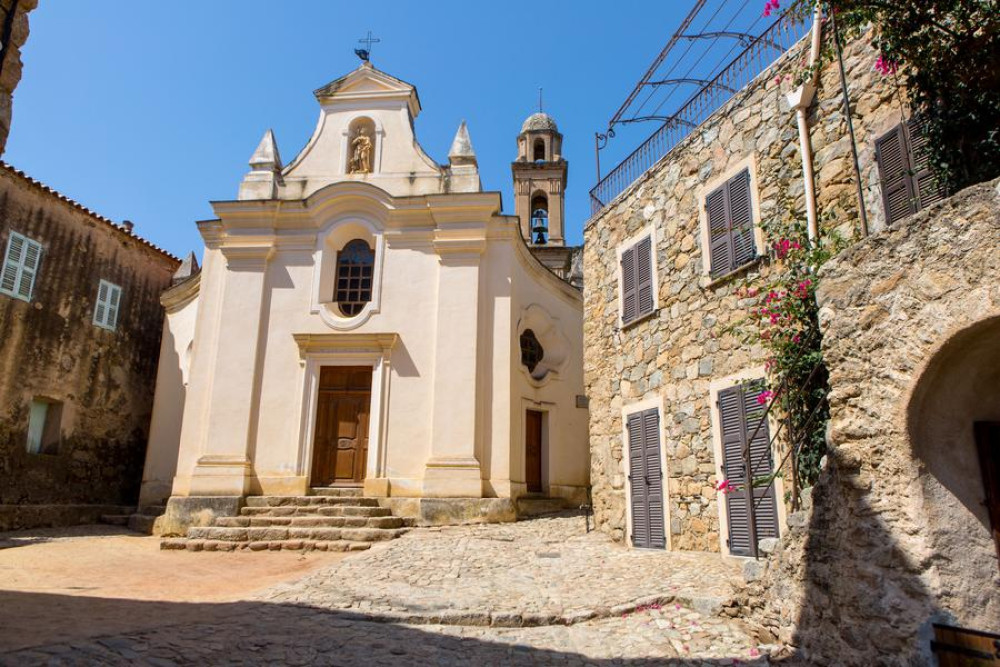
This 18th-century Baroque-style church is dedicated to San Roccu. Every 16 August, in honour of the saint, the population gathers "in allegria" for two days of celebrations and a torchlit procession.The church is notable for its remarkable tiered bell tower.
Over the years, several restoration projects have helped preserve the building. The facades were restored in 1978 and again in 1995 using a traditional technique that involves coating the still-fresh mortar with lime wash. The roof was then completely redone in 2004.
The sacristy has also undergone significant work. After the Santa-Reparata-di-Balagna town hall repaired its roof, an association based in Occiglioni is continuing the restoration and renovation of its interior.
The interior of the church reveals particularly remarkable decor. Beneath more recent layers of paint, research has uncovered a decorated vault as well as stuccolustro ornamentation around the altars. This technique, unique to Corsica, dates back to antiquity. Used by the Phoenicians, it was adopted by Italian masters beginning in the 16th century before experiencing a resurgence during the Baroque period, which sought to glorify religious buildings.
The church also houses a rich collection of liturgical furnishings from the 17th and 18th centuries, notably a solid silver chalice bearing the “Torette” hallmark and a monstrance dating from the Second Empire, likely a gift from Emperor Napoleon III.
The building is accessible via a narrow alleyway that is in good condition.
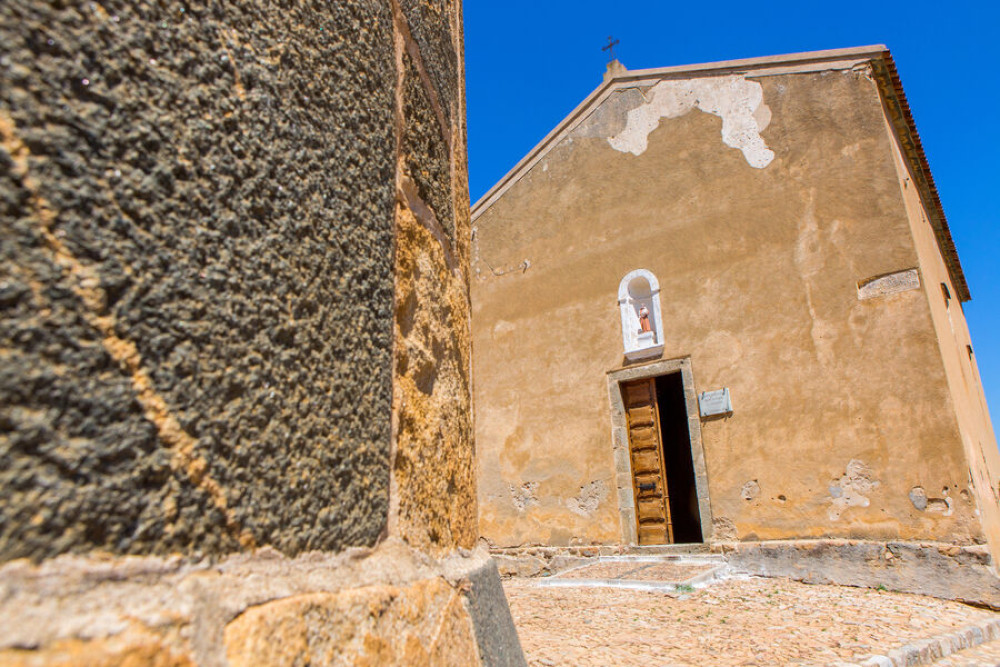
The Sant'Antone Confraternity, located behind the Church of Santa Reparata, was built in 1600 and restored in 2005. In 1618, it was furnished with wooden pews crafted by the Genoese master Joannes Andreas Lucchini, as well as frescoes adorning the ceilings.
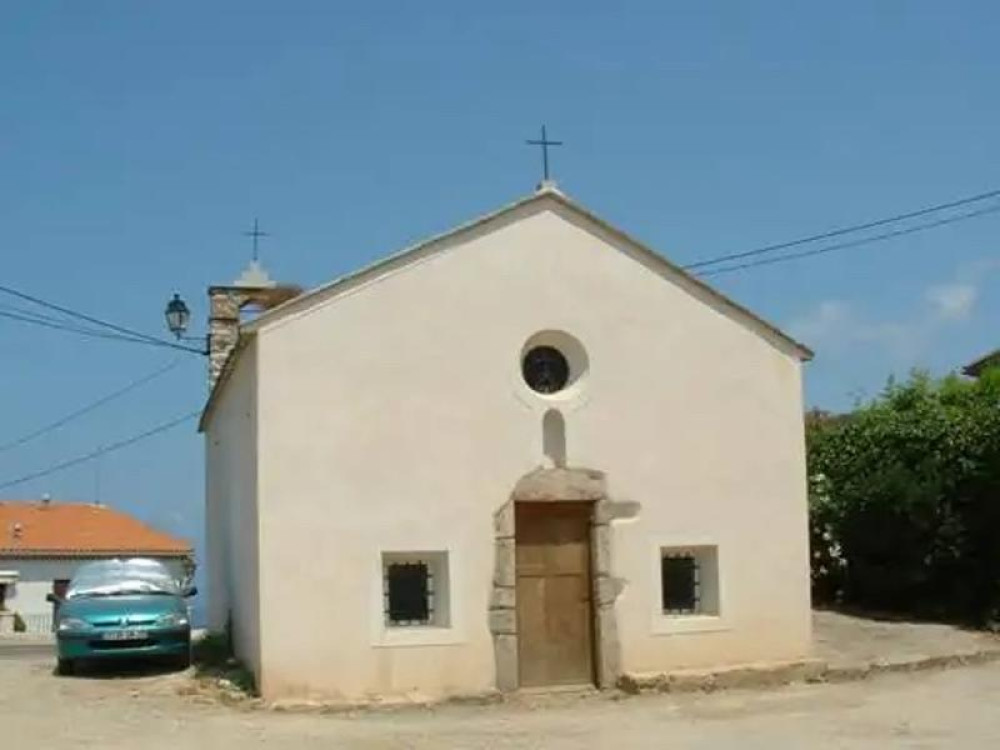
The chapel is located on the outskirts of Santa Reparata, on the road to Monticello. Dating from the 17th century, it is dedicated to the renowned Tuscan Franciscan preacher. San Bernardinu is celebrated on May 20.
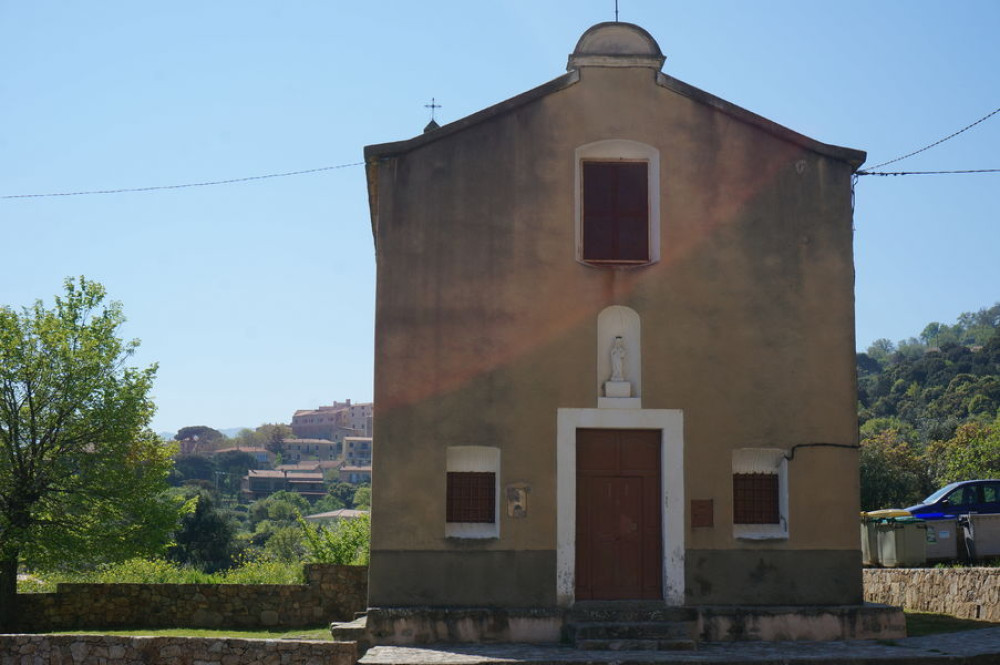
Dating from the 18th century, it was originally an oratory. It houses a remarkable wooden statue of Christ carved by Antoine Franceschini, a local craftsman who was also a gifted healer, as well as marble statues. Its roof was restored in 2003.
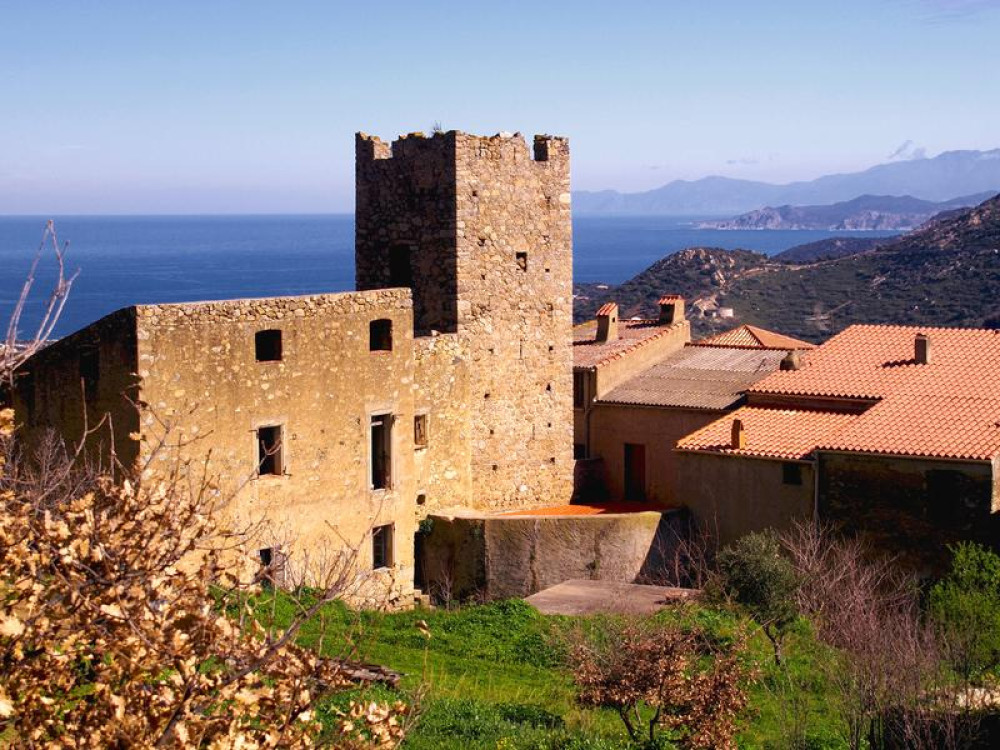
During the Middle Ages, the fiefdom of Santa Reparata surrounded the old castle and four towers of Palmentu. The oldest of the towers dates back more than a thousand years. Two of them are still partially visible and have been converted into housing.
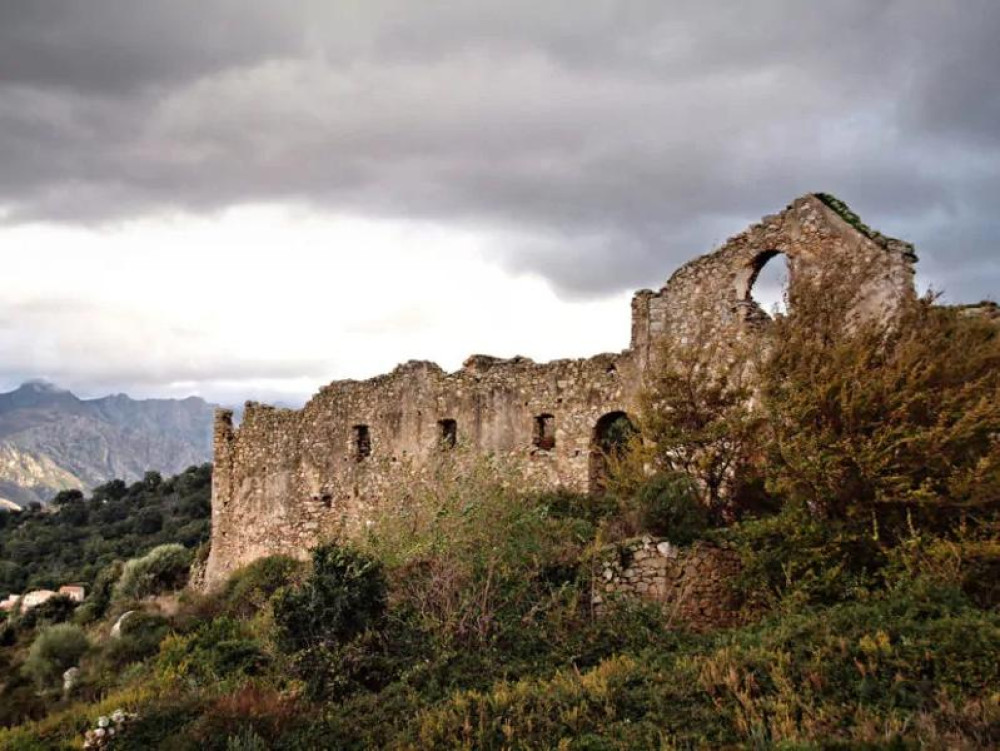
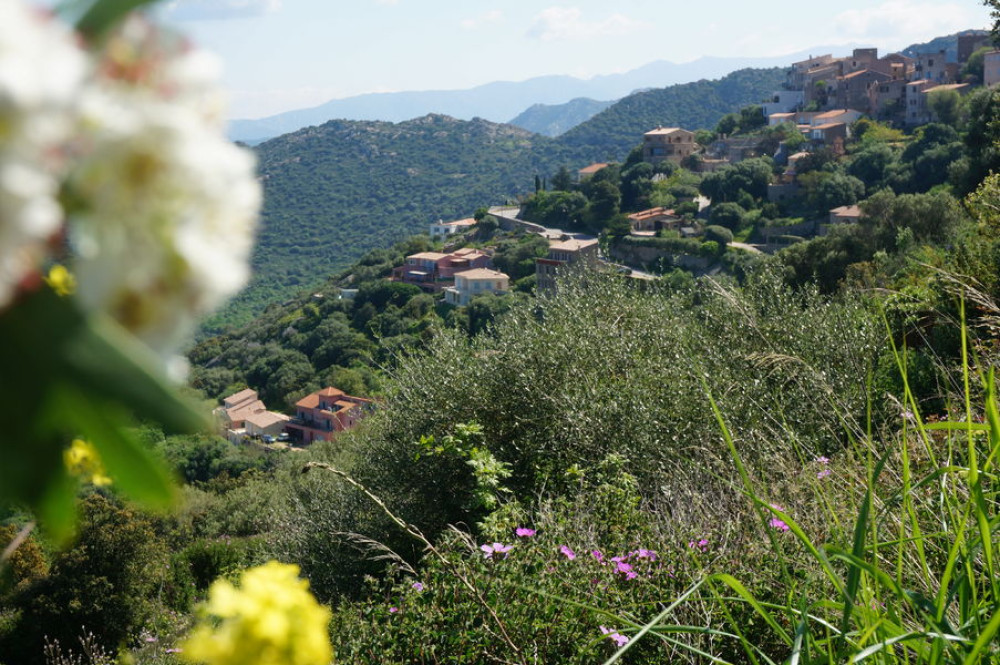
Monticello is a small, picturesque village built amid olive trees around a lovely little square where the locals love to gather for a game of boules or to sip a cool beverage on the terrace of the bar.
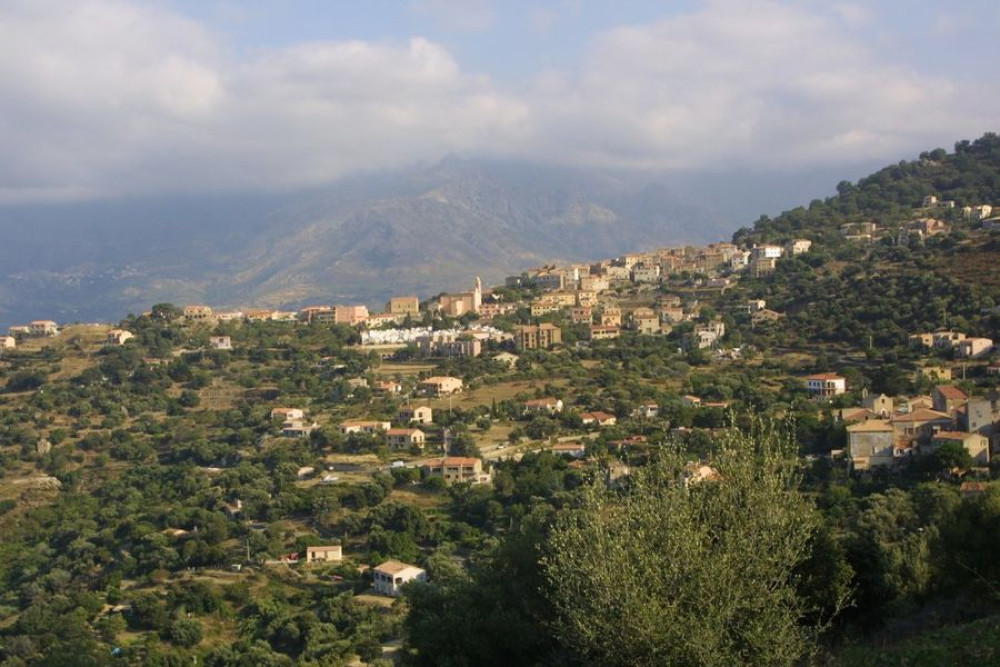
Santa Reparata straddles the hills of Santa Suzanna and the Mont Sant'Angelu. Take your pick, between the blue-green blend of the Palazzi Valley and L'Ile-Rousse Bay, or the wooded countryside of the green Reginu Valley.
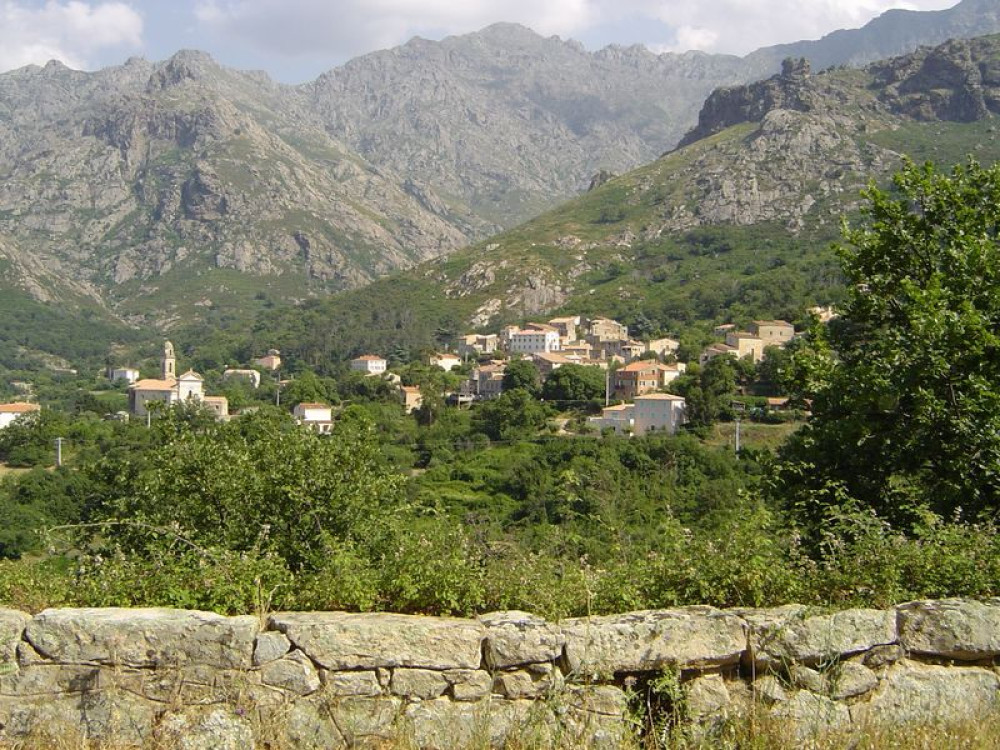
Balagne's smallest village has some pleasant surprises in store for you. Costa is a wonderful place, full of old stone houses, alleyways and arches. The only way to visit is on foot.Next to the town hall, the Malaspina House, a beautiful residence built in the 17th century, overlooks one of these vaulted passages. Take your time in Piazza Cumuna. Stop in front of the church of San Salvatore and enter to admire its paintings, olive tree statues and beautiful organ.
And if you feel like quenching your thirst, push on to the 17th century washhouse where the water gushes out of the fountain with a purity equalled only by its freshness.
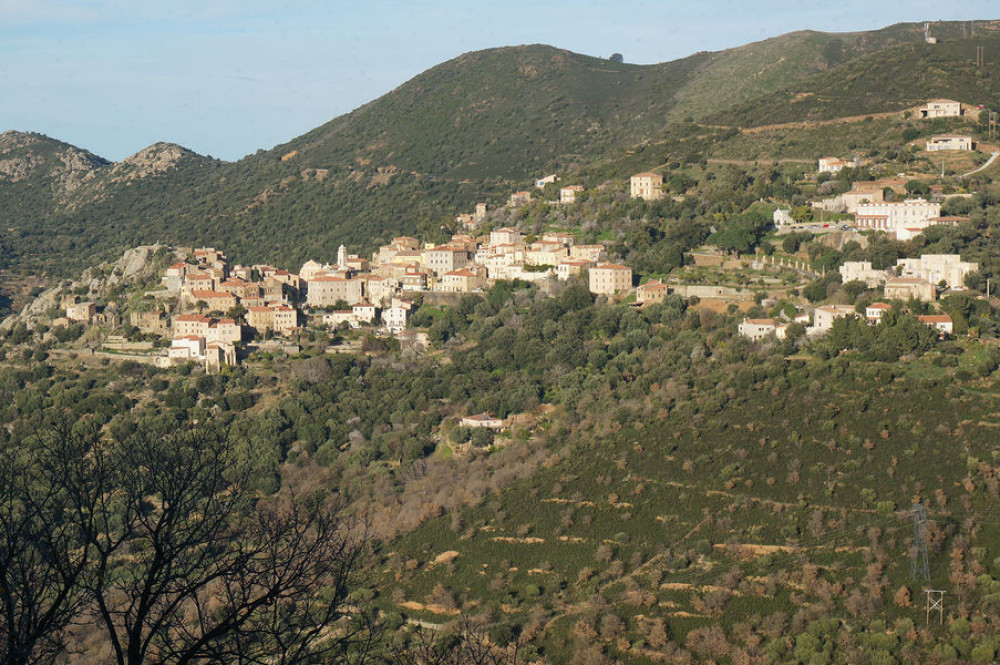
Succumb to the poetic charm of Occhiatana. Built on the Pinzu Sordu mountainside, this beautiful village offers a magical blend of tradition and modernity.
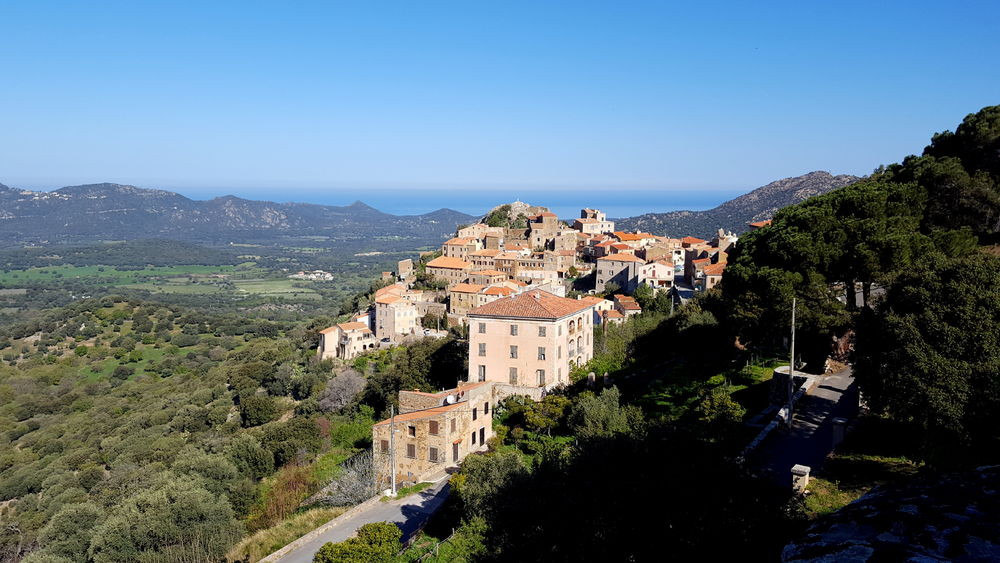
Standing proudly on its rocky spur overlooking the Reginu valley, the vibrantly colourful village of Belgodere invites you to explore the district of La Cima and the Malaspina castle!Follow in the footsteps of the Marquis of Massa, a powerful feudal lord, who one day in 1268 retreated to the top of the teghje (rocks) before deciding to settle there.
Explore the fortified part of the village of Belgodere, you won't regret it! Pass under one of the three vaulted entrances and visit the Cima du Fondu and Cabanne districts. Climb to the top of the teghje on the remains of the tower and enjoy the exceptional view.
Take a break in the centre of the village and sit at a café before heading to the parish church, which is a listed monument. Don't forget to look up on the way out of the village if you're heading towards Costa to see the Malaspina Castle.
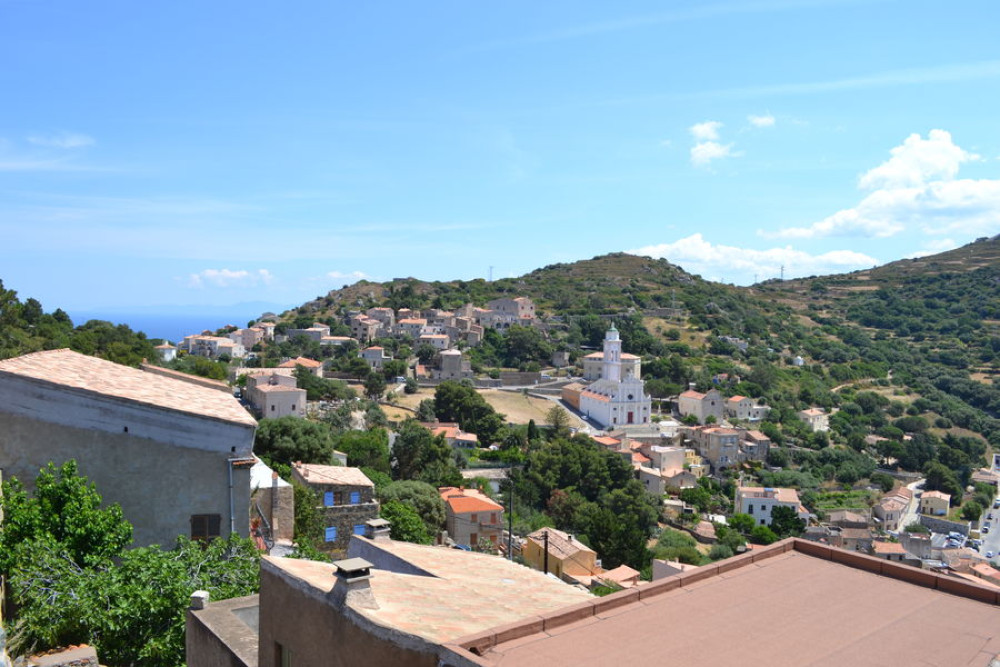
Explore one of the oldest villages in Balagne, and the hamlets that stretch majestically across the hills of Mont de Guido, Borgu and Pietralta, just below Mont Sant'Angelo.Travel to the heart of Moorish architecture by visiting Corbara, where a certain native Davia became Empress of Morocco. Walk along its beautiful houses, stroll through its streets and alleys, pass under its vaulted passages to discover the typicality of a Balinese village.
Rich heritage and history
You can visit the many religious buildings such as the chapel of Notre-Dame des Sept Douleurs, the church of the Nativity of the Virgin (known as Notre-Dame de Lazio), or the many other chapels or oratories, not forgetting the convent of Saint-Dominique.
Don't miss the obligatory visit to the parish church of A Nunziata to discover the Treasure Museum with its collection of liturgical ornaments in the sacristy. If you don't want to miss anything about the heritage and the famous people of the old village of Corbara, let yourself be tempted by the audio guide available at the entrance.
On the way to the village square, stop at the fountain of the Sbollaru. Under a beautiful vault, this spring, known for its capricious flow, flows in a beautiful granite basin. Try the experience and quench your thirst here to see if, as the saying goes, he who drinks his water will eventually calm down.
Climb to the top of the village to the house of Monsieur Guy Savelli. Here, portraits, maps, period posters, handwritten letters, old musical instruments, welcome you to the heart of a house museum.
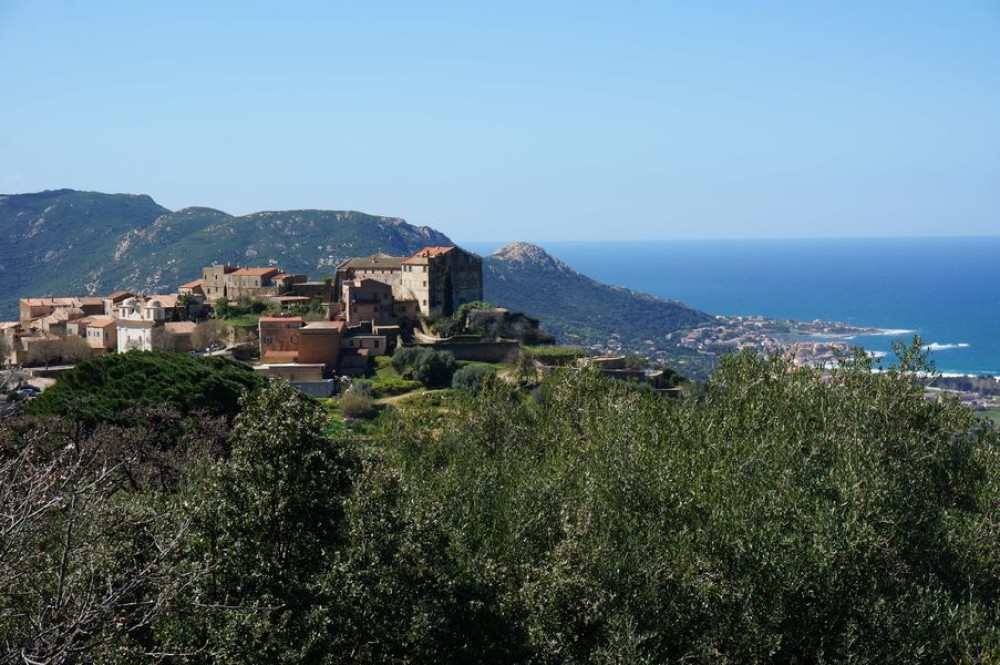
A village of flaxen houses with sky-blue shutters awaits you. This is Pigna, a delightful village which has re-emerged like a phoenix from the ashes. A blend of stone, clay and tuff has returned this place to its former splendour.
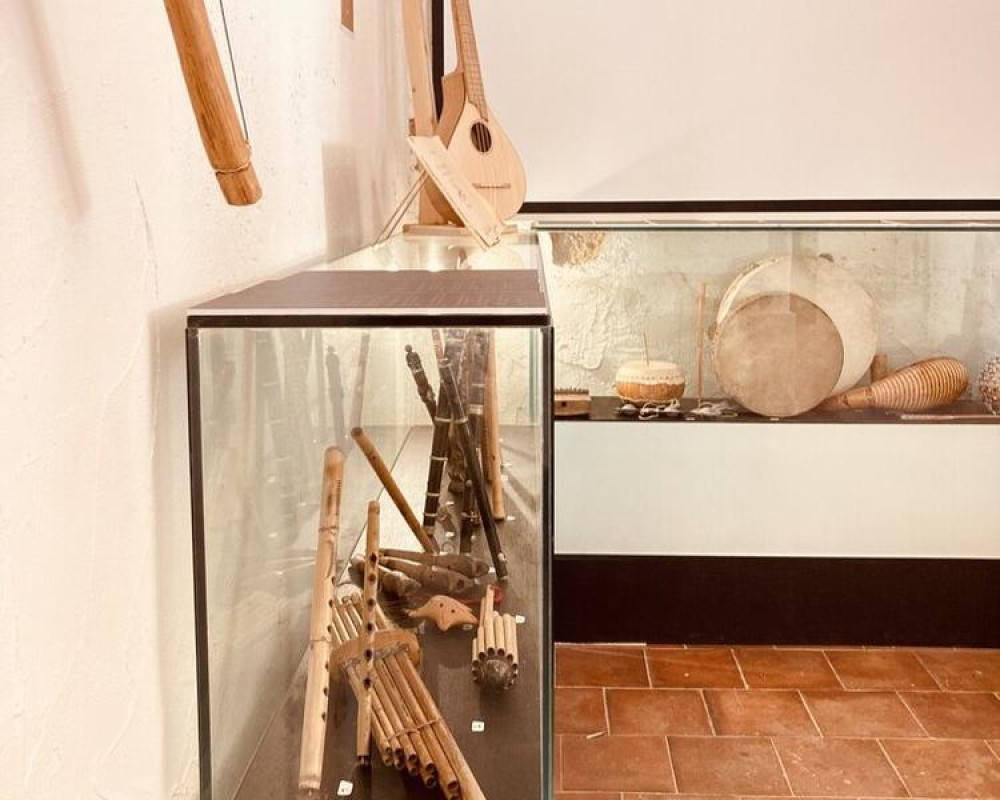
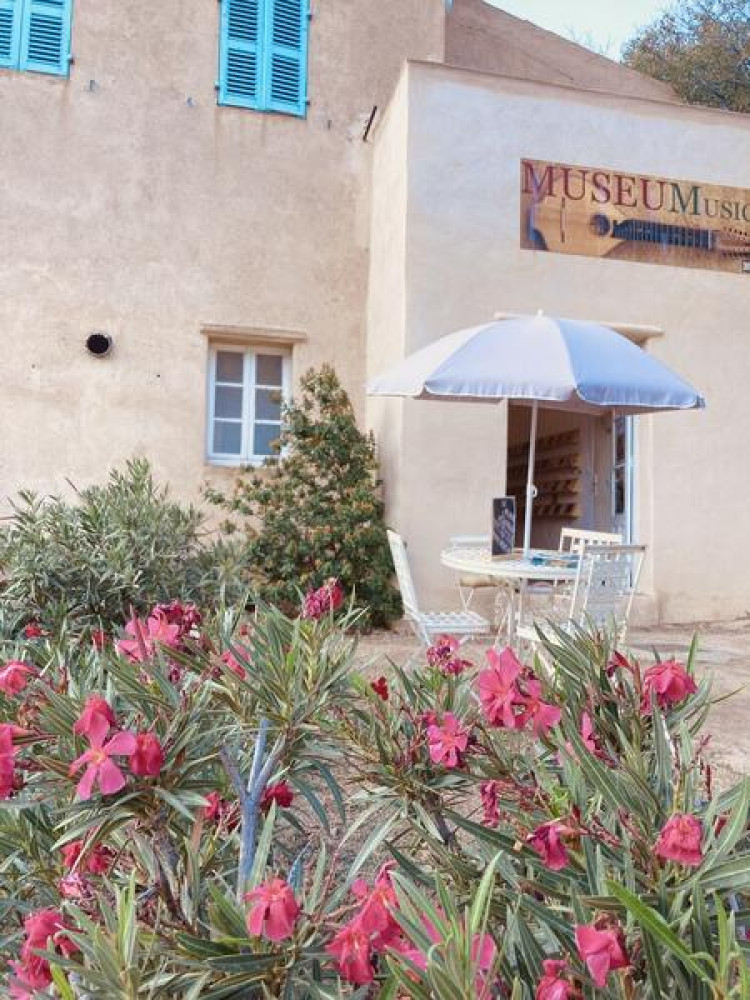
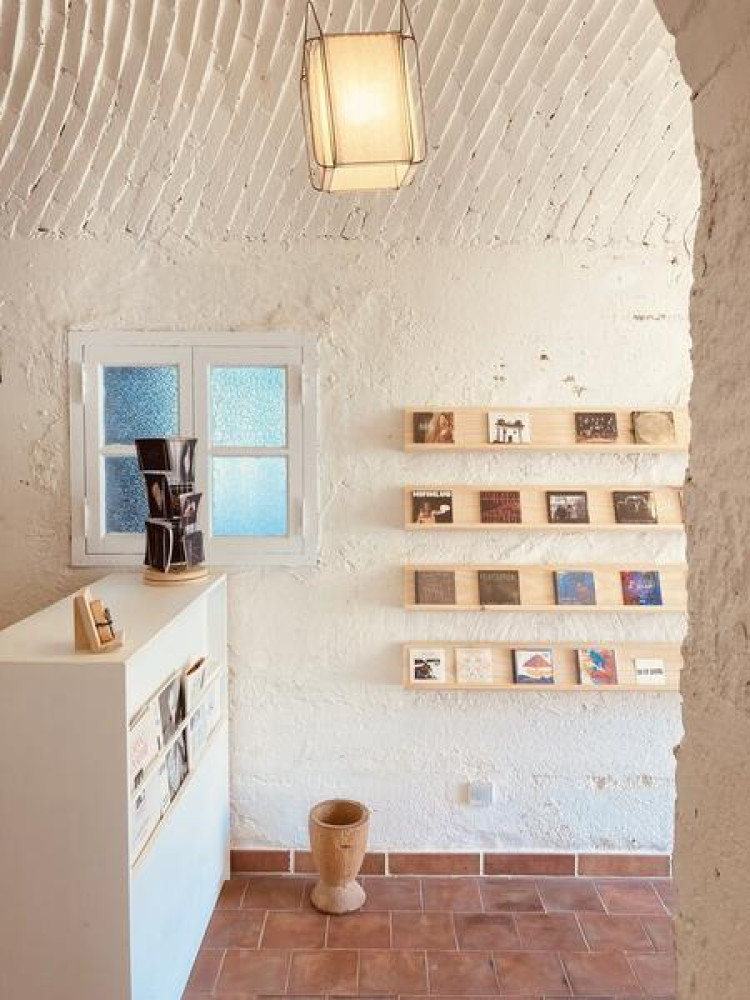
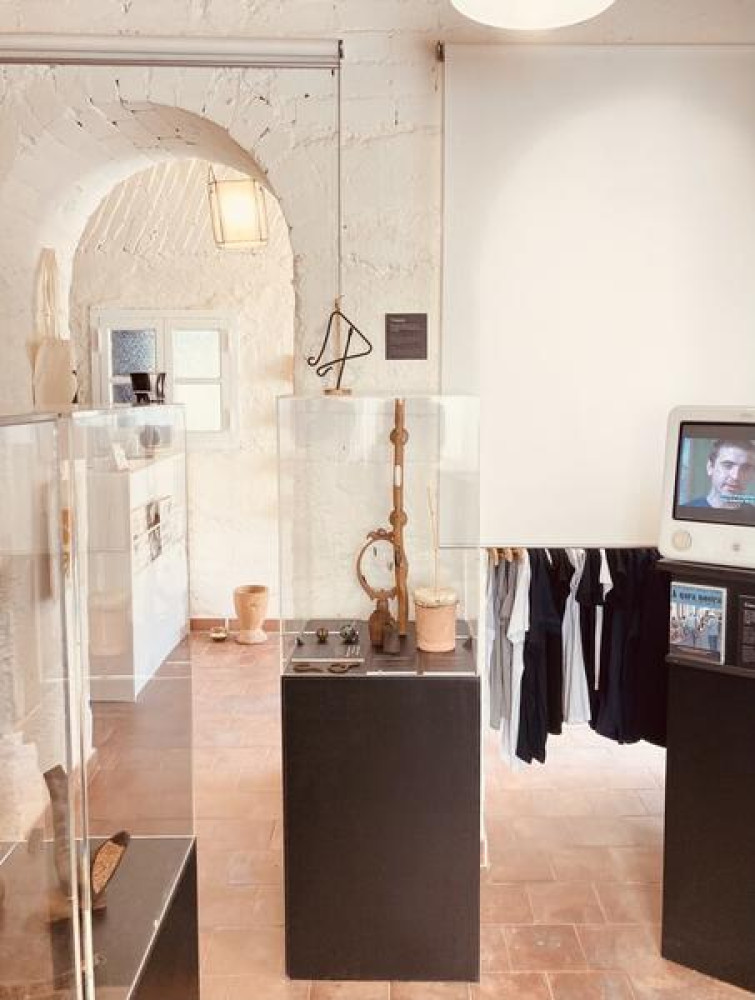
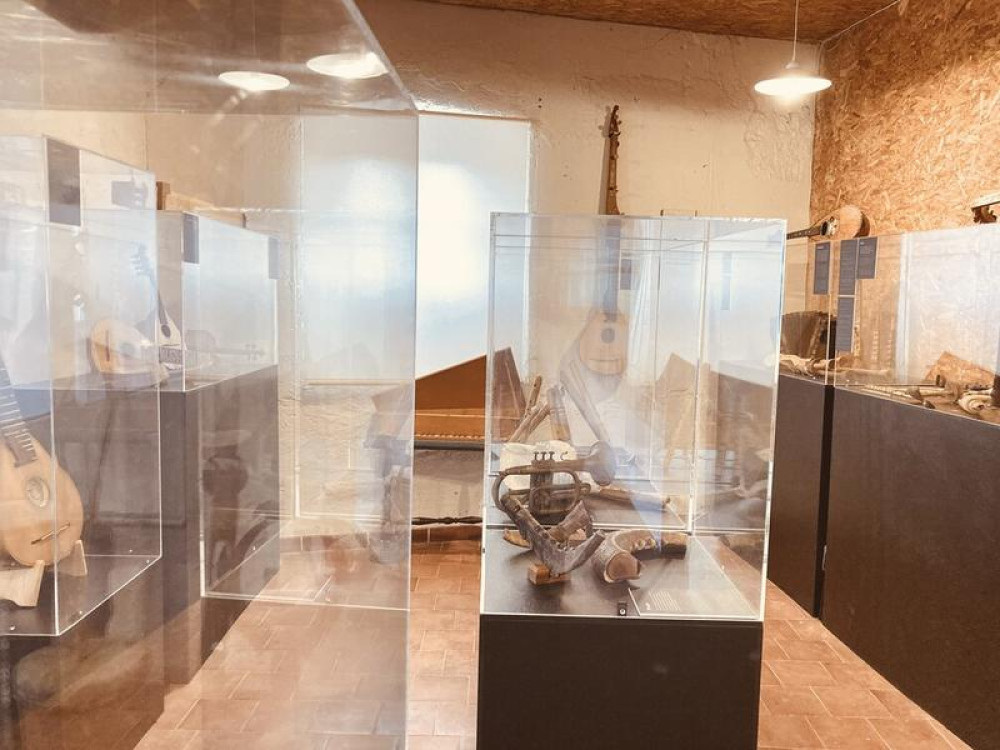
The CNCM VOCE museum, MuseuMusica, is a space dedicated to the dissemination and memory of Corsican musical culture, past and present. You'll discover a collection of instruments from Corsica and elsewhere, as well as an audiovisual space.Located at the entrance to the village, the museum features a Corsican and Mediterranean instrumentarium, audio-visual and sound equipment, and a store run by the Pigna-based Casa Éditions label.
- Connection and context above all -
Chloé, the museum's receptionist, will passionately guide you through the traditional instrumentarium, immersing you in its history and evolution, from manufacturing techniques to ancestral uses.
- Instrumentarium -
A number of lost instruments have been recreated at Pigna thanks to historical research. Pivana, Pirula, Cialamella and Colombu are just some of the instruments typical of the island that you can discover during your visit.
- Casa Éditions & Boutique -
An opportunity to discover the musical collection of Casa Éditions, a label based in Pigna since 1997, with albums ranging from traditional Corsican music to jazz. You'll also find t-shirts, bleu de chine, books and sheet music, for a souvenir of the village or its Festivoce festival!

A masterpiece of Romanesque Art and the flavour of almonds... This village takes delight in perpetuating ancient customs. It still organises traditional processions followed by festivities around an open-air meal.The village and its two hamlets, Torre and Praoli, located on the hillside, overlook an agricultural plain that extends to the sea.
Arboriculture has been one of the riches of the town: olive trees but also citrus and almond trees have long shaped this landscape, unfortunately damaged by fires.
Aregno was known for the quality of its oranges, considered to be the best in Corsica; they were even exported to the continent.
The first Aregno orange trees were imported from Portugal in the 17th century. One variety of orange is called "AREGNO citrus sinensis osbeck".
In January, the blessing of the oranges takes place, and the procession of Saint Anthony the Abbot, whose statue they adorn.
The village is also known for its almonds ... At the end of the 19th century, almond cultivation covered 3000 ha of the island.
By the middle of the last century, it only represented a hundred hectares.
It was in 1997 that the rural center decided to give the almond tree its nobility through its cultivation and the organization of a rural fair on the first weekend of August.
Almond and its derived products from ancient local food traditions are celebrated there.
Sights...
Trinity Church: a real gem of Romanesque art, built from multicoloured granite. Listed as a Historical Monument since 1883, it was the seat of the Aregno parish in the diocese of Aleria in 1177. The interior wall paintings dating from 1449 and 1458, "The Four Doctors of the Church" and "Saint Michael Slaying the Dragon", are also classified works.
Saint-Antoine Abbé parish church: located in the heart of the village, this Baroque church features a tall ochre-coloured bell tower with 3 arched levels. The front facade of pink striped with white is flanked by sculpted side doors. The date 1818 is engraved on a cornerstone. The church houses some works belonging to the municipality which are listed Historical Monuments, including canvas paintings, "The Death of Saint Francis-Xavier" and "The Virgin and Rosary with Saint Dominic and Saint Catherine of Sienna", some wooden furniture (prayer pulpit from 1714 and 18th-century friary stalls with four seats in stained, waxed wood) in the Saint-Antoine chapel.
Vestiges of San Quilicu Chapel, a Romanesque building dating from the 10th century.
Events: an almond festival, "a fiera di l'Amandulu" (first weekend of August)

Perched high on a hill and surrounded by the riches of Balagne, this village, one of the oldest in Corsica, must be the finest example of Corsican medieval architecture. Sant'Antonino is officially rated among the most beautiful villages in France.Built in the 9th century and located at 500 m. altitude and thanks to its eagle-nest construction, it overlooks and observes the whole of Balagne in 360 °.
You just have to walk through its narrow and stony streets, its network of galleries and vaulted passages, all forming a downward spiral from the top of the rocky outcrop on which it was built, to appreciate the preservation of this jewel.
Its medieval architecture and its narrow streets paved with very old stones have contributed to its classification among the most beautiful villages in France.
Overlooking the sea, this "fortress" in the shape of an eagle's nest was built in the 9th century; it dominates the whole of Balagne and observes it at 360 °.
It is made up of around 75 residences, welded to each other, and which wrap around a granite peak forming an embryo of a labyrinth to better resist the possible invader.
Due to its position, it is said to be visible from all sides in Balagne. Founded by Ugo Colonna in the 9th century, its establishment at the top of the hill made it possible to take refuge and defend itself there during the Moorish invasions.
Sights...
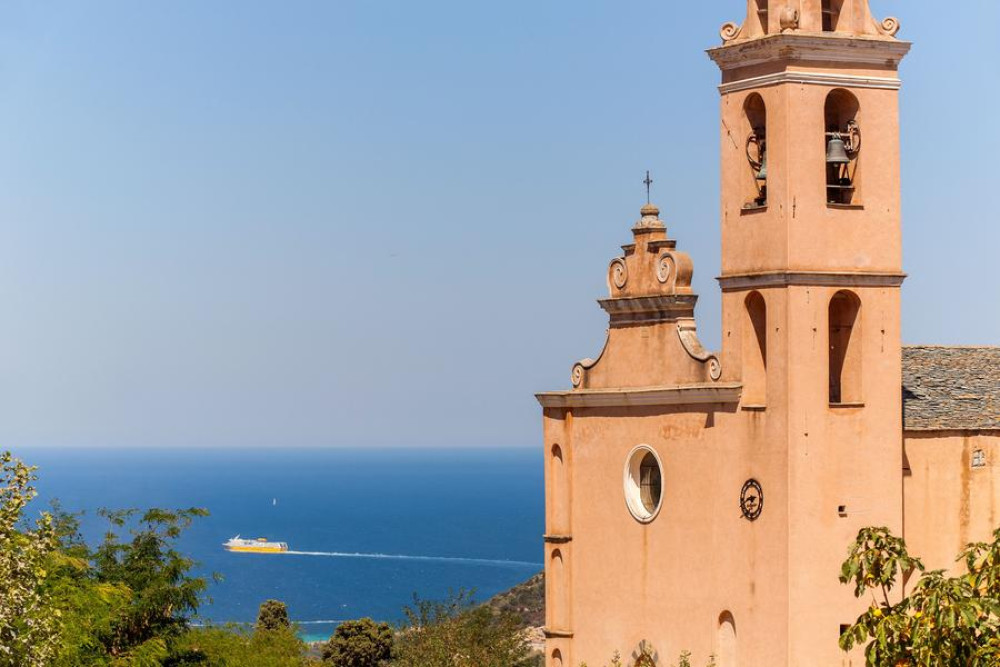
The 17th-century A Nunziata parish church and multi-level bell tower.
Chapel of the Saint Antoine Friary, built between 1760 and 1770.
Ancient bread furnace.
Vestiges of the old Castellu fortifications.
Notre Dame des Bergers chapel.

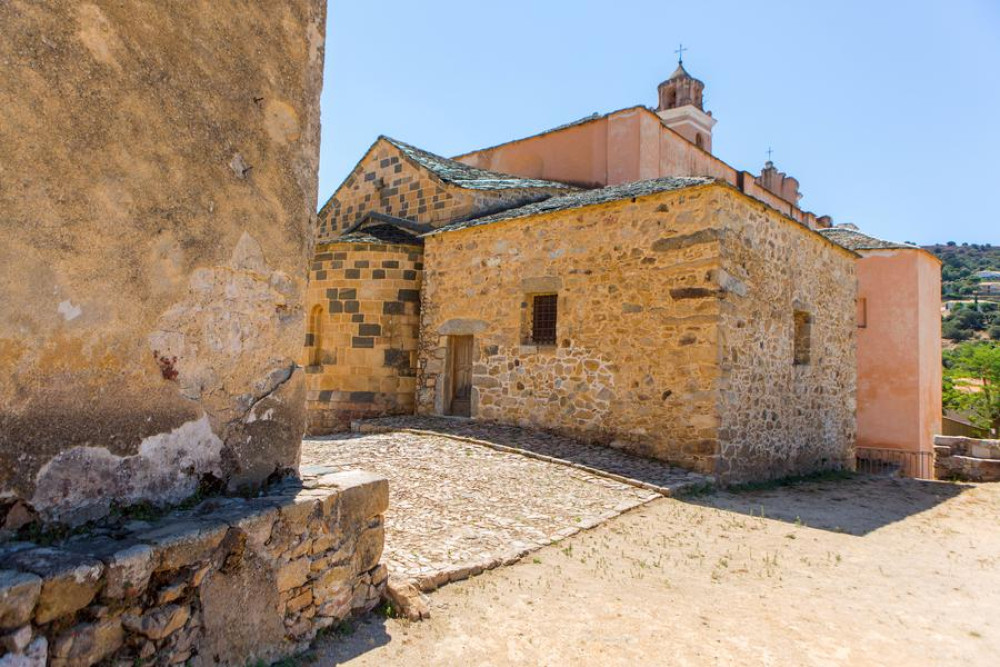
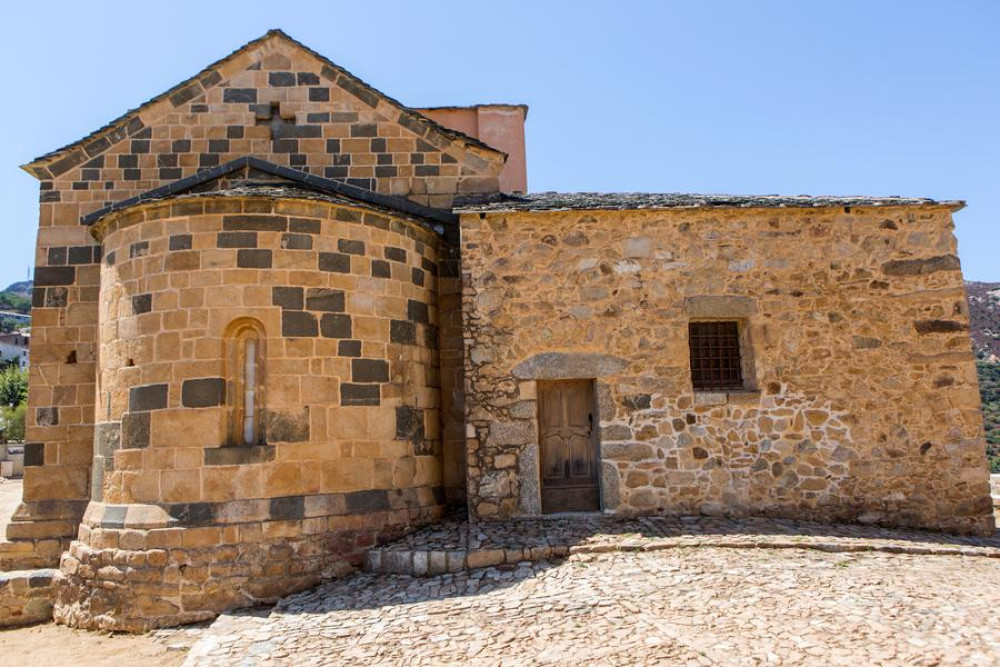
A Ghjesgia di a Trinità di San Giovani... This building dating from around 1100 is an absolute gem of Romanesque Art.The granite blocks constituting its facade are of 3 different colors, 3 being the number of the perfection of the Trinity: beige symbolizes the Father, green, the Son, and red the Holy Spirit.
Above the door, an arch has 7 dark keystones and 8 light keystones: the 7 invites man to turn to God and the 8 symbolizes his resurrection.
Inside are 2 15th century frescoes.
The Church had the status of a Piévane Church. It served as a burial place for the inhabitants of Aregnu and Sant'Antuninu until the beginning of the 19th century in a communal burial place called "arca". His religious vocation was coupled with a role
social until the beginning of the 16th century.
It also served as a court of first instance. The name of the village, Aregno, would be a deformation by palatization of aringo.

There is evidence that this church existed in the 17th century under the name of Santa Croce.In 1730 she was named Sant'Antonio Abbato. The organ gallery dates from 1888. The preaching pulpit, dated 1714, is in waxed wood; it was listed in 1995. Inside, several chapels and their altars were founded by the community or families whose coat of arms can be found.
The San Quilicu Chapel is the former Chapel of Souls in Purgatory. It was redecorated in 1810 after the upper window was obstructed during the erection of the campanile.
The baptistery chapel houses an 18th century canvas, a reproduction of a work by Carlo Maretta preserved in Rome, representing the martyrdom of St Francis Xavier. This painting, the author of which is unknown, was filed in 1995.

This chapel was founded around the 10th century and left to abandon in the 13th century. It was dedicated to San Quilicu, who is honoured and carried in procession in mid July.The building is built in two-tone polychrome granite (beige granitoïde and black syeno-diorite) without plaster, in the Romanesque tradition. It is located on the first built site of the village, traces of which remain in the surrounding land. It is now in ruins.

The parish church, A Nunziata, was built in the early 17th century. It features an elegant multi-level bell tower.The parish church A Nunziata contains old paintings and an organ dating from 1744 signed "Battista Pompost di Pistoia".
Its bell tower is made up of two floors. The bell was recast and baptized on April 4, 1982 Madre Di Le Gratiae "mother of all graces" by Father Pol de Léon of the convent of Marcasso.
The parish church adjoins the Chapel of the Confrérie Saint Antoine, a building built between 1760 and 1770. It is decorated with a niche in which is a statue of the Immaculate Conception Virgin.
It has a high altar from 1776 with plasterwork and visibly Baroque decor.

The convent's first stone was laid on 5 September 1623, on land generously donated by Cateri's three inhabitants. An official ceremony was held to mark the occasion. The building overlooks the entire Aregno plain.Its location had been chosen two years earlier, on May 6, 1621, and materialized by a cross placed on the ruins of a former commandery.
In all, it took two centuries and constant work to complete this imposing building of over 1500 m².
It consists of around 40 rooms, a cloister and a church; the latter was at that time the parish church of Cateri.
In 1642, the population of the convent was very important and many cultures were developed in its dependencies; consequently, the water requirements have, in fact, increased.
This is the reason why the neighboring municipality, Lavatoggio, was asked to donate water.
The municipality donated water from the "Capu di Guestia è Monacu Mortu" to the convent. 9 years later, another donation of water from Quarciolu and Parnicale was made; however, this water was only available from mid July to the end of October.
In 1789, the convent of Marcassu was declared National Property and sold at auction to Joseph Salvini de Nessa after the expulsion of the Franciscan friars who occupied it.
In 1806, Joseph Salvini sold the 2 large bells (bought by the factory of Sant Antonio) and the organs. He also ceded the polychrome marble high altar which now adorns the Church of Cateri.
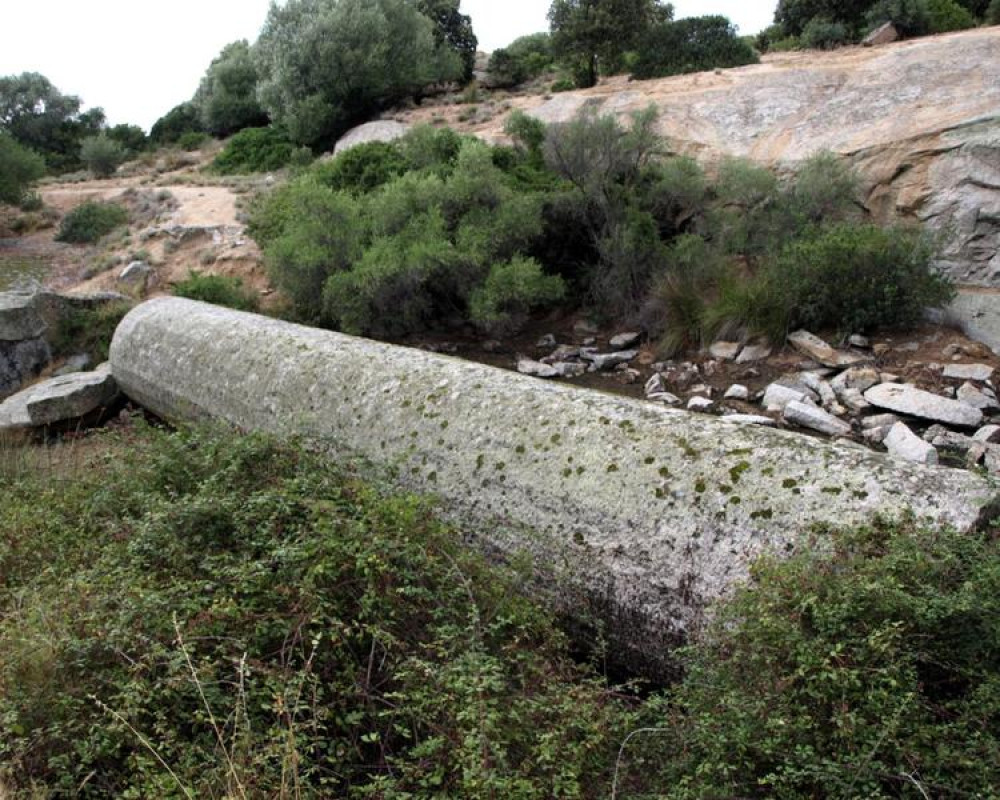
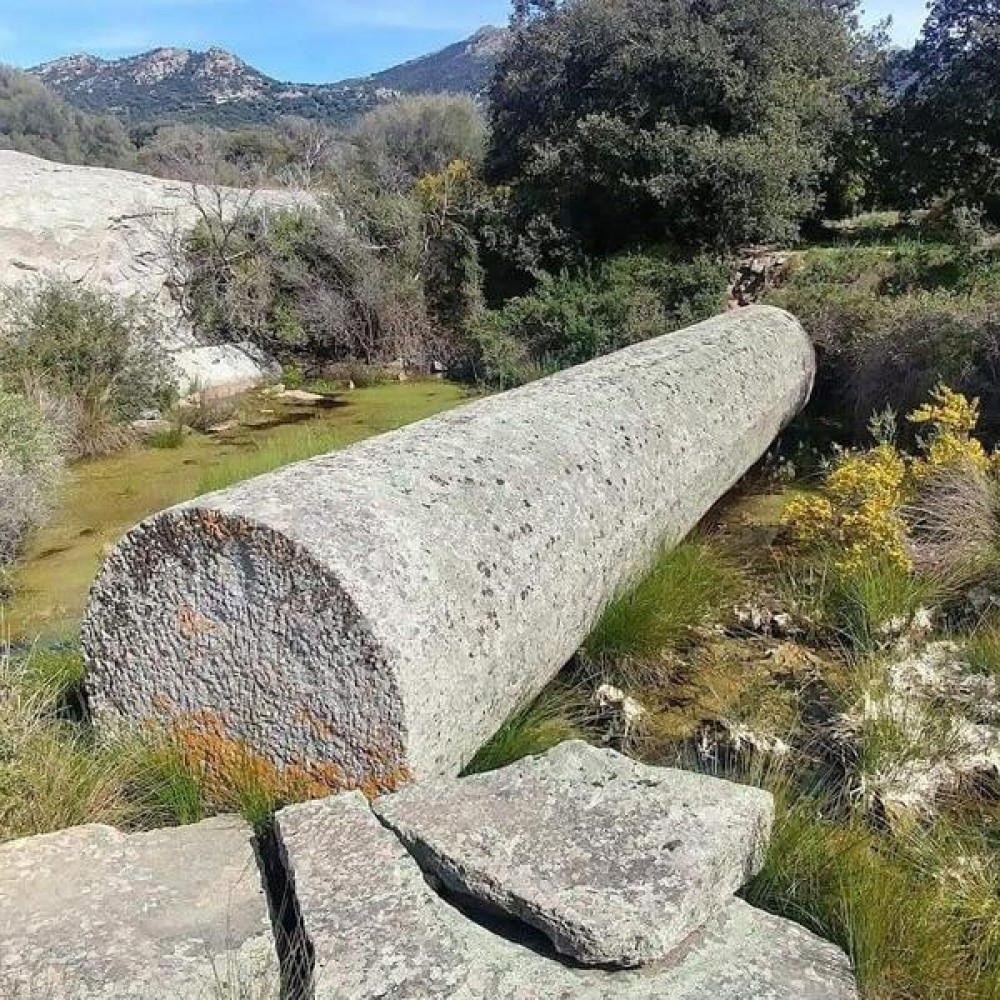
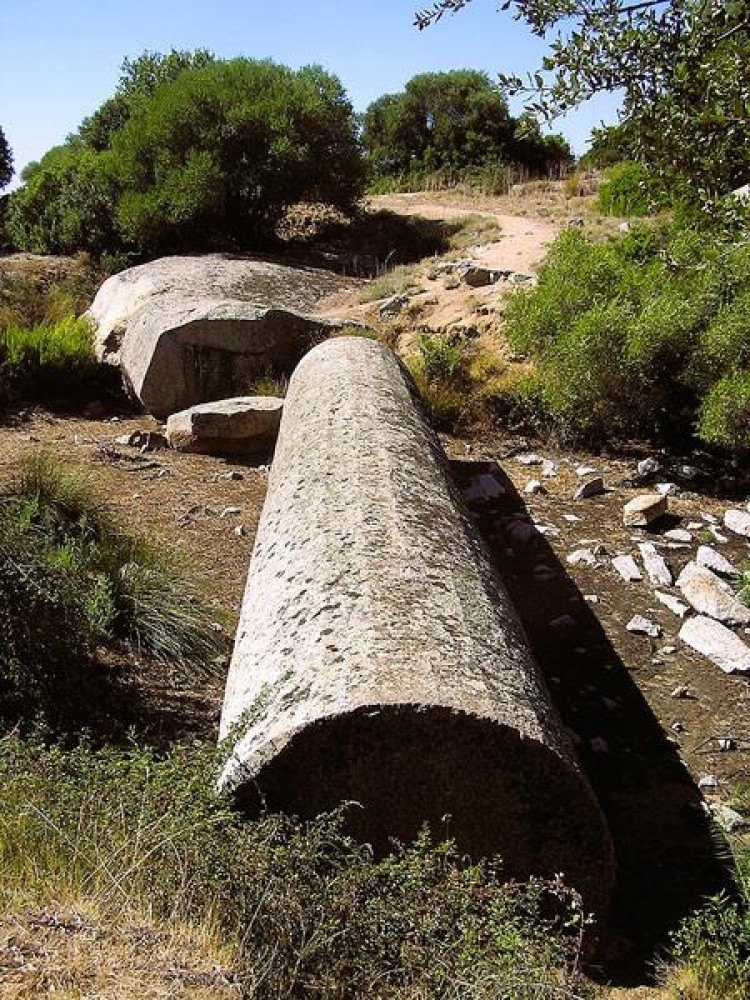
The Corbara Monolith is an impressive granite column, 17 m long and 3 m in diameter, carved in 1839 to support a statue of Napoleon I. It has been abandoned for logistical reasons. Abandoned for logistical reasons, it weighs 272 tons and bears witness to local history.A few kilometers from Algajola, off the RT30 and in the commune of Corbara, lies a little-known but impressive monument: the Corbara Monolith.
This granite block, 17.36 metres long and 2.74 metres in diameter, weighing almost 272 tonnes, is an imposing testimony to imperial ambition in the 19th century. Conceived in 1839 to serve as the base for a monumental statue of Napoleon destined for Ajaccio, the monolith never left the site where it was carved.
The quarry where this stone giant was born is located in an area where granite is characterized by its large, slightly faulted domes. Algajola granite is remarkable for its large honey-yellow crystals, micas with varied greenish inclusions, and its envelope of feldspars and quartz. Quarrymen cut this monolith directly on site, but the technical and financial difficulties of transporting it condemned this ambitious project to abandonment.
Today, the monolith rests peacefully in a private field, close to the ruins of the former quarrymen's cottages.
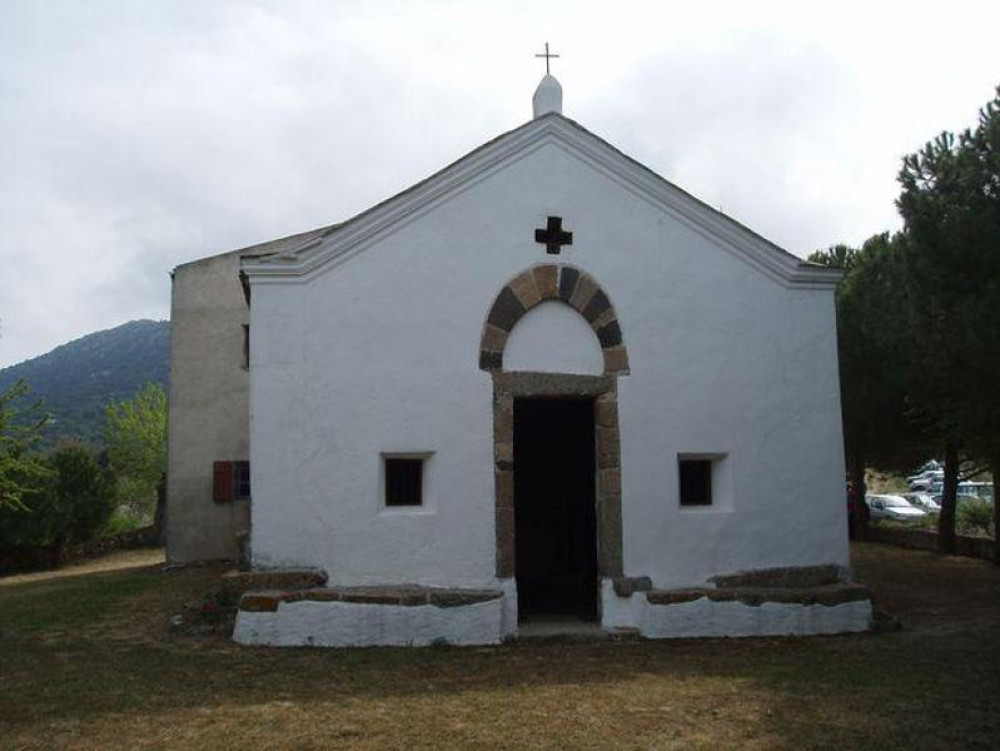
Located on the road from Ile-Rousse towards the village of Corbara, this Romanesque chapel was built in 1098 on the ruins of a Phoenician temple dedicated to the god Baal.The chapel was remodeled in the first half of the 18th century and restored in the 20th century.
This elongated edifice comprises a single nave and a choir covered with an exposed wooden frame and featuring religious symbols.
Two celebrations take place here: the first, on Easter Monday, with a procession and the blessing of eggs.
The second takes place on September 16, the feast day of Saint-Cyprien and Saint-Corneille, at which mass is held to enthrone the Prior and new members of the Confrérie de pénit.
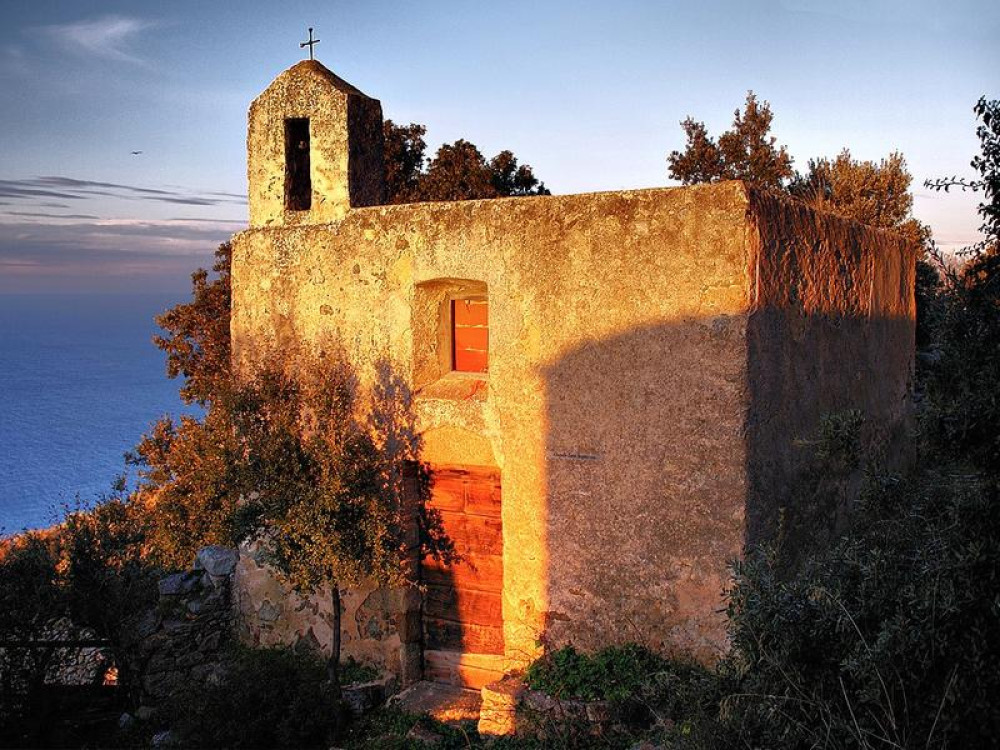
The Chapel of St. James belongs to the Franceschini family and stands at the foot of the ruins of a castel built in the 9th century by Guido de Sabellis.Around 1595, the Chapel of St. James (San Giacomo) was erected in memory of General Count Jacques Savelli, Governor of Famagusta (Cyprus), who was born in Corbara and died in 1570.
Restored in 1780, it is no longer used for worship and is not open to the public due to its private status.
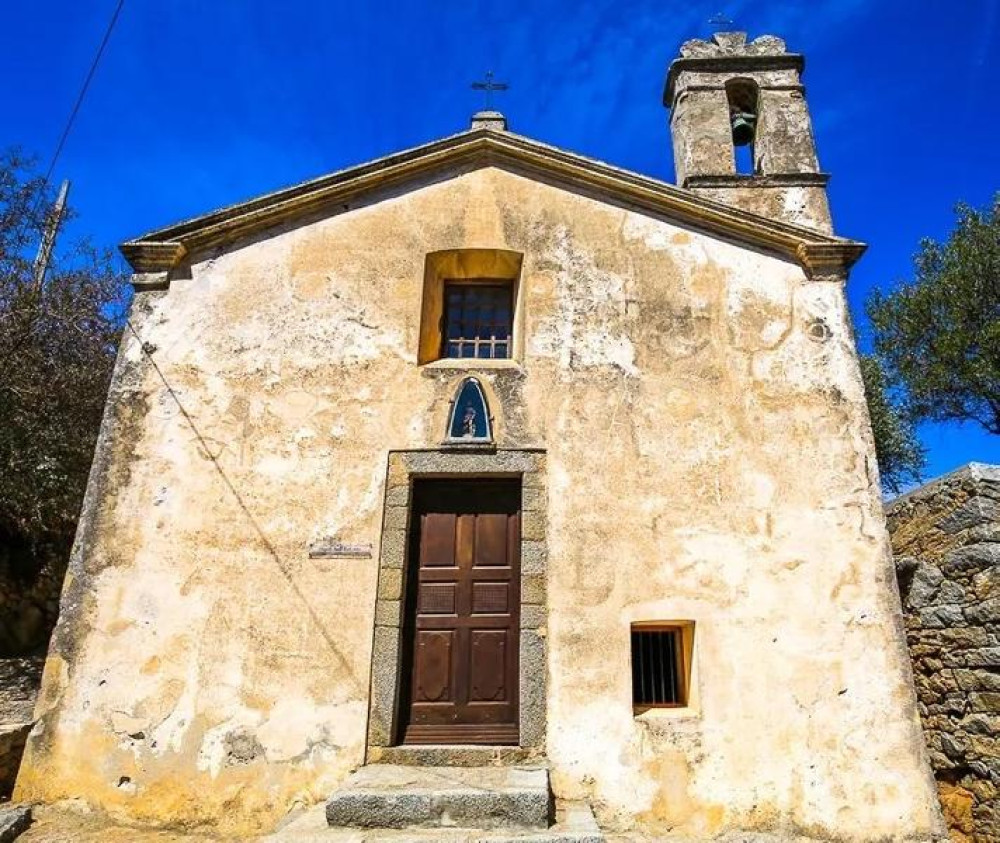
The Chapelle Saint Roch, built in 1607 by David Aitelli de Savelli, houses a 17th? century altarpiece bearing his coat of arms.The Chapelle Saint Roch was built around 1607 at the request of David Aitelli de Savelli, a member of the Corsican Council of Noble Twelve.
Inside, a 17th? century altarpiece, dedicated to Saint Roch, bears the coat of arms of its founder, accompanied by the following inscription: "David Aitelliu de Sabellis ex voto divo Rocco posuit hanc imaginem".
It was subsequently restored in the XIX? and XX? centuries.
The feast of Saint Roch is celebrated on August 16.
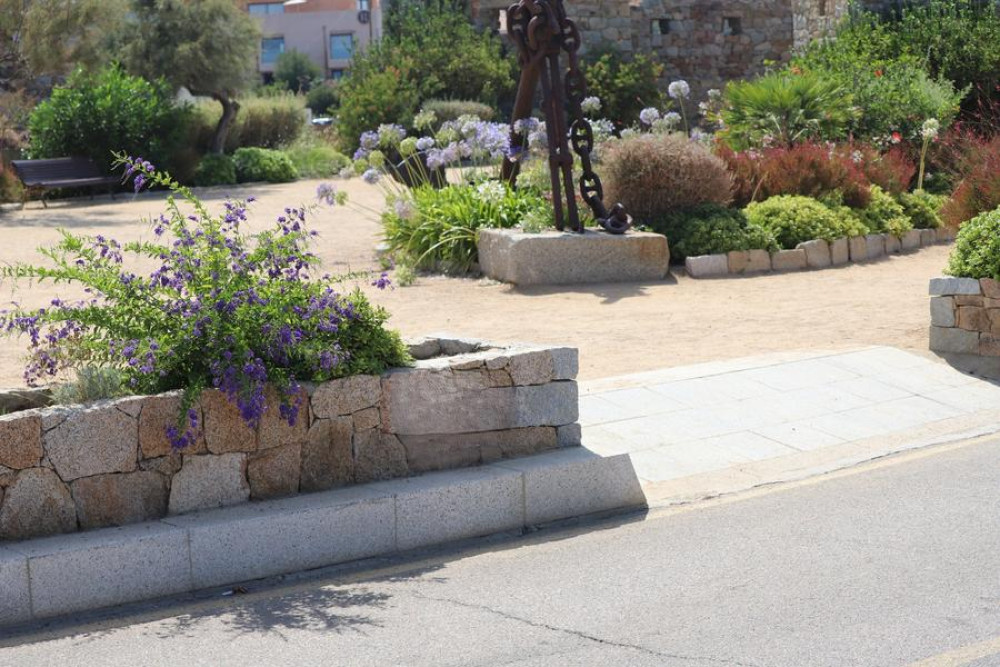
Built on the remains of the 1792 ramparts, the Fortin gardens are a reminder of L'Ile-Rousse's defensive past. Rehabilitated in 2021, this peaceful site blends heritage and nature, offering a panoramic view over the town and the sea.Laid out in 2021, the Fortin gardens extend over the site of the old ramparts erected in 1792. Witness to L'Ile-Rousse's defensive history, these fortifications, which disappeared in the 19th century, have given way to a peaceful garden where heritage and nature meet.
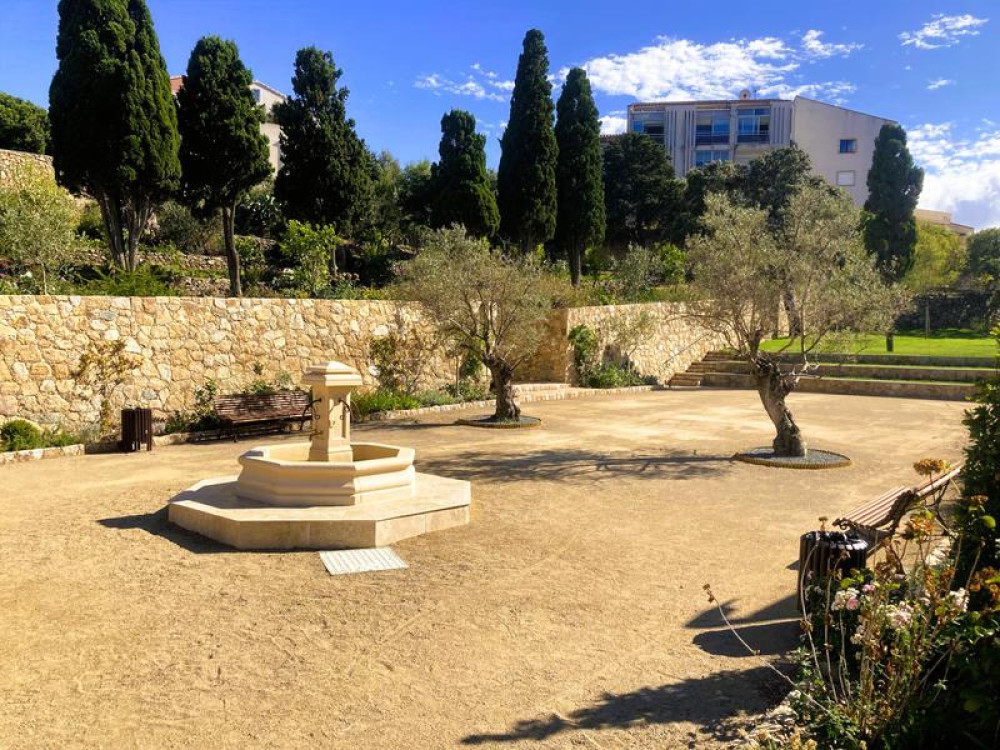
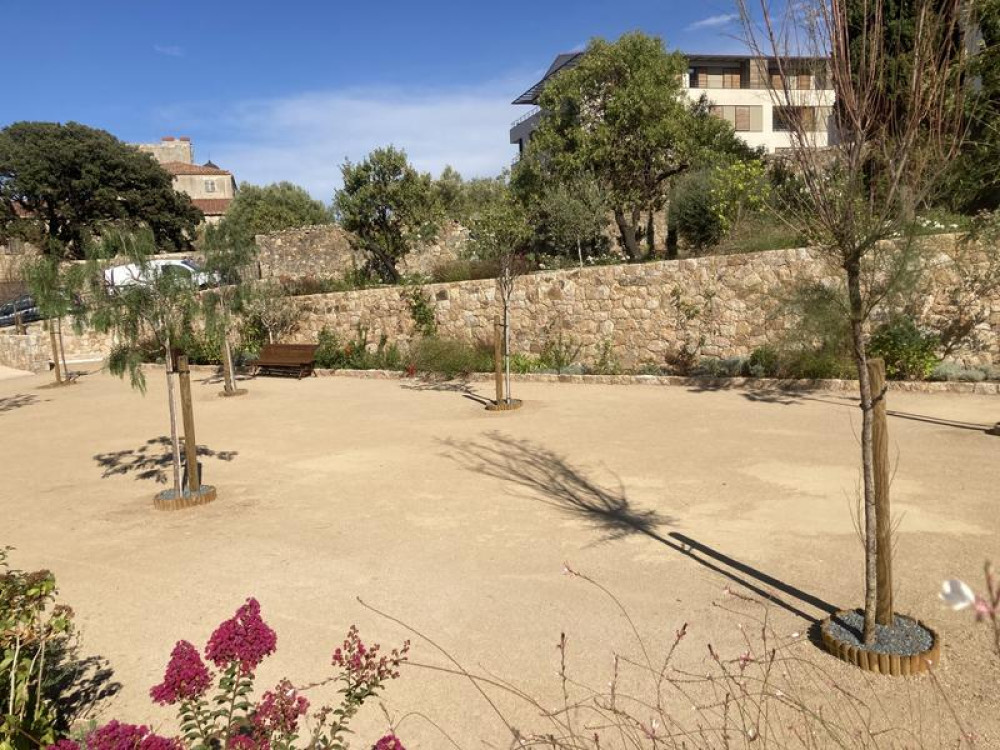
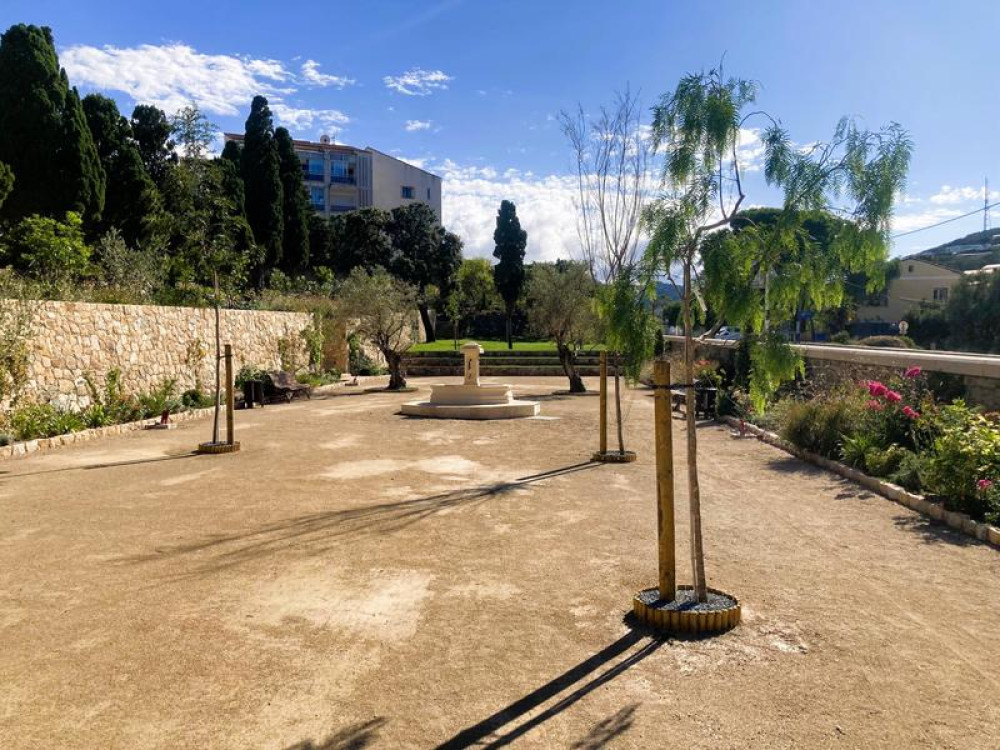
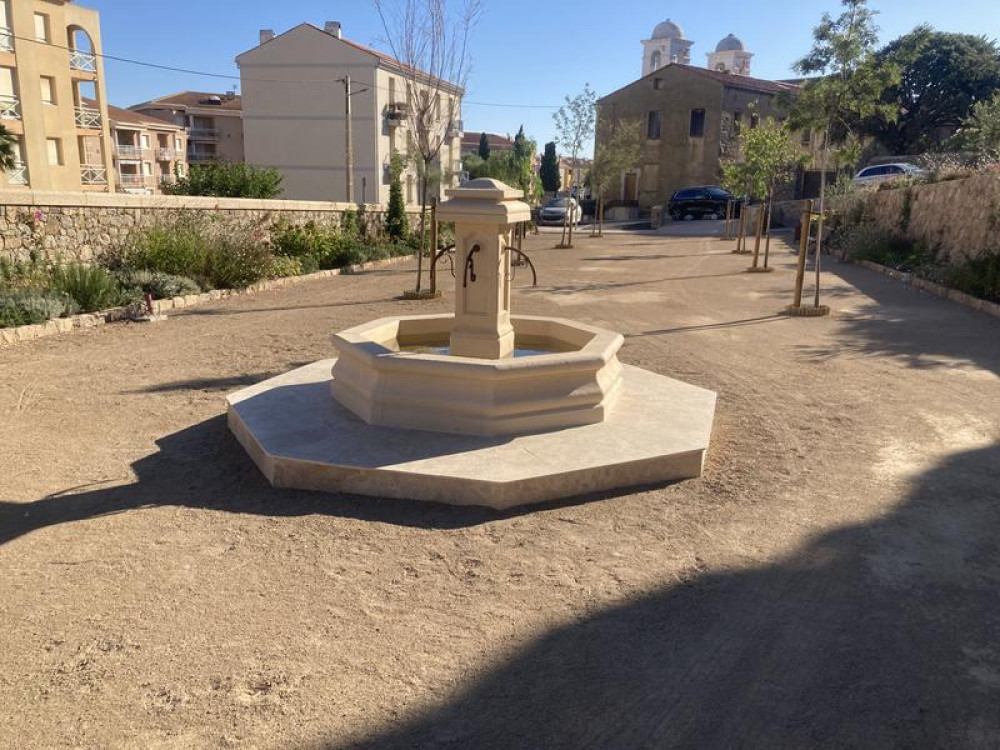
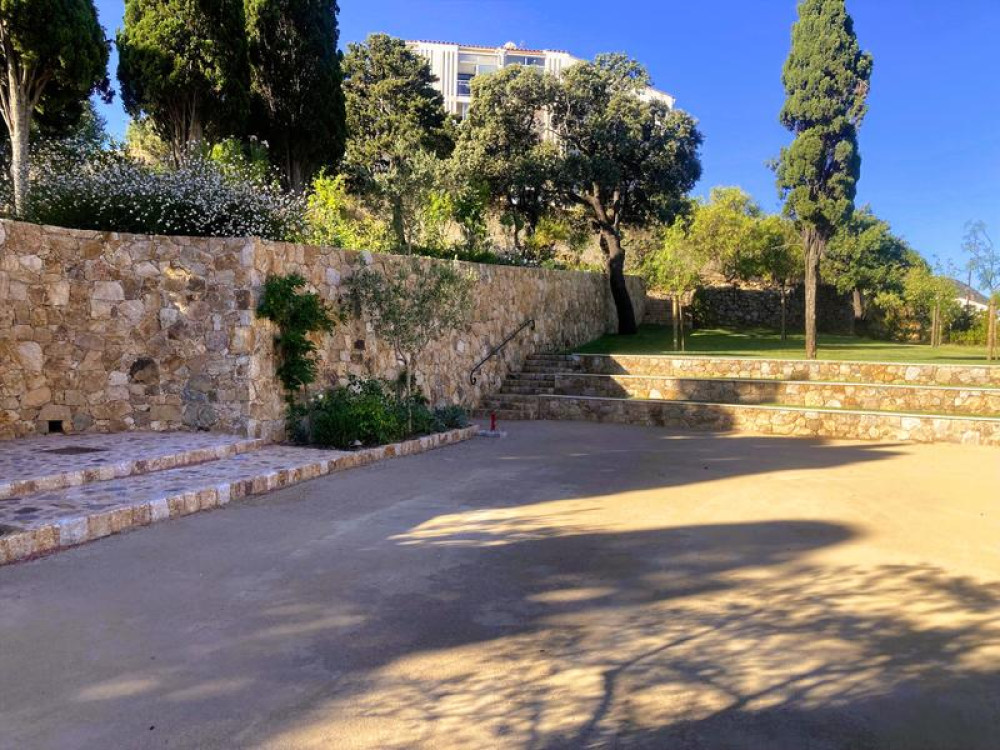
The monks' garden, a former terraced orchard, recalls L'Ile-Rousse's agricultural past with its dry-stone terraces, restored in 2025. With its fountain and green theater, adjacent to the church, it has become a place for strolling and cultural activities.Formerly a terraced orchard, the dry-stone walls of the jardin des moines evoke L'Ile-Rousse's agricultural past. Renovated in 2025, it now offers a verdant setting, enhanced by a fountain and an open-air theater.
Adjacent to the Misericorde church, the garden has become a shared heritage:
- a place for residents to stroll and meet,
- a place for children to discover nature,
- a testimony to a preserved and enhanced heritage for visitors.
Today, it hosts conferences and cultural events.
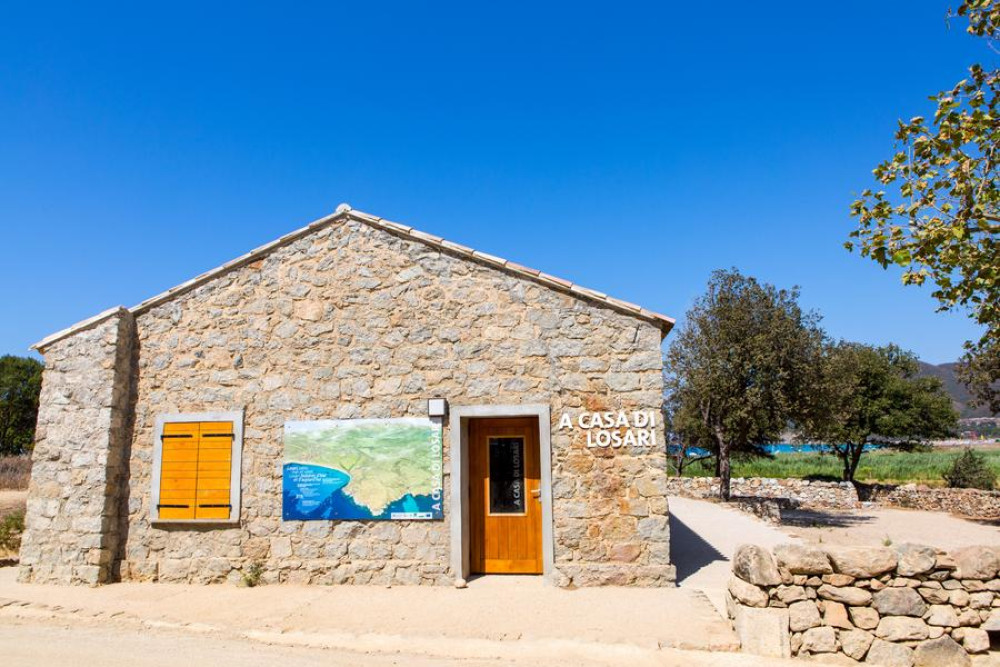
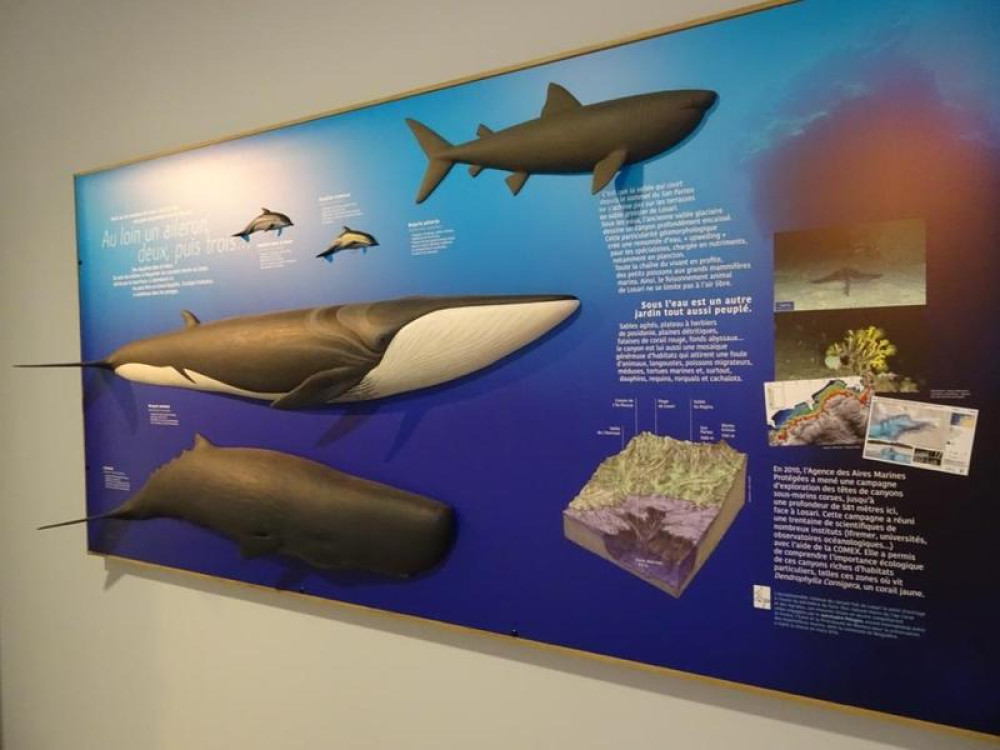
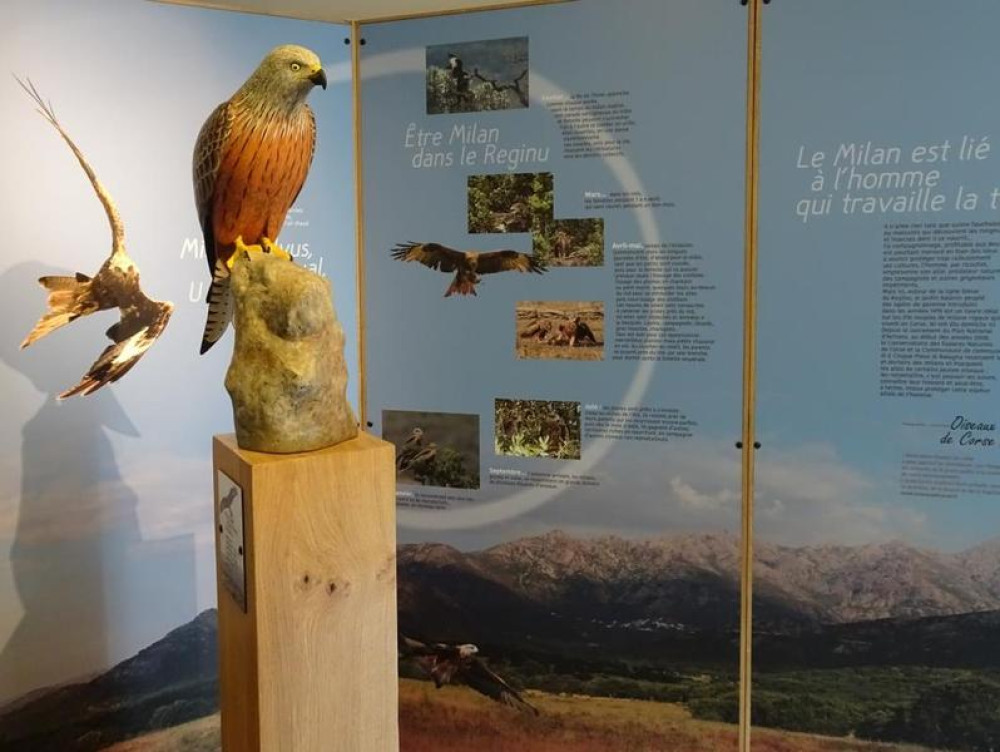
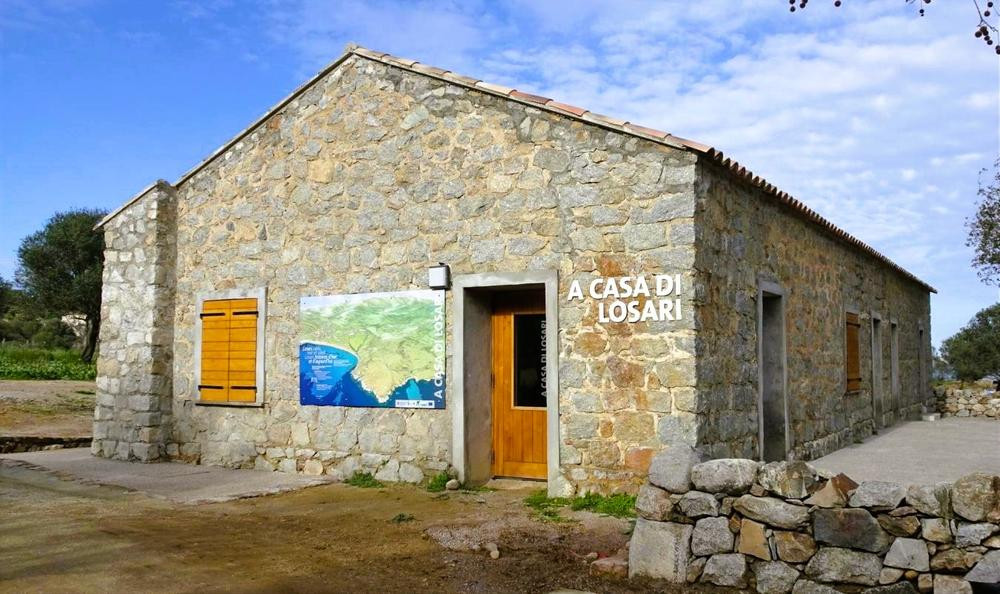
A Casa di Losari is a cultural venue located in Belgodere that promotes local history, from the Genoese era to the 1930s, as well as the natural heritage of the Reginu valley and coastline, between the land of red kites and the sea of sperm whales.Located on the Belgodere coastline, A Casa di Losari is a cultural site owned by the Conservatoire du Littoral and managed by the town council. Inaugurated in 2016 in a former farmhouse that was first used as workers' housing and then as an agricultural depot, it now houses a unique interpretation center.
A Casa di Losari offers a sensitive, immersive approach to the area, combining history and nature. Visitors discover the evolution of the site, from the Genoese period to the innovative tourist development of the 1930s. The natural heritage of the Reginu valley is also showcased, between sky and sea: the red kite reigns supreme, while the nearby underwater canyon is home to sperm whales.
From the site house, two signposted footpaths invite you to explore: the tower footpath and the Reginu footpath, taking in a variety of natural environments and heritage sites: Genoese tower, chapel, old pumping station.
Every summer, the Parc naturel marin du Cap Corse et de l'Agriate opens the doors of A Casa di Losari, with the support of a specialized guide. This initiative is run in partnership with the Conservatoire du Littoral, the Collectivité de Corse and the Office de l'Environnement de la Corse.
A place to remember, to meet and to raise awareness, A Casa di Losari is a bridge between past and present, between land and sea.
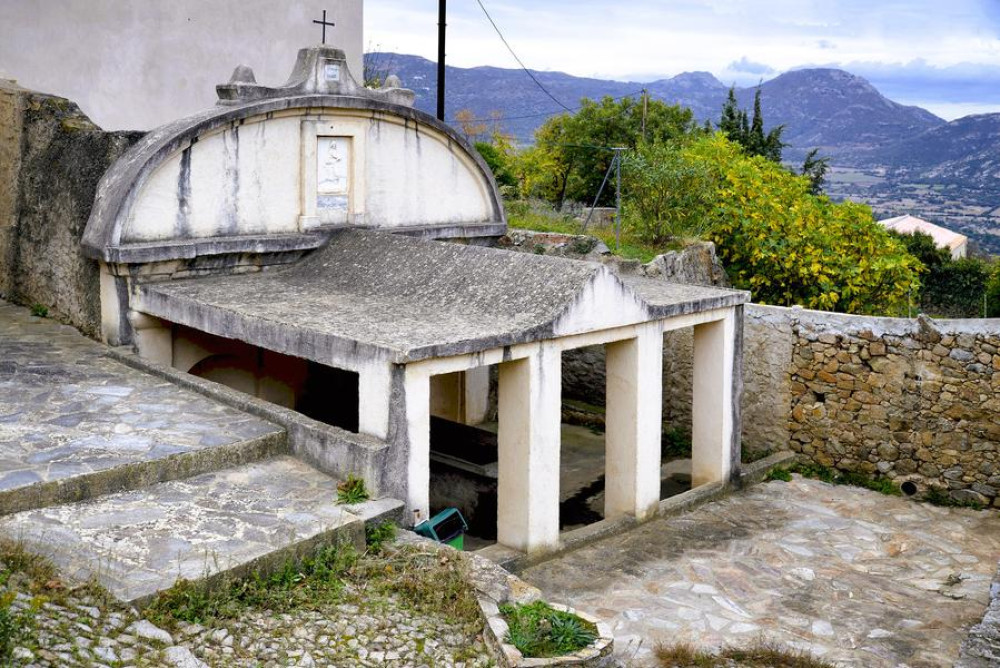
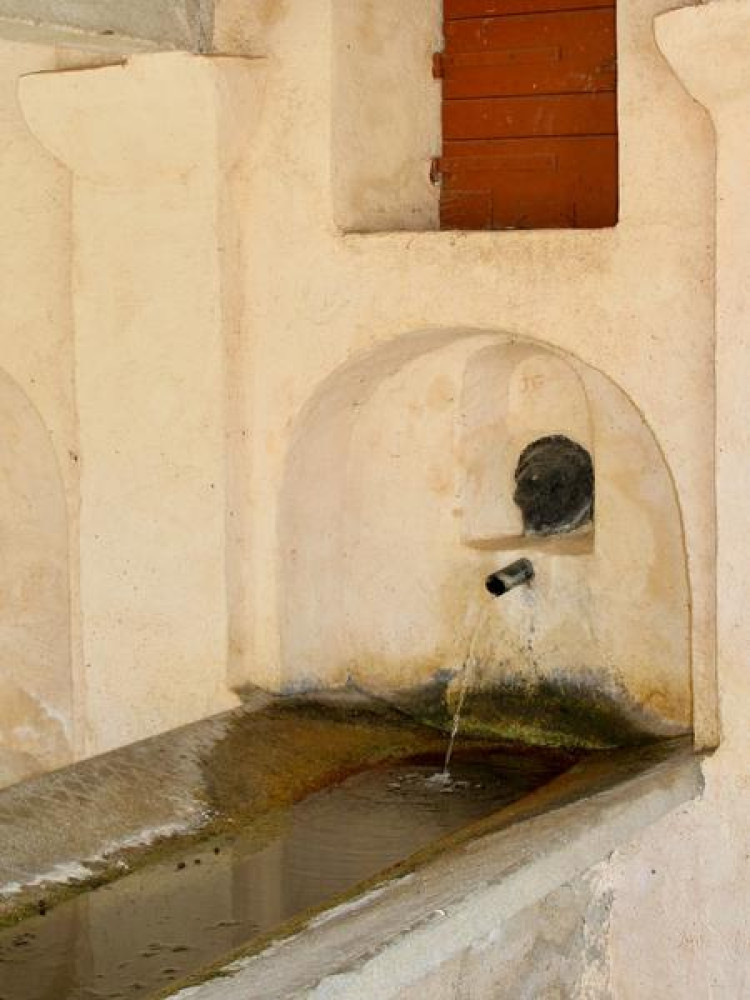
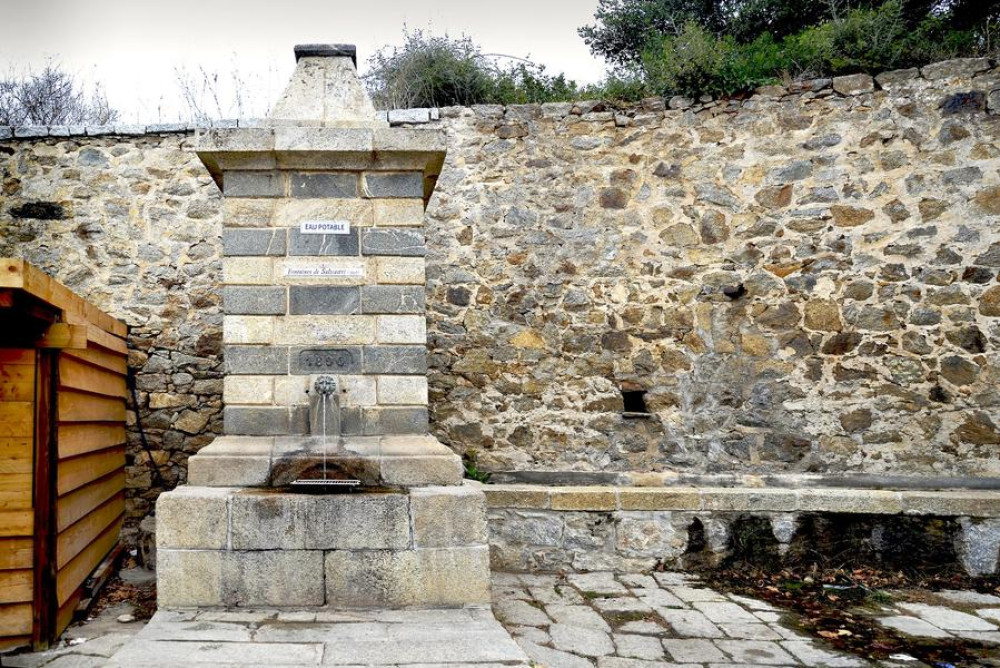
In Villa Suttana, the Salicastri fountains bear witness to the past. One, dating from the 16th century and featuring a Madonna and a Moor's head, was also used as a washhouse. The second, built in 1816 in two-tone granite, is a reminder of the importance of springs in local life.The Salicastri fountains
Two fountains in the hamlet of Villa Suttana are a reminder of the importance of springs in village life.
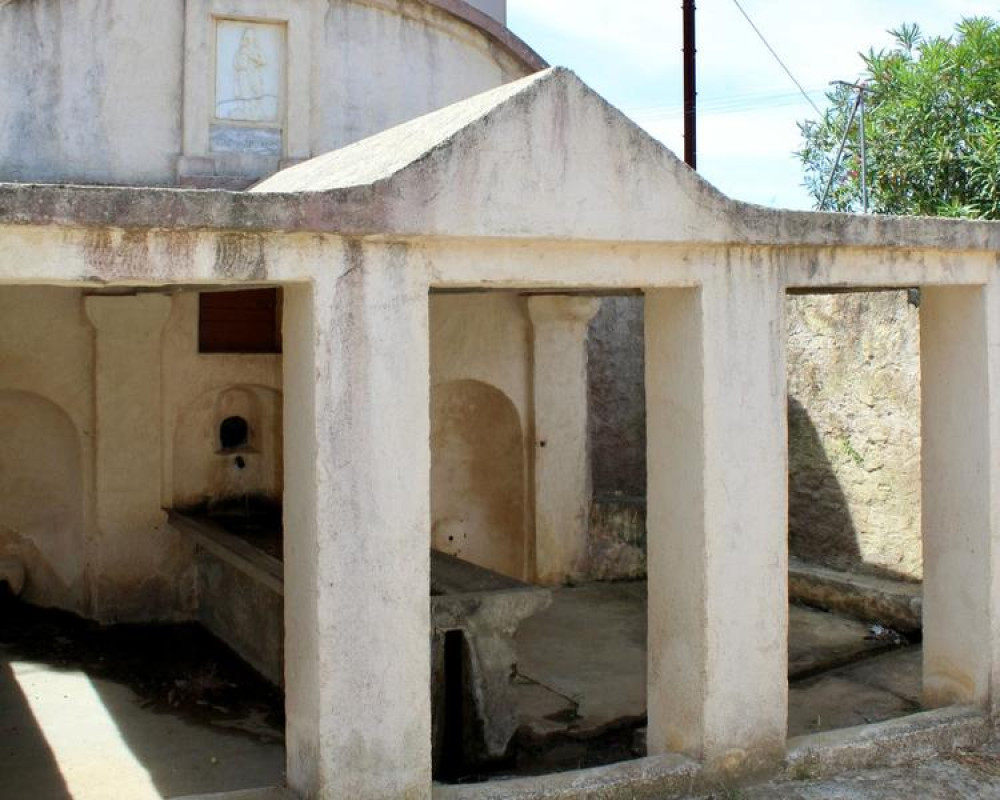
The A Funtana di u Moru fountain and its washhouse:
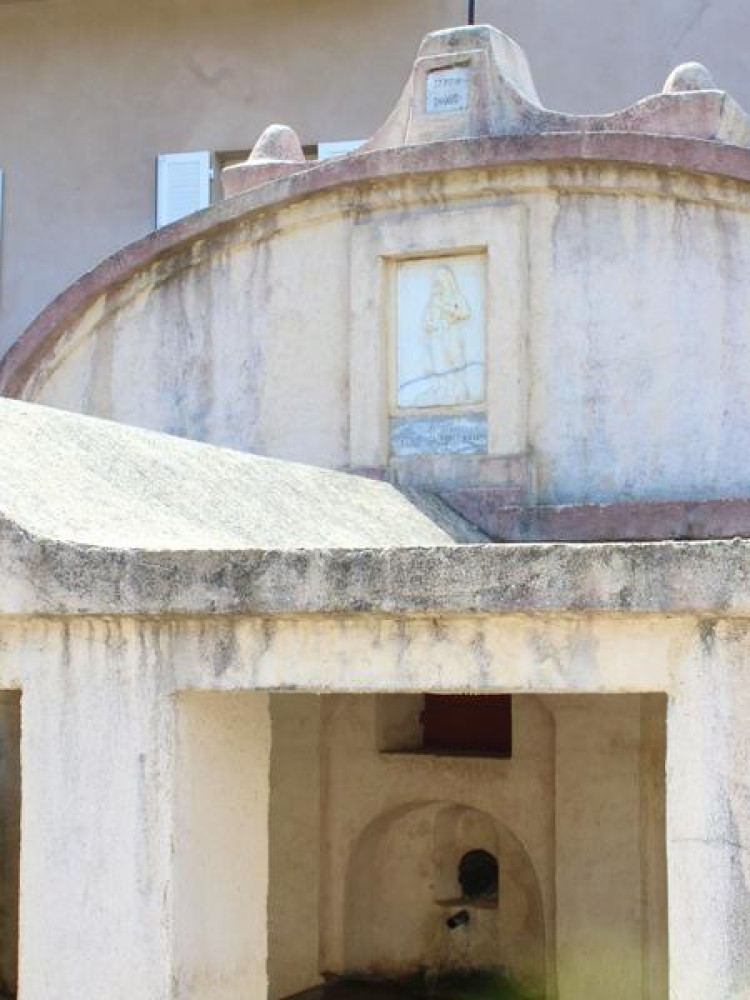
The oldest fountain, A Funtana di u Moru, dates back to the XVI? century. Built below the road, it was also used as a washhouse. Its pediment is decorated with a white marble sculpture of the Virgin and Child, accompanied by the Latin inscription Ave Fons Salutis Maria ("Hail Mary, fountain of salvation", 1590). The water inlet, adorned with a black granite Moor's head, is the source of a popular expression: "He's as black as the Moor of Salicastri", used to designate a person accused of many faults. In 1895, a washhouse with a domed roof was added to the ensemble, restored in the late XX? century.
The fountain known as A Funtana di Salicastri:
The second, A Funtana di Salicastri, erected in 1816 by the roadside, is built of two-tone granite, probably quarried in Barcale. It is distinguished by its meticulous architecture: an aedicula crowned by a pyramidion, an elegant cornice and a basin fed by a lion's head-shaped spout. It was designed by the architect Forcioli.
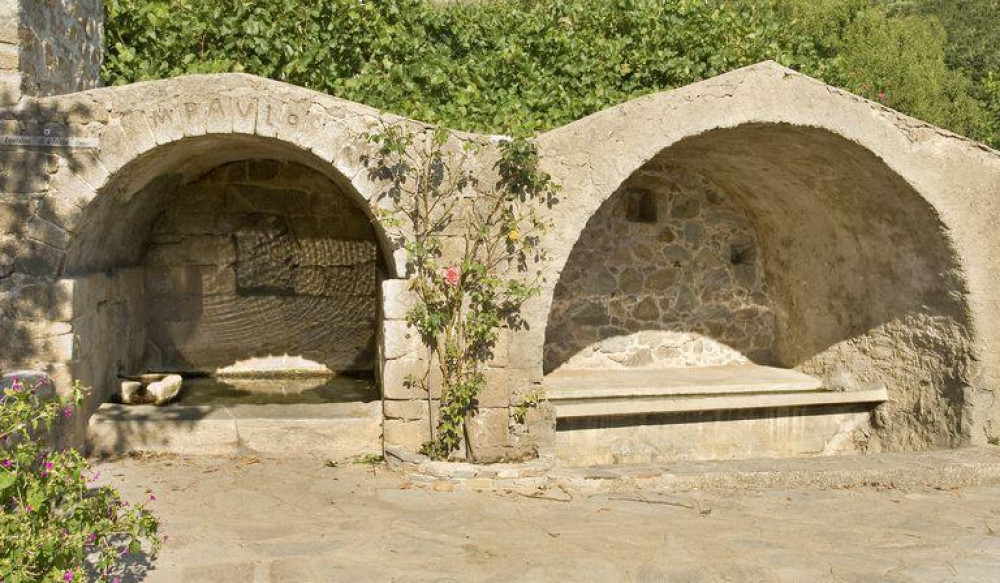
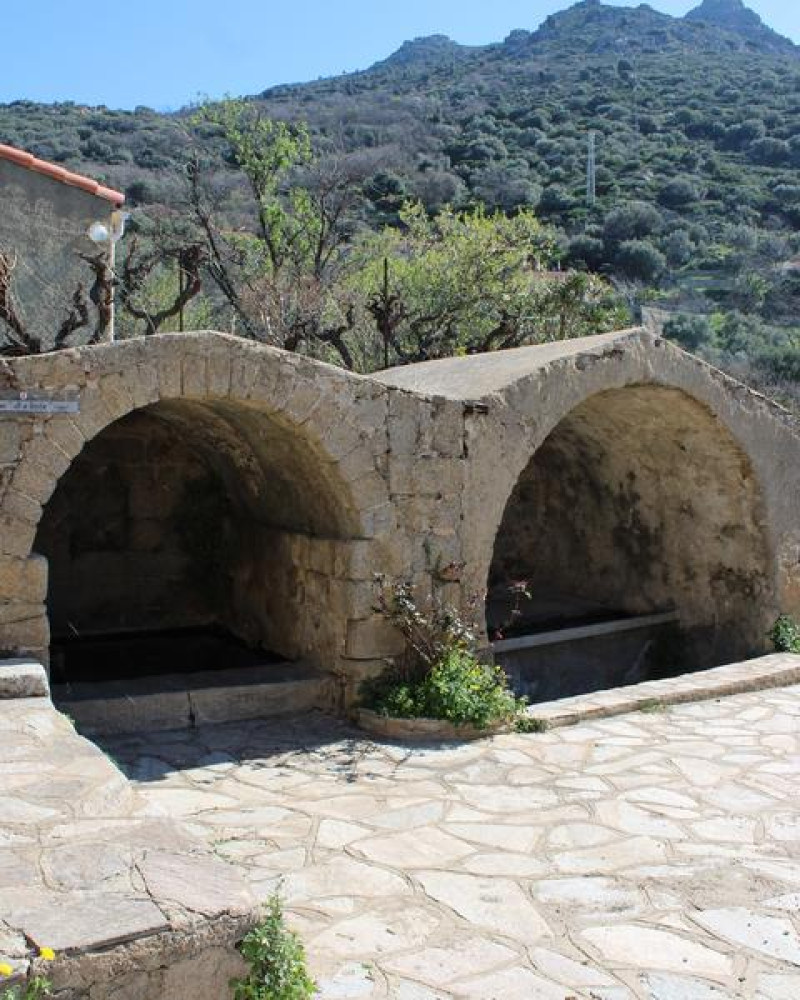
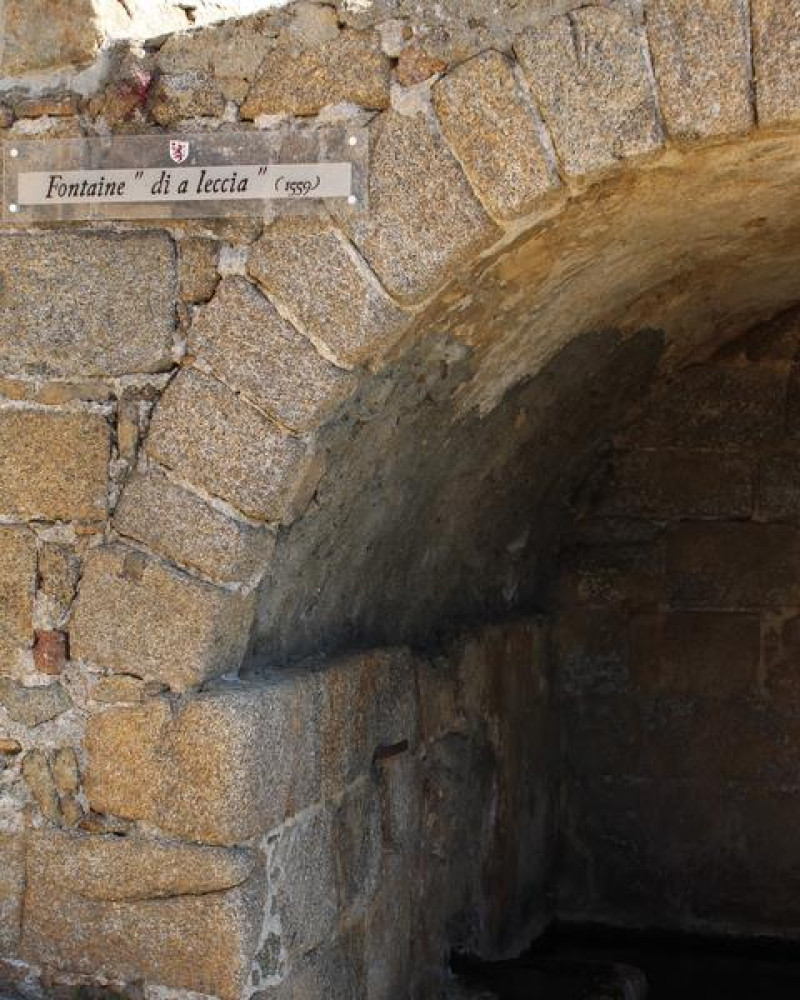
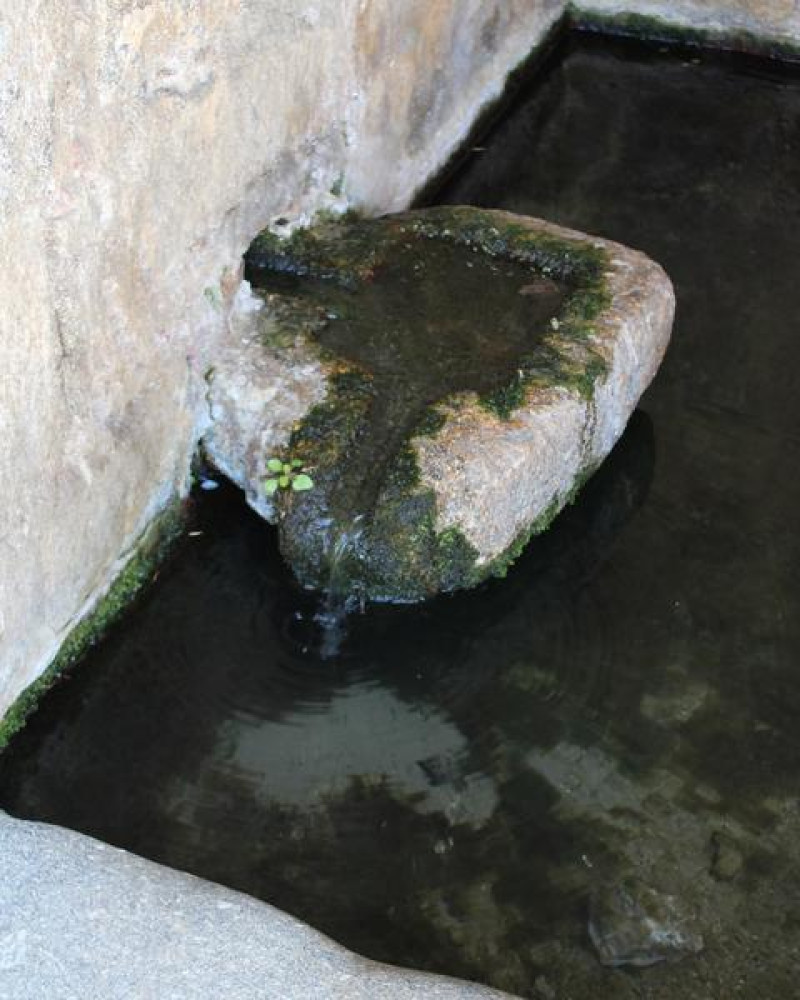
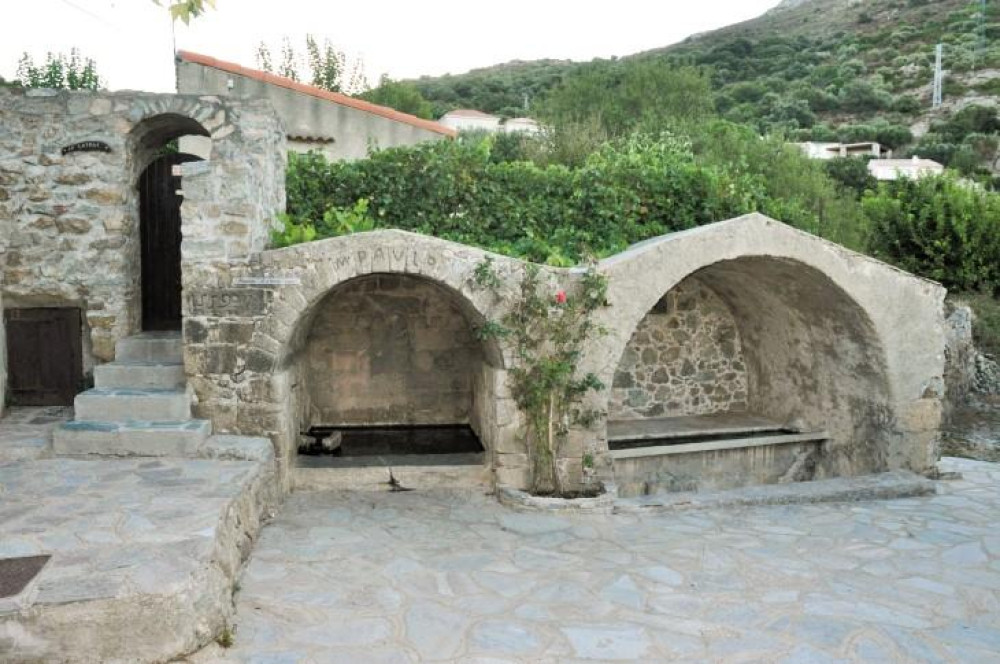
The "di a Leccia" fountain, built in 1559 by Maestro Paulo, combines fountain, washhouse and drinking trough. Restored in 1853 and again in the 20th century, it is located on the road between Corbara and Pigna. Its vaulted aedicula preserves period inscriptions and sculptures.Located at the bottom of the village, on the local road linking Corbara to Pigna, the fountain known as "A Funtana di a Leccia" is one of the oldest watering places in the village.
Erected in 1559 by Maestro Paulo, as the inscription engraved on the aedicula indicates, it combined several uses essential to daily life: a fountain, a washhouse and a watering place for animals.
The ensemble comprises two vaults: the first housing the fountain and its basin, the second the wash-house. The inscription M.P.A.V.L.O.X.+ can still be seen on the pediment of the main vault. On one of the pillars, a jug carved in the shape of an ancient vase accompanies another inscription: 1559 P.AN.L.
Over time, the fountain has benefited from several restorations, notably in 1853 and then during the XX? century, which have helped preserve this precious testimony to rural heritage.
Today, the "di a Leccia" fountain retains all its historical value and serves as a reminder of the importance of water in community life in days gone by.
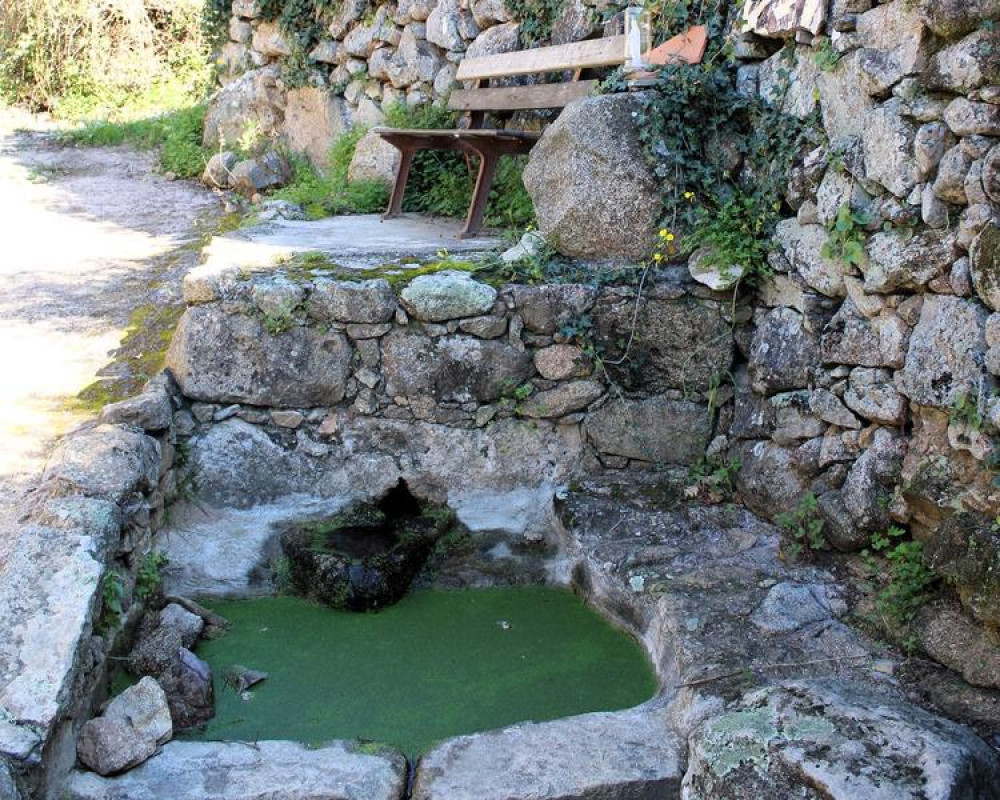
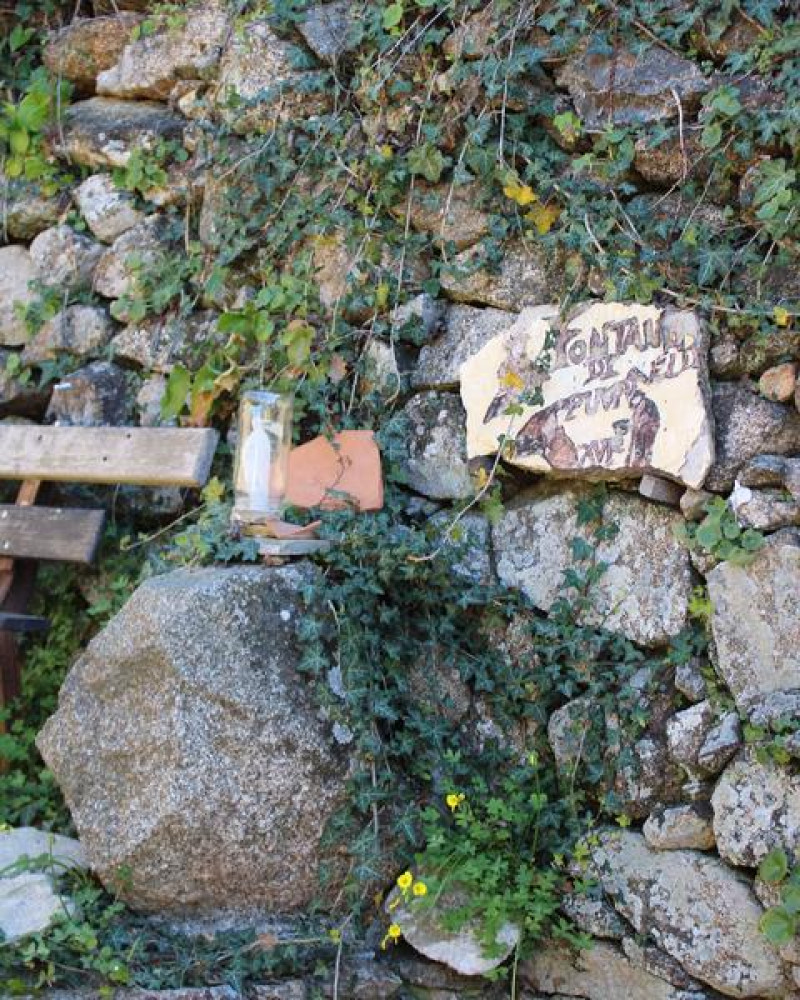
The fountain "di i Puvarelli" (of the beggars) owes its name to an old tradition: on the eve of the patron saint's day, beggars from the plain were allowed to enter the village on condition that they washed here, under the gaze of the young Corbarais.The "Di i Puvarelli" fountain (the beggars' fountain) is located at the bottom of the village, a short distance from the "di a Leccia" fountain, on the edge of the local road linking Corbara to Pigna.
It owes its name to an old tradition: on the eve of each patronal feast day, principally that of the Nativity of the Virgin on September 8, beggars from the plain were exceptionally authorized to enter the village to beg. There was only one condition: they had to wash at this fountain to ensure they were clean before entering the alleys. The young people of the village ensured that this rule was respected, guaranteeing that everyone could take part in the festivities in accordance with ancient customs.
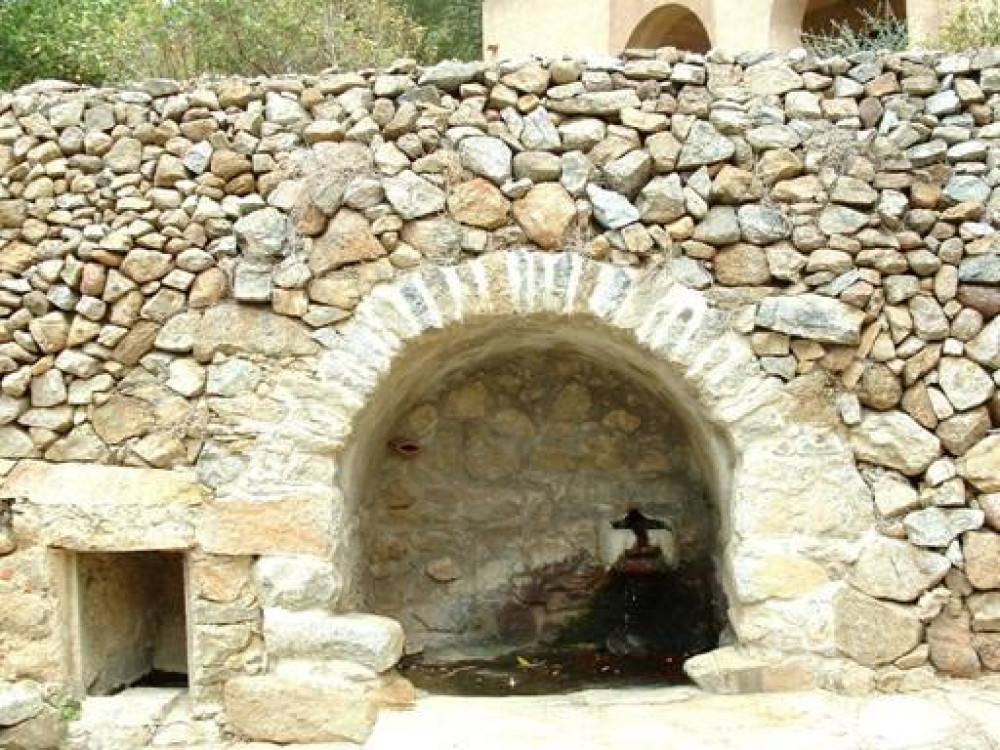
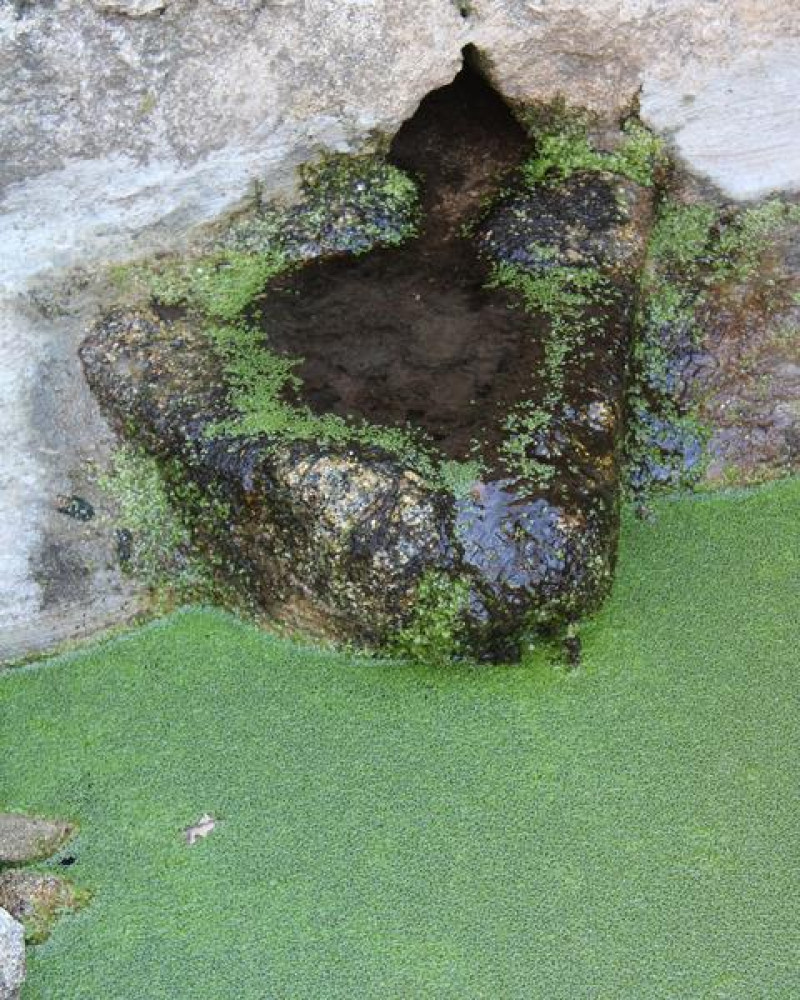
The "di u Sbollaru" fountain is located between the church and Place de l'Ormeau. Sheltered beneath a vaulted ceiling, it feeds a granite basin. Its capricious flow has inspired a proverb about changing moods and broken promises.Located on the path linking the parish church to the Place de l'Ormeau, the "di u Sbollaru" fountain, also known as the bubbling fountain, is an ancient witness to village life.
Probably built in the XVI? century, it is sheltered by a stone vault and fed by a spring that flows into a granite basin. The overflow then runs off to irrigate the neighboring gardens, once cultivated as vegetable gardens and planted with citrus fruits.
The fountain's flow is capricious: sometimes weak, sometimes abundant, especially after heavy rains. This characteristic has given rise to a well-known proverb. It was said that, like the fountain, some people change their moods or make promises they don't keep. The expression "drink the water of the Sbollaru" meant that one day, they would calm down or return to a better mood.
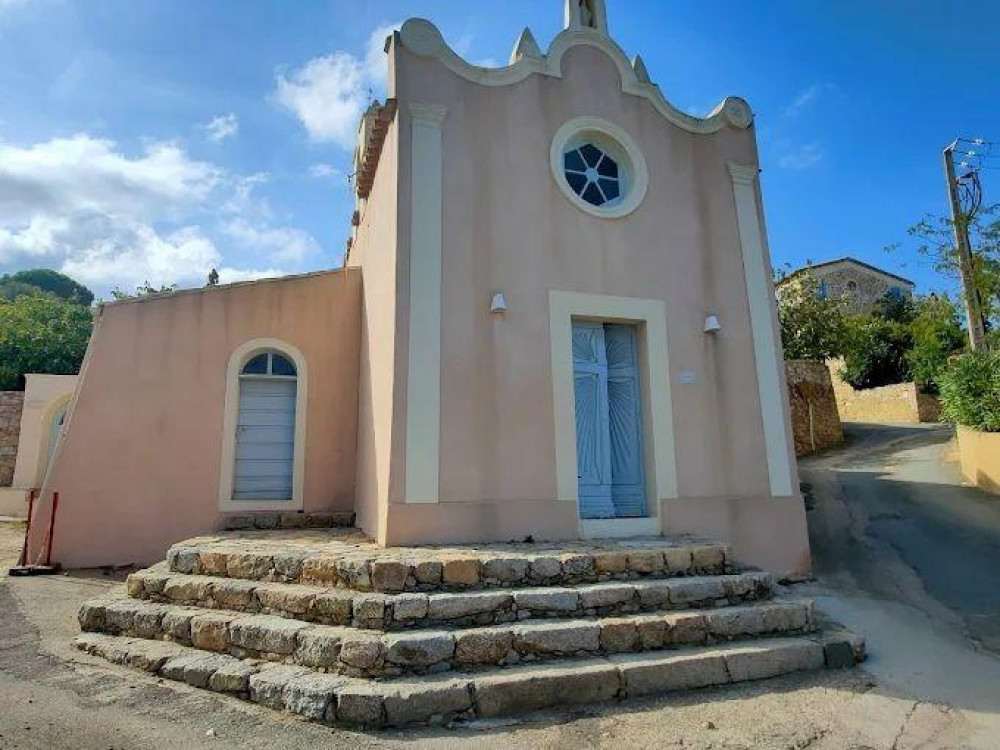
The private chapel of Santa Maria Assunta, restored in 2005, is located along the roadside and can be viewed from the outside.
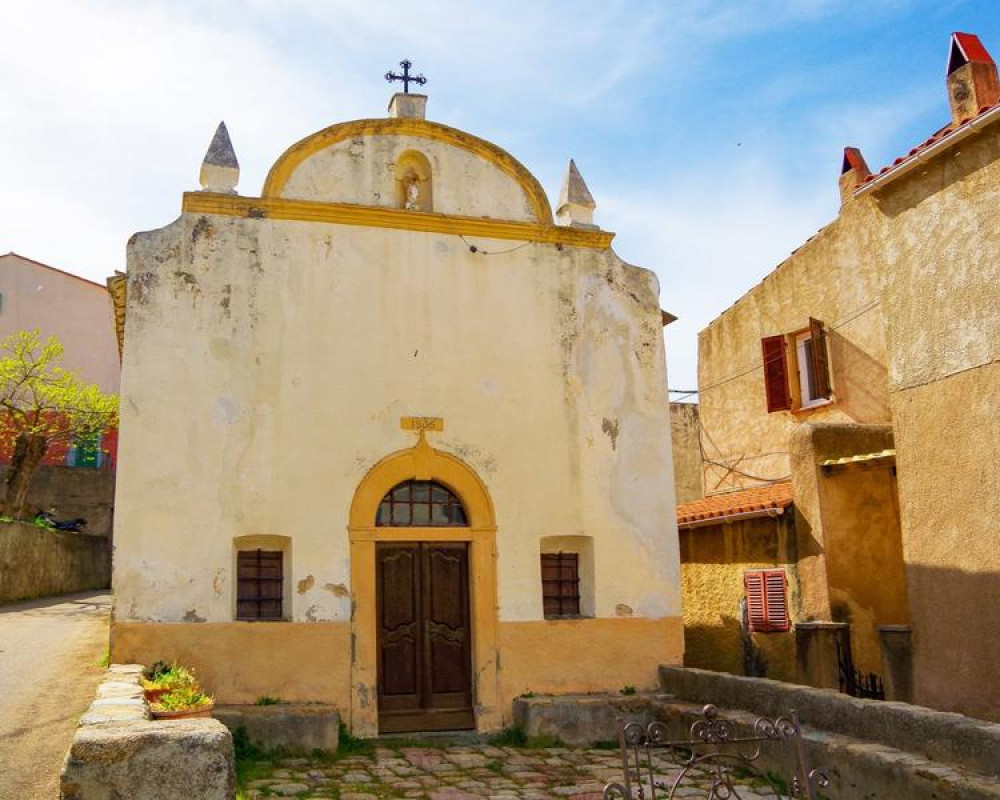
The Sant’Anna private chapel, dating from 1836, is located along the roadside and can be viewed from the outside.
 Lisula - Outdoor & Trail - Trace - N°3 - Giru di L'Isula - Munticellu - Palmentu