


Discover Corsican and Mediterranean vegetation staged by a landscape gardener during a unique 7-hectare nature walk. A true moment of relaxation, discovery and sharing to be enjoyed with friends or family. Various activities and events.On the seafront, at the gateway to L'Ile-Rousse, discover an exceptional 7-hectare landscaped site.
Explore the "Art of gardening in the heart of the Corsican maquis" through its botanical circuit, a true immersion in the soul of the island. Here, Corsica can be discovered, breathed and admired through the plants of its maquis and the vestiges of an ancient agricultural activity.
Stroll among olive trees, cypresses and oleanders, and marvel at the sublime Mediterranean in an exceptional setting. Open to the public since spring 2005 and classified as a "Jardin Remarquable", the Parc de Saleccia is a haven of relaxation, discovery and inspiration. For lovers of Corsican and Mediterranean gardens, it's a unique example of a landscape revisited by man.
On site:
Garden restaurant - local, organic, home-made products
Children's area - large play area, huts, quizzes for visitors
Farm animals, aviaries, educational beehive
Activities & workshops - for young and old
Private events - weddings, christenings, seminars... in the heart of the park.
A unique venue for an unforgettable experience!
See the monthly program at the bottom of the page.




This Genoese tower dating from the late 16th century was built by Angelo Aijcardo on a headland 26 metres above sea level. It can be reached via a footpath near the Casa di Losari, and a flight of steps takes you to the top of the tower to enjoy a 360° panoramic view.

Longtime abandoned, it was renovated in 2015. An annual mass is celebrated here with many inhabitants who spent their childhood here. A number of shepherds from the Niolu area came to spend the winter in Losari with their families.

Saint-Dominique convent was founded in 1456 by two Franciscan priests of the Observantine Order. After being destroyed during the Revolution, the Dominicans rebuilt it as a place of study. It is now occupied by the community of Saint John.The convent of Saint-François d'Aregno was founded by the Friars Minor of the Observance in 1456, representing one of the oldest convents in the Franciscan province of Corsica.
During the French Revolution, the monastery's property became "national property".
From 1857 to 1864, the Dominicans set about rebuilding the convent. The Dominicans restored it as a school for local children. Later, a philosophy and theology college was added for religious students from the PARIS province. After the separation of church and state, the Dominicans were expelled and the building became the property of the commune of Corbara. Left abandoned, German and Austrian prisoners were placed inside.
Then, in 1927, the convent returned to Dominican hands for 66 years.
In 1993, the friars of Saint-Jean took over the convent following the departure of the elders. Pasquale de Paoli took advantage of his many visits to gather his friends and advisors from the Balagne region. Illustrious figures such as De Didon, Peyrefitte, Roncalli and Maupassant have stayed here. It is thus a veritable emblem for the commune of Corbara.
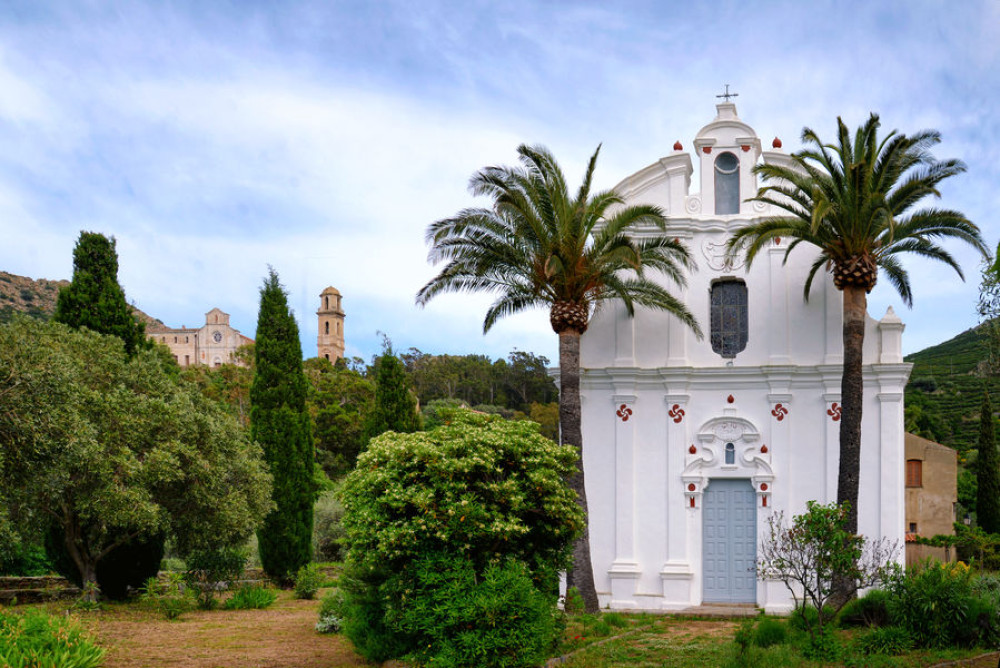
Notre Dame du Lazio in Corbara is an ancient sanctuary of Balagne. It dates from the Middle Ages and was rebuilt towards the end of the 18th century.

The Pietra lighthouse marks the entrance to Corsica's north-western coastline. It marks the end of your visit to the island of Pietra, where you can admire a magnificent view of the hinterland and the Balagne seaside.
A wonderful walk!It dates from the 3rd quarter of the 19th century, during the reign of Napoleon III. It is built on the highest point of the island of La Pietra, linked by a dike to L'Ile-Rousse. It marks the entrance to Corsica's north-western coastline. The lighthouse known as "La Pietra" was part of the second wave of lighthouses to be built in Corsica, along with the lighthouse at Ajaccio.
The current lighthouse is a square tower, centered on a square base, in smooth masonry, painted white, with the lantern painted green. The lighthouse is powered by solar panels and automated.
The interior of the lighthouse is open to the public during the summer! Here you can discover a unique museographic space, comprising three interpretation rooms that tell the story of Pietra Island and the lighthouse:
- Room 1: Vertical map cabinet -
A collection of historical plans and documents tracing the evolution of the islands and the lighthouse, highlighting architectural transformations and maritime developments.
- Room 2: Magic Lantern Lighthouse -
An interactive model of the lighthouse illustrating the evolution of lighting over the decades, with light projections to visualize changes in the lighthouse's illumination.
- Room 3: Technical room -
An immersive projection on sea-level fluctuations, accompanied by historical bas-reliefs forming a chronological frieze of the Pietra's evolution, enriched by visual and sound elements.
Discover the island of La Pietra and its lighthouse, recently embellished and in the process of being planted. Enjoy the beautiful pedestrian promenade and marvel at the spectacular panoramic views over the town, the villages of Balagne and the majestic surrounding mountains.
Whether you're a nature lover or a fan of breathtaking views, this must-see site in L'Ile-Rousse is sure to please.

This military building from the 16th century features a round tower whose purpose was to ward off attacks from the Barbaresque corsairs. It was restored in the early 1980s.

Created in 1834 and inaugurated in 1852, this pleasant square is the heart of the town. Surrounded by ancient plane trees, it is an inviting spot featuring a fountain known as "the pump" which is decorated with statues, including a bust of the town's founder, Pasquale de Paoli.

In L'Ile-Rousse, the bust of Pasquale Paoli takes centre stage on the square of the same name. Paoli founded this town during the Corsican Revolution. He is the father of a democratic constitution, a national hero whose wisdom shone out across Europe.

Commonly known as "Monks' church", it was built between 1825 and 1850 by Tony Cardella, the great Corsican master of the 19th century. Some of his paintings can be found inside, including his "Stations of the Cross".

In 1853, the people of L'Ile-Rousse wanted their own community of the children of Saint Francis. The house adjoined the Church of Mercy and for a time was the town's only place of worship. It houses the private school of Notre Dame.

Built in 1887 to replace the old parish church of Le Scalu and its successor, Notre Dame la Miséricorde, which had become too small. This church was more spacious and occupied a more central position in the expanding town.

Built in 1844 by the mayor, Mr Piccioni, essentially to replace the outdoor market. The region's producers can be found here every morning.

Now the Town Hall, this building built in 1763 by Pasquale de Paoli was occupied by the military headquarters of L'Ile Rousse and the King's lieutenance, at the initiative of the Count of Vaux.It was a military estate until 1904, when it was called the General Ambert barracks. Then, the mayor of the time, President Gavini, bought it and one day made it the seat of the town hall and the social services. The gabelous had their post in this old barracks (today the town hall) as well as a shelter at the bottom of the small cove under the Pietra lighthouse. This building was marked not so long ago on the staff maps. However, it was rebuilt and is now used as a marine archaeology shed.

The old gunpowder magazine named Tour du Scalu stands on the current Place de la Mairie. Refurbished in 2012, it was built in the 17th century when it went by the name of Tour des Fabiani. It was a salt warehouse before becoming a gunpowder magazine and, finally, a prison.


Le Scalo is an old natural fishing port that's commonly known as the "fishermen's jetty". So it's no surprise that the structure has always had close links with the fishermen's market located at the bottom of Rue Notre Dame. This market was refurbished in 2002.

Le Scalo port is an ancient, natural fishing port commonly known as the "fishermen's jetty". The structure has indeed always had close links with the fishermen's market located at the bottom of Rue Notre Dame and which was renovated in 2002.
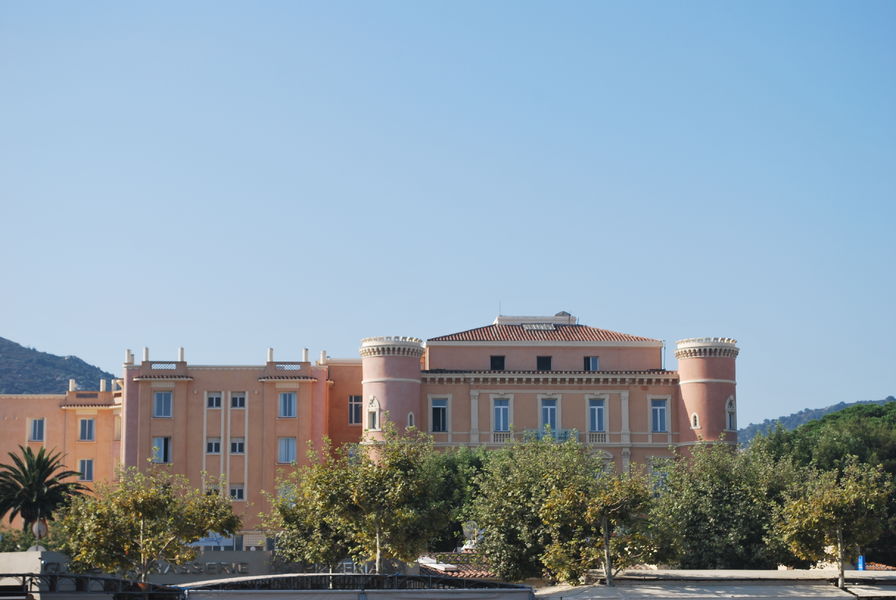
The Piccioni palace is the highest and one of the most famous buildings in the town of L'Ile-Rousse. Magnate Sebastien Piccioni, dissatisfied with a mere town-centre abode, ordered the construction of this veritable château which is now the Hôtel Napoléon.

The Mermaid by Corsican artist Gabriel Diana is a lost-wax cast bronze sculpture of human dimensions. Competing beautifully with her Copenhagen counterpart, A Sirenella sits on a granite rock close to the shore.
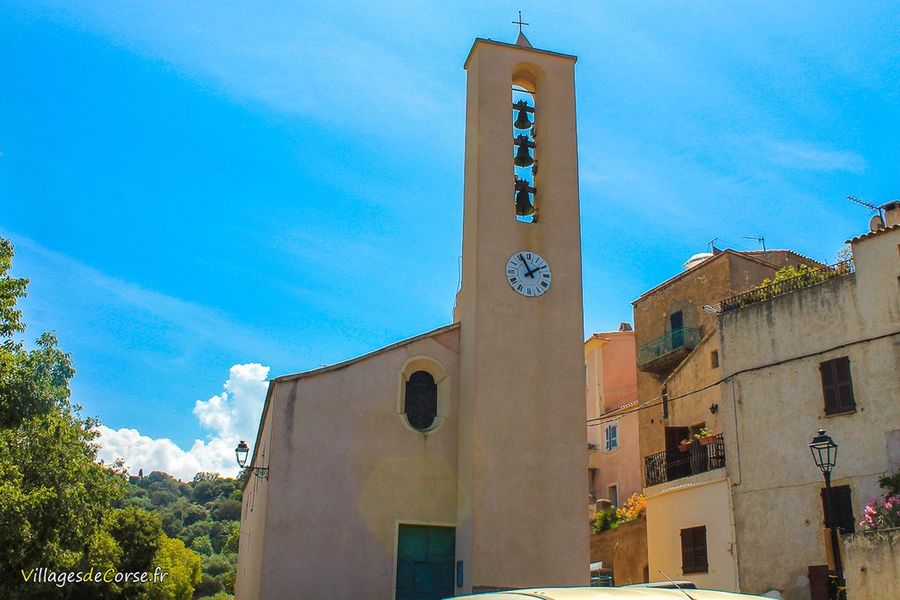
This Roman church was destroyed in the 16th century by the King of Algiers and rebuilt in the 17th century. In 1887, the exterior was enhanced. The church boasts a tower with 3 bells and a listed painting which has been restored.
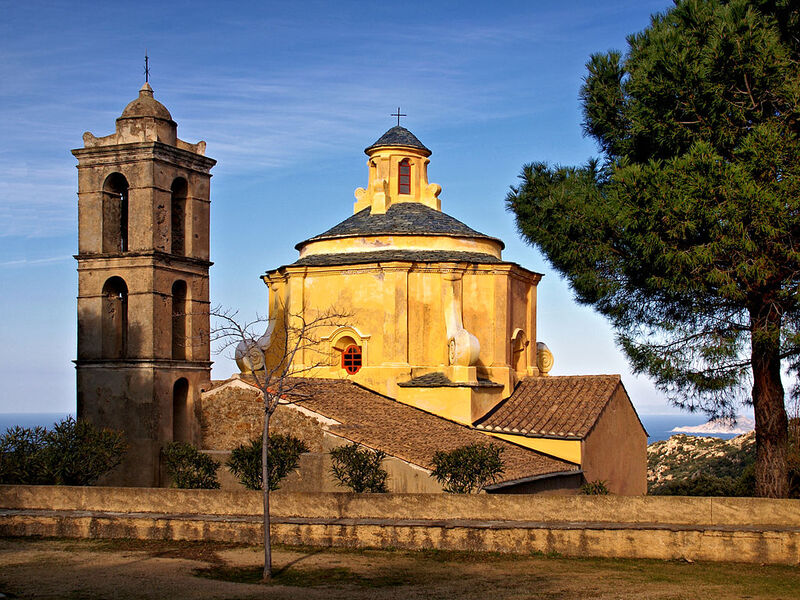
Of Baroque style, it dates from the latter half of the 17th century. The dome was added in the 18th century. The chapel was built at the initiative of a Jesuit priest who wanted to protect the population from its enemies. San Roccu day is celebrated here every year on 16 August.

Built in the 11th century, this Romanesque chapel was stripped of its sacred objects and religious ledgers during an incursion of the Turks who then burnt and destroyed it. Its only nave has been consolidated with what little was left of the ruins.Several attempts have been made to restore and consolidate it, which has not been easy since the chapel was seriously damaged by the transformations it underwent around the 17th century (apse cut off, extended nave). There is an "arca" inside, as evidenced by the marble plaque on which is engraved "ANNO 1686 DEL MONTICELLO". There are also funeral plaques of the oldest inhabitants of Monticello.
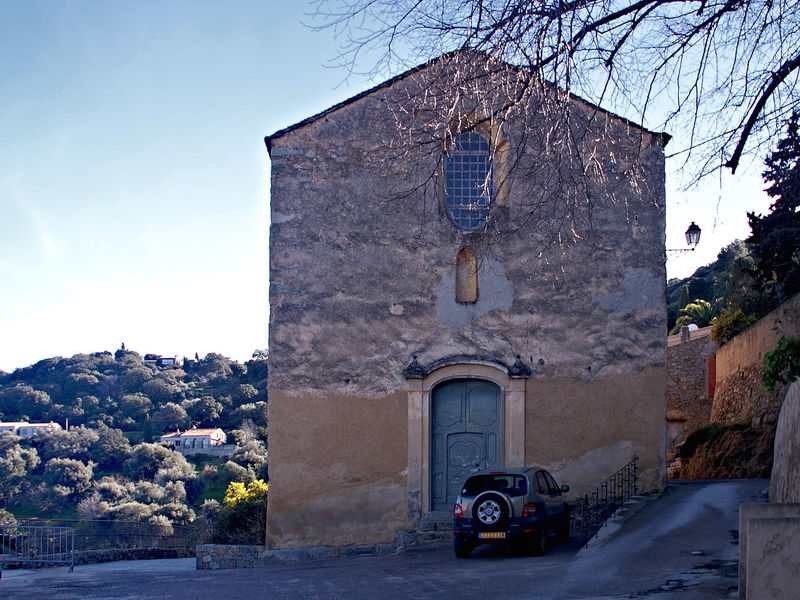
Built in the 17th century, it boasts a remarkable decor with a smooth, shiny appearance thanks to the use of ground marble. The interior frieze is superbly decorative. The walls are covered in timber which forms two benches on either side of the entrance.

Protected by the VMF built heritage label, this 17th-century private mansion is the Fabiani Malaspina palace and was the home of Pasquale Paoli from 1790 to 1796. One of its lounges is decorated in frescoes depicting 17th-century L'Isula Rossa. Napoleon Bonaparte also stayed here.

Also known as Cala Rossa or Di Tre Moline, the tower was built in the 16th century by the Genoans, 36 metres above sea level and the little cove of Algaja.

Overlooking the village, the parish church of Santa Reparata bears witness to a long history. Built in the Middle Ages and expanded in the 16th and 17th centuries, it features a remarkable polychrome Romanesque apse as well as several works of religious art.Perched on its promontory, the Church of Sainte-Reparata, whose origins date back to the 9th century, is one of the oldest examples of the religious heritage of the Balagne region. According to tradition, it was founded by Count Boniface, Marquis of Tuscany and founder of Bonifacio, on a site previously occupied by an ancient place of worship.
Dedicated to Saint Reparata, a young Christian martyr whose story remains shrouded in mystery, the church was donated at the end of the 11th century to the Benedictine monastery on the island of Gorgona. Over the centuries, it underwent several transformations. Enlarged in 1538, it was completed in the 17th century with an elegant five-story bell tower topped by a dome.
The building retains valuable Romanesque elements, notably a remarkable polychrome apse, a remnant of the original church. Various restoration campaigns have highlighted the reused stones and materials from the ancient structures.
Inside, visitors can see two side altars dedicated to Saint John the Baptist and the Virgin Mary, as well as several works of religious art, including paintings from the 17th and 18th centuries.
Even today, Saint Reparata plays an important role in village life. The patron saint is traditionally celebrated on the first Sunday in August, although her liturgical feast day is October 8.
With its thousand-year history, its architecture, and the treasures it houses, the Church of Sainte-Reparata is a must-see stop on any tour of the heritage of Santa-Reparata-di-Balagna.

This 18th-century Baroque-style church is dedicated to San Roccu. Every 16 August, in honour of the saint, the population gathers "in allegria" for two days of celebrations and a torchlit procession.

The friary of Sant'Antone, behind Santa Reparata church, was built in 1600 and restored in 2005. In 1618, it was fitted with wooden stalls made by the Genoese master, Joannes Andreas Lucchini, and frescoes were painted on the ceilings.

The chapel is located on the outskirts of Santa Reparata, on the road to Monticello. Dating from the 17th century, it is dedicated to the renowned Tuscan Franciscan preacher. San Bernardinu is celebrated on May 20.

Dating from the 18th century, it was originally an oratory. It features some marble frescoes and a superb wooden sculpture of Christ by Antoine Franceschini, a village craftsman who also had the gift of healing. The roof was restored in 2003.

During the Middle Ages, the fiefdom of Santa Reparata surrounded the old castle and four towers of Palmentu. The oldest of the towers dates back more than a thousand years. Two of them are still partially visible and have been converted into housing.

Built by Capuchin monks in 1606, it was abandoned during the Revolution.


Monticello is a small, picturesque village built amid olive trees around a lovely little square where the locals love to gather for a game of boules or to sip a cool beverage on the terrace of the bar.

Santa Reparata straddles the hills of Santa Suzanna and the Mont Sant'Angelu. Take your pick, between the blue-green blend of the Palazzi Valley and L'Ile-Rousse Bay, or the wooded countryside of the green Reginu Valley.

Built on the remains of the 1792 ramparts, the Fortin gardens are a reminder of L'Ile-Rousse's defensive past. Rehabilitated in 2021, this peaceful site blends heritage and nature, offering a panoramic view over the town and the sea.Laid out in 2021, the Fortin gardens extend over the site of the old ramparts erected in 1792. Witness to L'Ile-Rousse's defensive history, these fortifications, which disappeared in the 19th century, have given way to a peaceful garden where heritage and nature meet.

The monks' garden, a former terraced orchard, recalls L'Ile-Rousse's agricultural past with its dry-stone terraces, restored in 2025. With its fountain and green theater, adjacent to the church, it has become a place for strolling and cultural activities.Formerly a terraced orchard, the dry-stone walls of the jardin des moines evoke L'Ile-Rousse's agricultural past. Renovated in 2025, it now offers a verdant setting, enhanced by a fountain and an open-air theater.
Adjacent to the Misericorde church, the garden has become a shared heritage:
- a place for residents to stroll and meet,
- a place for children to discover nature,
- a testimony to a preserved and enhanced heritage for visitors.
Today, it hosts conferences and cultural events.

A Casa di Losari is a cultural venue located in Belgodere that promotes local history, from the Genoese era to the 1930s, as well as the natural heritage of the Reginu valley and coastline, between the land of red kites and the sea of sperm whales.Located on the Belgodere coastline, A Casa di Losari is a cultural site owned by the Conservatoire du Littoral and managed by the town council. Inaugurated in 2016 in a former farmhouse that was first used as workers' housing and then as an agricultural depot, it now houses a unique interpretation center.
A Casa di Losari offers a sensitive, immersive approach to the area, combining history and nature. Visitors discover the evolution of the site, from the Genoese period to the innovative tourist development of the 1930s. The natural heritage of the Reginu valley is also showcased, between sky and sea: the red kite reigns supreme, while the nearby underwater canyon is home to sperm whales.
From the site house, two signposted footpaths invite you to explore: the tower footpath and the Reginu footpath, taking in a variety of natural environments and heritage sites: Genoese tower, chapel, old pumping station.
Every summer, the Parc naturel marin du Cap Corse et de l'Agriate opens the doors of A Casa di Losari, with the support of a specialized guide. This initiative is run in partnership with the Conservatoire du Littoral, the Collectivité de Corse and the Office de l'Environnement de la Corse.
A place to remember, to meet and to raise awareness, A Casa di Losari is a bridge between past and present, between land and sea.

In Villa Suttana, the Salicastri fountains bear witness to the past. One, dating from the 16th century and featuring a Madonna and a Moor's head, was also used as a washhouse. The second, built in 1816 in two-tone granite, is a reminder of the importance of springs in local life.The Salicastri fountains
Two fountains in the hamlet of Villa Suttana are a reminder of the importance of springs in village life.
The A Funtana di u Moru fountain and its washhouse:
The oldest fountain, A Funtana di u Moru, dates back to the XVI? century. Built below the road, it was also used as a washhouse. Its pediment is decorated with a white marble sculpture of the Virgin and Child, accompanied by the Latin inscription Ave Fons Salutis Maria ("Hail Mary, fountain of salvation", 1590). The water inlet, adorned with a black granite Moor's head, is the source of a popular expression: "He's as black as the Moor of Salicastri", used to designate a person accused of many faults. In 1895, a washhouse with a domed roof was added to the ensemble, restored in the late XX? century.
The fountain known as A Funtana di Salicastri:
The second, A Funtana di Salicastri, erected in 1816 by the roadside, is built of two-tone granite, probably quarried in Barcale. It is distinguished by its meticulous architecture: an aedicula crowned by a pyramidion, an elegant cornice and a basin fed by a lion's head-shaped spout. It was designed by the architect Forcioli.
 Lisula - Outdoor & Trail - Trace - Rando 9 : Fiuminale Cala d'Alivu


